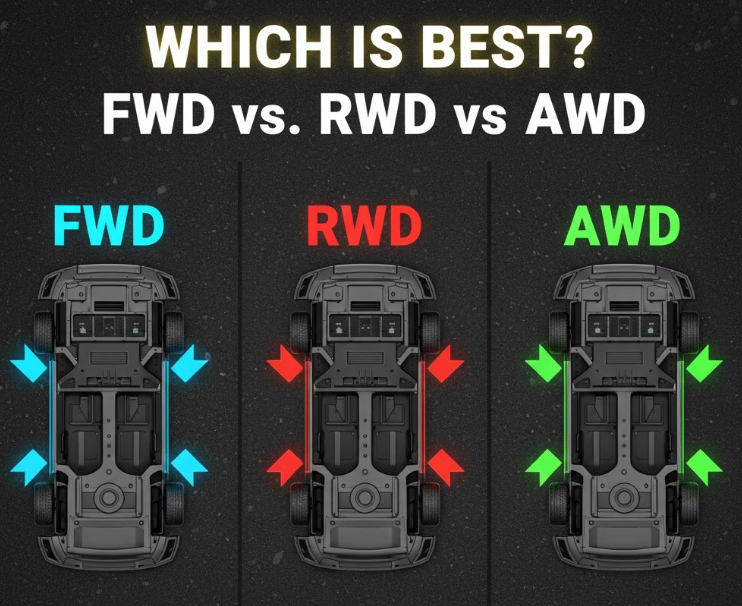
If you’re shopping for a car or just curious about how different drivetrains work, you’ve probably come across terms like AWD, RWD, and FWD. Understanding them can change the way you drive, handle corners, or even deal with rainy or snowy roads. This blog breaks down each drivetrain, explores its pros and cons, and helps you decide which suits your driving style best.
Estimated reading time: 8–10 minutes
What Are Drivetrains?
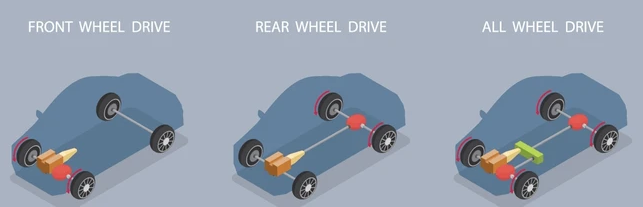
A drivetrain is the system that transfers power from your car’s engine to the wheels, making it move. The design affects traction, handling, fuel efficiency, and performance.
1. FWD – Front-Wheel Drive
Definition:
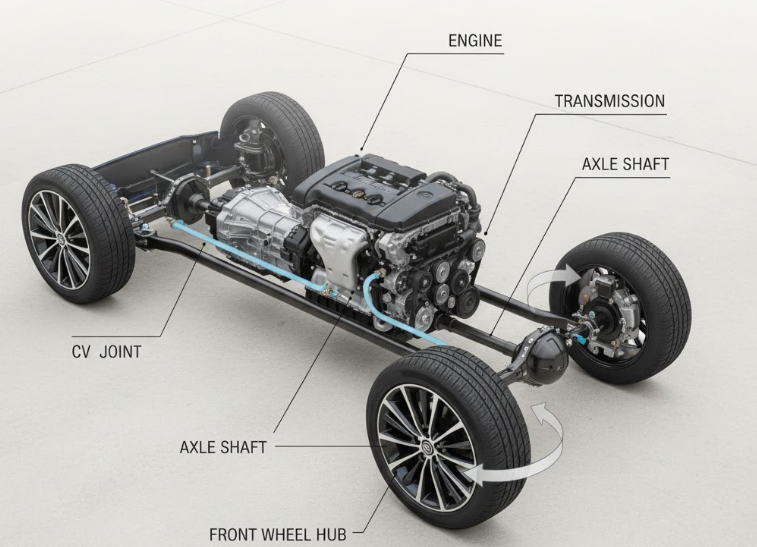
In a Front-Wheel Drive (FWD) car, only the front wheels receive power from the engine.
How It Works:
- Engine is usually mounted above or near the front wheels.
- Front wheels both steer and propel the car.
Advantages:
- Fuel efficient
- Better traction in rain or snow
- Lower cost
- More cabin space
Disadvantages:
- Understeer at high speeds
- Front tire wear
- Less sporty feel
Best For:
City driving, commuting, and moderate weather.
2. RWD – Rear-Wheel Drive
Definition:
In a Rear-Wheel Drive (RWD) car, only the rear wheels are powered.
How It Works:
- Engine can be front or mid-mounted.
- Rear wheels push the car while front wheels steer.
Advantages:
- Better weight distribution and balance
- Precise handling and acceleration
- Durable for towing and heavy loads
Disadvantages:
- Poor traction on wet or snowy roads
- Higher cost
- Can oversteer, tricky for beginners
Best For:
Sports cars, luxury vehicles, trucks, or performance-focused driving.
3. AWD – All-Wheel Drive
Definition:
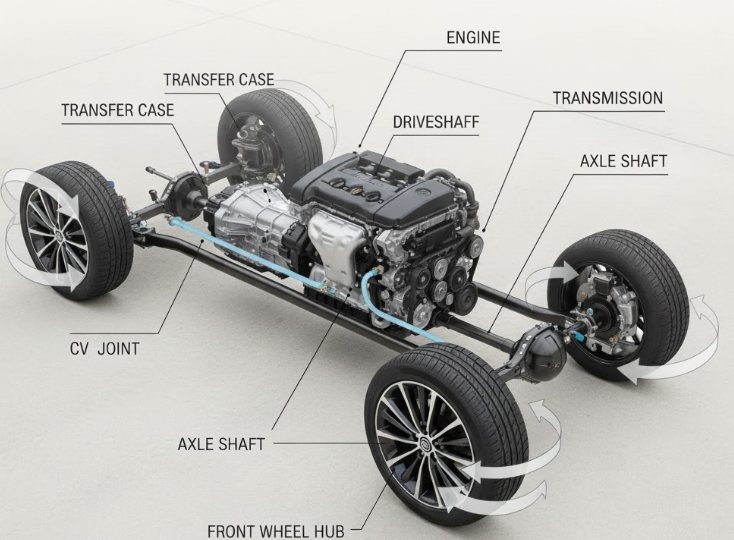
All-Wheel Drive (AWD) sends power to all four wheels, full-time or automatically when slip is detected.
Advantages:
- Maximum traction for snow, rain, or off-road
- Improved stability
- Versatile driving conditions
Disadvantages:
- Higher cost
- Reduced fuel efficiency
- More complex maintenance
Best For:
Drivers in harsh weather, off-road enthusiasts, or anyone seeking extra stability.
FWD vs RWD vs AWD: Quick Comparison
| Feature | FWD | RWD | AWD |
|---|---|---|---|
| Driven Wheels | Front only | Rear only | All four |
| Traction | Good in wet/slush | Poor in snow/rain | Excellent |
| Handling | Understeer prone | Oversteer prone | Balanced |
| Cost | Low | Moderate | High |
| Fuel Efficiency | High | Moderate | Lower |
| Ideal Use | City & Daily Drive | Sports & Heavy Load | All Conditions |
Which One Should You Choose?
- FWD: Fuel economy, simple city driving
- RWD: Performance, sporty handling, heavy-duty
- AWD: All-weather stability, off-road, and safety
Pro Tip: AWD is convenient year-round, but FWD with winter tires can be a cost-effective alternative for snowy regions.
Conclusion
Understanding FWD, RWD, and AWD affects how your car handles, safety, fuel efficiency, and driving enjoyment. Whether you prioritize economy, performance, or stability, knowing your drivetrain helps you make smarter car decisions.
Next time you see these terms, you’ll know exactly what they mean and how they affect your drive.