

The first time my steering wheel started shaking on the highway, I genuinely thought something was about to fall off my car. That vibration at 65 mph was unsettling enough that I white-knuckled it to the nearest exit and called my mechanic in a mild panic. Turns out, it wasn’t nearly as catastrophic as I feared—just unbalanced tires.

It’s Probably Your Tires (Like 80% of the Time)
Yeah, I know that sounds too simple, but unbalanced wheels cause most highway steering wheel vibrations. When you hit 50-60 mph and suddenly feel that shimmy through the steering wheel, you’re likely dealing with wheels that aren’t spinning evenly.
Think about it like an unbalanced washing machine during spin cycle. Even a quarter-ounce weight difference on your tire creates vibrations that get amplified as you go faster. Maybe you lost a wheel weight hitting a pothole, or the shop forgot to rebalance after your last tire rotation. Sometimes the weights just fall off over time.
The fix costs maybe $40-$60 to rebalance all four tires. Any tire shop can knock this out in 20 minutes. They’ll spin each wheel on a machine, figure out where it’s heavy, and stick small weights on the rim to even things out.
Warped Brake Rotors Feel Different
Here’s how to tell if it’s your brakes instead—does the shaking get worse when you brake? If yes, you’ve probably got warped rotors. This happened to me after I did some aggressive mountain driving without letting my brakes cool properly between runs.
Brake rotors can warp from heat, corrosion, or just wearing unevenly over time. When they’re not perfectly flat anymore, your brake pads grab unevenly and create that pulsing sensation through the steering wheel. It’s more of a pulsing wobble than a constant vibration.
Fixing warped rotors means either resurfacing them (if there’s enough material left) or replacing them entirely. You’re looking at $300-$500 depending on your car. And honestly, with how cheap rotors are nowadays, most mechanics just replace them rather than bothering with resurfacing.
Worn Suspension Components Are the Sneaky Culprit
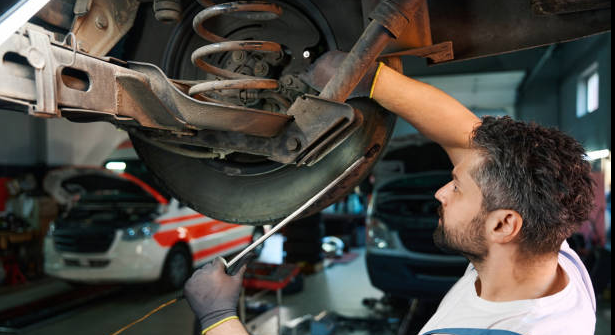
If balancing your tires doesn’t fix the shake, you’re probably dealing with suspension issues. Worn tie rods, bad ball joints, shot control arm bushings—any of these can let your wheels wobble at high speeds.
I had a tie rod end that was completely shot, and the vibration felt different than tire imbalance. It was more random and unpredictable, and it got worse over bumps. The steering also felt loose and sloppy in general, not just at highway speeds.
Suspension problems are trickier to diagnose and more expensive to fix. A mechanic needs to physically inspect everything, and repairs can run anywhere from $150 for a single tie rod to $800+ if multiple components need replacement.
Alignment Issues Make Everything Worse
Bad alignment doesn’t usually cause vibration by itself, but it makes every other problem worse. If your wheels aren’t pointed in the right direction, they’re fighting each other constantly. This creates uneven tire wear, which then leads to vibrations.
You’ll notice your car pulling to one side, the steering wheel sitting crooked when you’re driving straight, or your tires wearing weird patterns on the edges. Get an alignment done—it’s like $75-$100 and should happen every couple years anyway.
Less Common But Still Possible
Sometimes it’s something weirder. I’ve heard of bent wheels causing vibrations, usually from hitting a massive pothole or curb hard enough to actually deform the rim. You can sometimes see it if you look closely at the wheel while it’s spinning, but a tire shop can measure it precisely.
Separated tire belts are another possibility, especially on older tires. The internal structure of the tire basically comes apart, creating a bulge or wobble. If you see any weird bumps or bulges on your tire sidewalls, don’t mess around—get new tires immediately. That’s a blowout waiting to happen.
CV joints going bad can cause vibrations too, though you’ll usually hear clicking noises when turning before you feel highway vibrations. And if you’ve got a truck or SUV with a driveshaft, a worn u-joint or center bearing could be the problem.
What You Should Actually Do
Start with the cheapest and most common fix—get your tires balanced. Seriously, do this first before spending money on anything else. If the shop finds your tires are fine, ask them to check for wheel damage and suspension play while they’ve got the car on the lift.
If balancing doesn’t solve it and the vibration gets worse when braking, your rotors need attention. If it feels random and the steering feels loose, you’re probably looking at suspension work.
Don’t ignore steering wheel shake. I know someone who kept driving on a severely worn tie rod until it literally separated while they were on the highway. They managed to pull over safely, but that could’ve ended way worse. Suspension and steering components are safety items—when they’re telling you something’s wrong, listen.
The good news? Most of these fixes aren’t that expensive if you catch them early. Wait too long and that $40 tire balance turns into $800 worth of new tires because they wore unevenly. Ask me how I know.