
My night vision started getting worse around age 35. Suddenly driving at night went from no big deal to actually stressful.
The headlights on my 2011 Civic were factory halogens. They were dim as hell. Could barely see deer on the side of rural roads until I was way too close.
Had a close call one night when a deer jumped out and I almost hit it because I didn’t see it soon enough. That was my wake-up call to do something about my garbage headlights.
Spent way too much time researching headlight upgrades. LED bulbs, HID conversions, entire headlight assemblies – it’s overwhelming. Also learned that most “upgrades” are actually illegal and blind other drivers.
Eventually figured out what actually works and what’s just marketing BS. Wish someone had explained this clearly from the start.
The Short Answer
Stock LED or HID headlights from the factory are best. If your car came with them, you’re set.
If you have halogen bulbs and want better visibility, upgrade to higher-quality halogen bulbs like Philips X-tremeVision or GE Nighthawk. Legal, easy, effective improvement.
Don’t put LED or HID bulbs in halogen housings. It’s illegal, blinds other drivers, and doesn’t actually work well despite what Amazon says.
If you really need major improvement, replace your entire headlight assemblies with proper projector housings designed for LED/HID. Expensive but actually works correctly.
I upgraded to Philips X-tremeVision halogens and they made a noticeable difference for like $60. Good enough for my needs.
My Halogen Headlight Journey
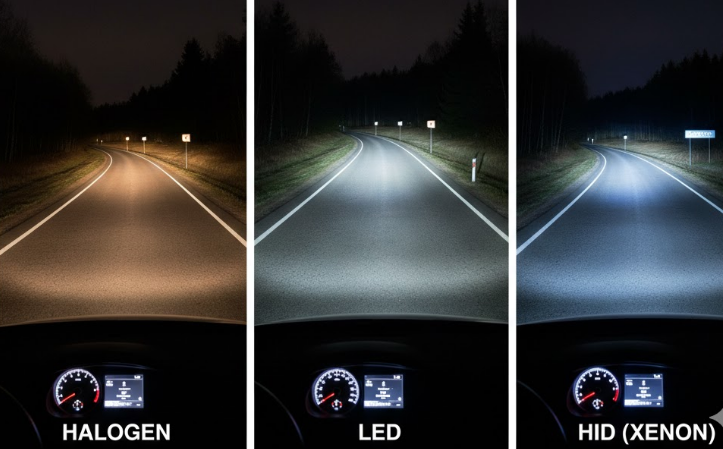
Stock Honda halogens – Dim and yellow. Could see maybe 100 feet ahead clearly. Terrible.
Cheap “bright white” bulbs from AutoZone – Looked whiter but weren’t actually brighter. Waste of $30.
Sylvania SilverStar Ultra – Better than stock, wore out in like 8 months. Not worth replacing constantly.
Amazon LED bulbs – Worst decision. Blinded oncoming traffic, had weird beam pattern, caused glare. Took them out after two days.
Philips X-tremeVision – Current setup. Noticeably brighter than stock, legal, reasonable price. Lasted over a year so far.
Friend’s factory LED headlights – Rode in his newer car with OEM LEDs. Night and day difference compared to my setup. But also a $30k car.
The pattern is clear – quality halogen upgrades work, cheap gimmicks don’t, and factory LED/HID is best if you can get it.
Why Most LED “Upgrades” Are Garbage
This is the thing I wish I’d understood before wasting money.
Halogen headlight housings are designed for halogen bulbs. The reflector and lens are engineered around how halogen light scatters.
LED bulbs produce light from a different point and in a different pattern than halogens. Sticking LED bulbs in halogen housings creates:
- Blinding glare for oncoming traffic
- Dark spots in your beam pattern
- Less actual usable light than good halogens
- Illegal in most places
Amazon is full of LED “upgrade” bulbs with fake reviews claiming they’re amazing. They’re not. They’re garbage that makes your headlights worse while blinding everyone else.
I tried them because YouTubers said they were great. Within two days I had three people flash their high beams at me because I was blinding them. Plus I couldn’t see as well as with good halogens.
Total waste of $80.
The Legal Situation
Most headlight “upgrades” are actually illegal. Not that cops enforce it much, but still.
Legal: Replacing halogen bulbs with better halogen bulbs. Cleaning/restoring cloudy headlight lenses. Aiming headlights properly.
Illegal: LED or HID bulbs in halogen housings. Excessively bright bulbs. Improperly aimed headlights. Light bars on public roads.
The illegal stuff also makes you a jerk because you’re blinding other drivers.
I was unknowingly driving illegally for two days with those LED bulbs. Glad I figured it out quickly.
Factory LED vs HID vs Halogen
Factory LED headlights – Brightest, longest lasting (20k+ hours), most energy efficient, usually best beam pattern. Only available on newer/nicer cars.
Factory HID (Xenon) – Very bright, good lifespan (2k+ hours), complex system with ballasts. Common on 2010s-era premium cars.
Halogen – Dimmest, shortest life (500-1000 hours), cheap to replace, what most older cars have. Still fine with quality bulbs.
If you’re buying a new car and night driving matters, pay extra for LED or HID headlights if offered. Worth it.
If you have an older car with halogens, you’re stuck with halogens unless you do major modifications.
My car has halogens and that’s fine. Good halogen bulbs are adequate for normal night driving.
The Best Halogen Bulb Upgrades
Since most people have halogen headlights, here’s what actually works:
Philips X-tremeVision – About 130% brightness increase over standard. $50-70 for a pair. What I use. Legit improvement.
GE Nighthawk Platinum – Similar to Philips. Around $60. Good reviews.
Sylvania SilverStar Ultra – Brighter and whiter light. Only downside is they burn out faster (6-12 months vs 1-2 years).
Osram Night Breaker – European brand, excellent performance. Sometimes hard to find in US.
These work because they’re still halogen technology, just with better filaments, gas mixtures, and coatings. They fit properly in halogen housings.
They’re not as bright as LED or HID, but they’re 30-50% brighter than cheap halogens. Noticeable difference.
Don’t waste money on bulbs claiming 200%+ brightness increase. Physics doesn’t work that way with halogens.
What About HID Conversion Kits
You can buy kits to retrofit HID (xenon) bulbs into halogen housings. They include bulbs, ballasts, and wiring.
Do not do this unless you also replace your headlight housings with proper HID projectors.
HID bulbs in halogen housings have the same problems as LED bulbs – wrong beam pattern, glare, worse actual visibility.
Proper HID retrofit with projector housings costs $300-800 depending on car. That’s the right way if you want HID.
Just bulbs and ballasts in your stock housings for $100 is the wrong way that blinds everyone.
I considered an HID kit before I learned this. Glad I didn’t waste the money.
Headlight Restoration Makes A Huge Difference
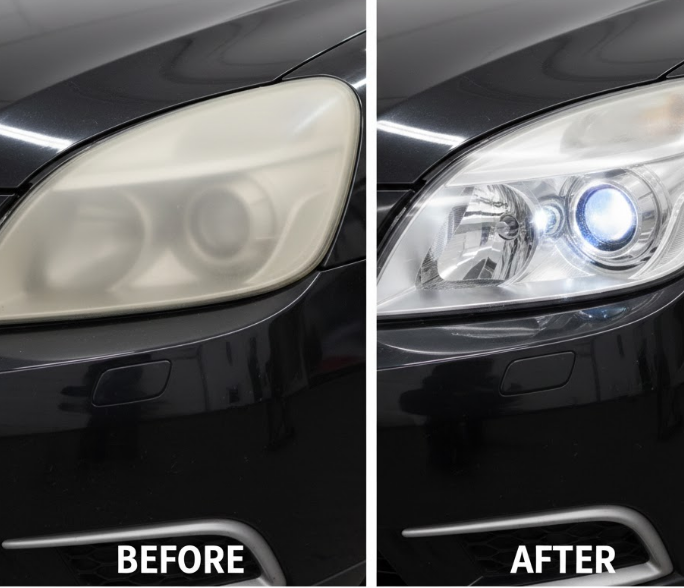
This is the thing nobody talks about. Cloudy oxidized headlight lenses block like 50% of your light output.
Before upgrading bulbs, restore your headlight lenses if they’re cloudy. Massive improvement for $20 and an hour of work.
I did this before upgrading bulbs. The headlights went from barely functional to acceptable just from cleaning the lenses.
Then new bulbs made them actually good.
Restoration kits are like $15-25 at auto parts stores. Sand away the oxidation, polish, apply UV coating. Takes an hour. YouTube has tutorials.
If your headlights are cloudy yellow instead of clear, do this first before considering any other upgrades.
Aiming Your Headlights Properly
Even good headlights won’t work right if aimed incorrectly.
Too high – you blind oncoming traffic Too low – you can’t see far enough ahead Aimed sideways – obviously wrong
Most headlights have adjustment screws. You’re supposed to aim them at proper height and angle.
I’ve never done this myself. Had a shop check my aim after installing new bulbs. They adjusted them slightly and it helped.
If you install new bulbs or headlight assemblies, get the aim checked. Most shops do it free or cheap.
LED Light Bars and Auxiliary Lights
Some trucks and off-road vehicles have LED light bars mounted on the front.
These are insanely bright and useful for off-road night driving. Illegal to use on public roads though.
I see trucks with light bars on the highway blinding everyone. Don’t be that person.
Auxiliary lights (fog lights, driving lights) can be helpful if aimed properly. But most people don’t aim them right.
For normal street driving you don’t need auxiliary lights if your headlights work properly.
The High Beam Situation
High beams are brighter and aimed differently than low beams. Use them on dark roads when no one’s around.
People forget to turn them off when traffic comes. This blinds oncoming drivers.
I’m religious about clicking my high beams off when I see headlights approaching. Common courtesy.
Modern cars have automatic high beams that turn off when they detect oncoming traffic. Nice feature if your car has it.
My car doesn’t so I manually control them. Not hard, just pay attention.
Factory Headlight Options When Buying New
If you’re buying a new car, headlight quality varies wildly.
Base models often have terrible halogen headlights. Higher trims get LED or HID.
The upgrade from base halogen to LED headlights is usually $500-1500 depending on manufacturer. Worth it if you drive at night regularly.
Test drive at night if possible. You’ll immediately notice if the headlights suck.
My next car I’m definitely getting LED headlights. They’re so much better than halogen.
Adaptive and Matrix LED Headlights
Fancy new cars have adaptive headlights that turn with the steering wheel and automatically adjust beam pattern around other cars.
Matrix LED systems can selectively dim parts of the beam to avoid blinding oncoming drivers while keeping the rest bright.
This stuff is amazing but expensive. Usually only on luxury cars or high-end trims.
I rode in a Mercedes with matrix LED headlights. It’s like cheating at night driving. You can see everything and never blind anyone.
If money isn’t an issue and you drive a lot at night, this technology is worth seeking out.
For Different Types of Driving
City/suburban driving – Stock headlights are usually fine. Lots of street lights help. Upgrade if yours are really dim.
Rural/country roads – Bright headlights matter more. Deer, dark roads, no street lights. Upgrade recommended.
Highway driving – High beams when no traffic, good low beams otherwise. Quality matters less than rural but still important.
Off-road – Auxiliary lights and light bars useful. Go wild since you’re not on public roads blinding people.
I do mostly city driving with occasional rural roads. The Philips upgrade bulbs are perfect for my needs.
Fog Lights vs Headlights
Fog lights are different from headlights. Aimed low to illuminate the road immediately in front during fog.
Some people use fog lights all the time. This is wrong – they’re for fog only.
Yellow fog lights supposedly reduce glare in fog. I’ve never noticed a difference vs white.
I never use my fog lights. Even in fog I just use low beams carefully. Fog lights don’t help much in my experience.
Don’t confuse upgrading fog lights with upgrading headlights. Different purposes.
Headlight Lifespan Reality
Halogen bulbs – 500-1000 hours typically. Maybe 1-2 years of normal use. Cheap to replace.
HID bulbs – 2000+ hours. Several years typically. More expensive to replace.
LED headlights – 20,000+ hours. Should last the life of the car. Can’t usually replace just the bulb.
Premium halogen bulbs like Sylvania SilverStar burn out faster – sometimes only 6-12 months. Tradeoff for brightness.
My Philips X-tremeVision bulbs are at 18 months and still working fine. Longer life than Sylvanias apparently.
Factor replacement costs into your decision. Cheap bulbs that last 2 years might be better value than expensive bulbs that last 6 months.
What About Older Cars With Sealed Beam Headlights
Really old cars (pre-1980s mostly) have sealed beam headlights. The entire lens and bulb are one unit.
These suck for night driving. Dim and terrible beam pattern by modern standards.
You can buy H4 conversion housings that let you use modern halogen bulbs. Costs like $100-200.
Or just accept that your classic car has terrible headlights and drive carefully at night.
I had a ’78 truck once with sealed beams. Could barely see anything at night. Sold it partly for this reason.
Color Temperature Confusion
Bulbs advertise color temperature in Kelvin. Lower = more yellow, higher = more blue/white.
3000K – Yellow (old halogen) 4300K – Warm white (good halogen) 5000K – Pure white (LED) 6000K+ – Blue-ish white (trying too hard)
Whiter light isn’t necessarily better. 4300-5000K is ideal for visibility.
Super blue/white bulbs (6000K+) look cool but actually see worse in rain and fog. Color doesn’t help, brightness does.
I got 4300K bulbs. They look whiter than stock yellows but still have some warmth. Good visibility in all conditions.
Installing Bulbs Yourself vs Shop
Replacing headlight bulbs is usually easy. Pop the hood, unplug connector, twist out old bulb, twist in new bulb.
Some cars (BMW, Audi, etc.) require removing the front bumper to access bulbs. Insane design. Pay a shop for those.
I did my Civic bulbs myself in 15 minutes. Watched a YouTube video first. Super easy.
Don’t touch the glass part of new halogen bulbs with bare fingers. Oil from your skin causes hot spots and premature failure. Use gloves or tissue.
The Cost Breakdown
Quality halogen upgrade bulbs: $50-70 per pair Headlight restoration kit: $15-25 HID conversion kit (bulbs only): $50-150 – Don’t do this Proper HID retrofit with projectors: $300-800 LED headlight assemblies: $200-600 per pair Factory LED headlight option on new car: $500-1500
Most people should spend $15 on restoration and $60 on good halogen bulbs. Total $75 for major improvement.
Only do expensive retrofits if you drive a ton at night and really need maximum visibility.
What I’d Do Today
If I needed to improve my headlights again, I’d:
- Restore the lenses if cloudy ($20)
- Get Philips X-tremeVision or GE Nighthawk bulbs ($60)
- Get the aim checked ($0-20)
- Call it done
That’s $80-100 total for significantly better night visibility. Legal, effective, reasonable cost.
I wouldn’t mess with LED bulbs in halogen housings or cheap HID kits. Not worth the problems.
If I was buying a new car I’d 100% pay for factory LED headlights. But retrofitting LEDs into an older car properly is too expensive and complicated.
The Real Answer For Most People
Clean/restore your headlight lenses. This alone might solve your problem.
Upgrade to quality halogen bulbs from Philips, GE, or Osram. Legal, easy, effective.
Get your aim checked after installing new bulbs.
This will make your headlights noticeably better for under $100.
Don’t fall for LED bulb scams on Amazon. Don’t do ghetto HID conversions. Don’t blind other drivers trying to see better yourself.
I stressed about headlights for weeks before realizing the simple solution worked fine. Restoration plus good bulbs made a real difference.
My night driving is way less stressful now. I can actually see deer and pedestrians with time to react. That’s all I needed.
If you drive constantly at night or on dark rural roads, maybe the expensive retrofit options are worth it. For most people they’re overkill.
Just get good halogen bulbs and clean lenses. Way easier and cheaper than I expected, and it actually works.