
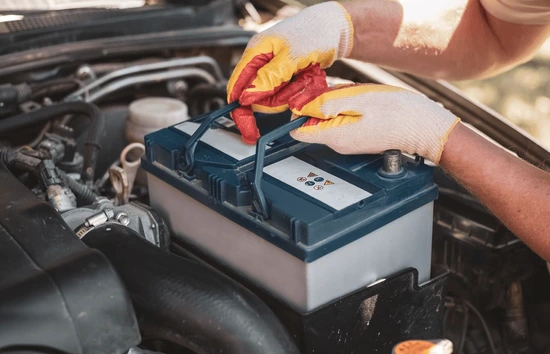
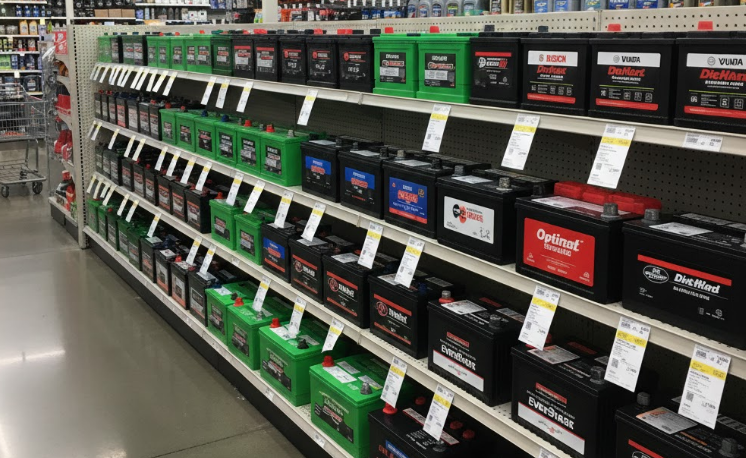
My car wouldn’t start in a Walmart parking lot three years ago. Battery was totally dead. Had to get a jump, drove straight to AutoZone, and stood there staring at a wall of batteries with wildly different prices wondering what the hell the difference was.
The guy working there could tell I was lost. Started asking me questions about my driving habits, where I park, how old my car was. Then he recommended a battery that was middle-of-the-road price-wise but supposedly lasted longer.
I went with it because I didn’t know any better. That battery is still going strong three years later, which got me curious about whether battery brands actually matter or if it’s all marketing BS.
Turns out it’s complicated. Some brands genuinely last longer, but there’s more to it than just slapping a name on your battery choice and calling it done.
The Brands That Keep Coming Up
Ask anyone who knows cars and you’ll hear the same names over and over. Interstate, Optima, DieHard, Odyssey, ACDelco. These are the ones mechanics actually recommend when you’re not around.
Then there’s the house brands from auto parts stores – AutoCraft from Advance Auto, EverStart from Walmart, DuraLast from AutoZone. These are cheaper but people have mixed feelings.
I’ve also seen Bosch, Exide, and a bunch of others. The market is flooded with options and half of them are probably made in the same factory anyway.
What I Found Out About Manufacturing
This is where it gets interesting. Most batteries aren’t actually made by the brand on the label. There’s like three or four big manufacturers that make batteries for everyone.
Johnson Controls (now Clarios) makes Interstate, DieHard, AutoCraft, and a bunch of others. East Penn makes DieHard now after some business changes. Exide makes their own plus some store brands.
So when you’re comparing an Interstate to a DieHard to an AutoCraft, you might literally be looking at batteries from the same factory with different stickers. The main differences are usually the warranty and sometimes minor spec differences.
My mind was blown when I learned this. I thought I was choosing between completely different products but really I was just choosing warranties.
The Warranty Game
Here’s what actually matters more than the brand name – the warranty length and what it covers.
Batteries come with warranties that range from 1 year to 5+ years. But here’s the catch – there’s usually a “free replacement period” and then a “prorated period.”
Free replacement might be 2 years. After that you get prorated credit for the remaining years. So a “5 year warranty” might really be 2 years free replacement plus 3 years of diminishing credit.
The battery I got three years ago had a 3 year free replacement warranty. I’m past that now so if it dies tomorrow I’m buying a new battery. But the fact it lasted past the warranty period is actually a good sign.
My Experience With Different Brands
I’ve owned six cars over the years and dealt with various batteries. Here’s what actually happened:
Interstate – Had one in my old Accord. Lasted about 5 years before it started getting weak. That was in Florida heat too, which kills batteries faster. Pretty solid.
EverStart – This is what I have now from Walmart. Three years in and no issues. I was skeptical because it was cheap but it’s been reliable.
Random battery that came with used car – No idea what brand. Died after a year and a half. This is the one that left me stranded at Walmart.
DieHard – My dad swears by these. His lasted 7 years in his truck. But he also takes better care of his vehicles than I do.
AutoZone DuraLast – Friend had one that died in 2 years. But he also left his lights on constantly and jump started it like 10 times. Not sure that’s the battery’s fault.
The pattern I noticed is that premium brands maybe lasted a year or two longer on average. But the difference wasn’t as dramatic as the price gap suggested.
What Actually Kills Batteries
Talking to mechanics and doing research, I learned that how long a battery lasts has less to do with brand and more to do with conditions and maintenance.
Heat destroys batteries. If you live in Arizona or Texas your battery will die faster than someone in Minnesota. The hot climate just cooks the internals. I’m in Texas and batteries lasting 3-4 years is normal here. Up north people get 6-7 years easily.
Short trips kill batteries too. If you only drive 5 minutes to work every day, your alternator never fully recharges the battery. It slowly dies from never getting a full charge. This was my problem for a while.
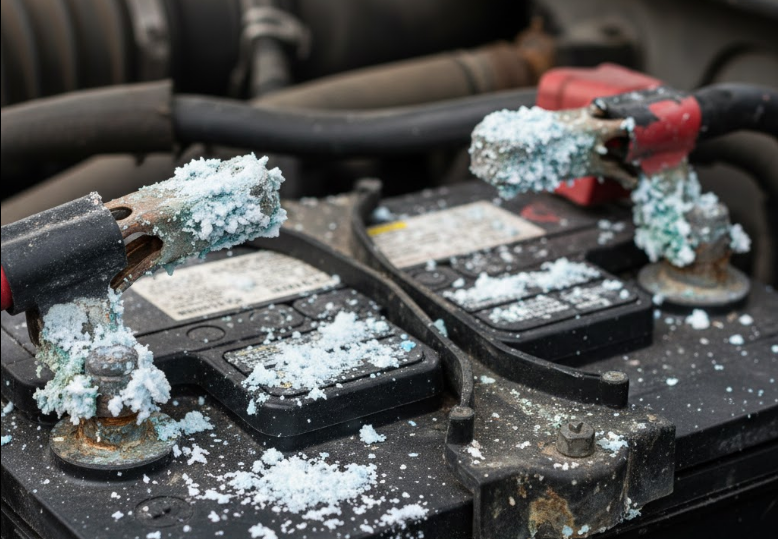
Corrosion on terminals slows down charging and draining. Those crusty white deposits you see on battery terminals aren’t just ugly, they’re actively hurting battery performance.
Leaving lights or accessories on drains it obviously. But even newer cars drain batteries slowly over time with all their computers. If you don’t drive for weeks the battery can die just sitting there.
Age matters more than anything. All batteries have a manufacturing date stamped on them. Even if it’s been sitting on a shelf, it’s aging. An “unused” 2 year old battery is not the same as a fresh one.
I didn’t know any of this when I bought my first battery. Just grabbed whatever was cheapest and wondered why it died in two years.
The Cold Cranking Amps Thing
Every battery has a CCA rating – Cold Cranking Amps. This is how much power it can deliver in cold weather to start your engine.
Your car needs a minimum CCA to start reliably. Going higher than minimum is fine and can help, but there’s diminishing returns. A 800 CCA battery isn’t necessarily better than a 700 CCA battery if your car only needs 600.
I made the mistake once of buying a battery with lower CCA than recommended because it was on sale. Winter came and my car struggled to start on cold mornings. Had to replace it. Lesson learned – don’t go below the recommended CCA for your vehicle.
But also don’t overpay for way more CCA than you need. It’s not like more is always better past a certain point.
AGM vs Regular Flooded Batteries
This is another thing that confused me. Some batteries are AGM (Absorbent Glass Mat) and cost way more. Are they worth it?
For most people? Probably not. AGM batteries are great if you have a car with start-stop technology, or if you run tons of accessories, or if you’re doing off-road stuff. They handle deep discharge cycles better and last longer in harsh conditions.
But for a normal daily driver? A regular flooded battery is fine and costs like $60-100 less.
I almost bought an AGM because the guy at the store said it was “better.” Then I asked what my car actually needed and he admitted a regular battery was fine. Marketing almost got me to waste money.
Optima makes those fancy yellow-top AGM batteries. They’re built like tanks and last forever supposedly. But they’re $250+. For my 2011 Civic? Not worth it.
The Cheap vs Expensive Debate
So after all this research and experience, what’s the actual difference between a $80 battery and a $200 battery?
The expensive one probably has slightly better materials and construction. Maybe thicker plates, better quality lead, more robust design. In perfect conditions this might mean an extra year or two of life.
But in real-world conditions with heat and short trips and neglect? The difference shrinks. The $80 battery might last 3-4 years while the $200 battery lasts 4-5 years. Is one extra year worth $120? Your call.
The expensive battery also probably has a better warranty. That peace of mind is worth something.
What I do now is buy mid-range batteries with good warranties. I’m not getting the cheapest garbage but I’m not spending $200+ either. Usually I’m in the $120-150 range and that feels like the sweet spot.
Costco’s Batteries Are Sneaky Good
One thing I learned from car forums – Costco’s Interstate batteries are apparently a really good deal. They’re made by Interstate (or the same company that makes Interstate) but sold cheaper through Costco.
Plus Costco’s warranty is stupid good. They’ll replace it basically no questions asked if it dies during the warranty period.
I haven’t personally tried one because there’s no Costco close to me, but everyone who has them says they last just as long as regular Interstates for less money.
If you have a Costco membership this seems like a no-brainer. Just saying.
What Mechanics Actually Use
I asked my mechanic what batteries he puts in his personal vehicles. He said Interstate or whatever has the longest warranty at the time he needs one.
He doesn’t stress about brand because he knows they’re mostly made in the same factories. He focuses on warranty length and making sure the specs match the vehicle.
That was honestly the most helpful advice I got. Stop obsessing over brand names and focus on warranty and proper specs.
My Current Strategy
After going through several batteries and doing way too much research, here’s what I do now:
Get a battery with at least a 3 year free replacement warranty. This is the minimum for me. Some cheap batteries only have 1-2 years and that’s not worth it.
Match or slightly exceed the CCA rating for my car. I look up what the manual recommends and get that or a bit higher.
Buy from somewhere with easy warranty claims. I’ve had good luck with AutoZone and Walmart because there’s multiple locations near me. Getting warranty service is easy.
Clean the terminals when I install it and check them every few months. This simple maintenance probably extends battery life by a year.
Check the manufacturing date on the battery before buying. I won’t buy one that’s more than 6 months old. They stamp a code on the battery – usually a letter for month and number for year. “A7” would be January 2017 for example.
I don’t go cheap anymore but I also don’t buy the premium brands. Middle tier with a good warranty has worked great.
The Jump Starter Thing
Side note but related – I keep a portable jump starter in my trunk now. Cost like $60 on Amazon. It’s saved me twice when the battery was weak and has helped other people in parking lots.
Honestly this is more valuable than stressing about which premium battery to buy. Even the best battery can die unexpectedly and being stranded sucks.
Not trying to sell you anything but having a jump starter has been more useful than the extra money I could’ve spent on a premium battery.
Signs Your Battery Is Dying
Pay attention to these because a battery rarely just suddenly dies (unless you left your lights on):
Engine cranks slower than normal when starting. This is the biggest sign.
Electrical things acting weird – dim lights, radio cutting out, windows rolling slow.
Battery warning light on the dash. Obviously.
Battery is more than 4-5 years old. At that point it’s on borrowed time regardless of brand.
Visible damage or swelling on the battery case.
I ignored the slow cranking thing once and ended up stranded. Now if I notice it I test the battery immediately. Most auto parts stores test them for free.
The Answer Nobody Wants To Hear
So which battery brand lasts longest? The honest answer is it depends more on your conditions and maintenance than the brand name.
In general, Interstate, Optima, and Odyssey have good reputations for longevity. But they also cost more and the extra life might only be a year or two.
Mid-tier brands like DieHard and store brands with good warranties are probably the best value. You get decent quality without overpaying for a name.
The cheapest batteries are fine if money is tight but they might die sooner. That’s the tradeoff.
What matters most:
- Getting the right specs for your car
- Having a good warranty
- Living in a climate that doesn’t cook batteries
- Actually maintaining the thing
- Not letting it sit for weeks without driving
I’ve seen expensive batteries die in 2 years and cheap batteries last 6 years. The conditions and care matter more than the label.
What I’d Buy Today
If I was buying a battery right now I’d probably get an Interstate or a DieHard with a 3-4 year free replacement warranty. That feels like the best balance of quality and value.
If money was tight I’d get a Walmart EverStart Maxx. It’s what I have now and it’s been solid. Way cheaper than premium brands.
If I had money to burn I might get an Optima YellowTop AGM just to see if it lives up to the hype. But that’s more curiosity than practical necessity.
The main thing is I’d make sure the specs match my car and the warranty is good. Brand name is like third or fourth on my priority list now.
Three years ago I was standing in AutoZone completely lost. Now I probably overthink it. But at least I’m not wasting money on marketing hype or buying inadequate batteries that die in a year.
Just get something decent, maintain it, and it’ll probably last 4-5 years regardless of whether it says Interstate or EverStart on the label.