
Which brands make the best timing belts? This matters way more than people think because a timing belt is not a “wear-and-see” part. When it fails, it doesn’t give you time to react. The engine just stops — and sometimes destroys itself in the process. That’s why mechanics are picky about brands, even when owners aren’t.
Before brands, one important truth:
- Timing belts don’t usually fail because of mileage alone
- They fail because of age, heat, poor materials, or weak tensioners
- Brand quality directly affects how predictable the belt’s lifespan is
Now let’s get into the brands with actual reasons, not hype.
Top-tier timing belt brands (highest trust, lowest failure rates)
- Gates
Widely considered the safest choice overall
Used as OEM by many manufacturers
Strong internal fiber cords that resist stretching
Rubber compound handles heat and long service intervals well
Very predictable aging, which is crucial for replacement timing - Continental (ContiTech)
Major OEM supplier, especially in European cars
Extremely precise tooth shaping, which reduces noise and wear
Excellent resistance to temperature changes
Known for long-term stability rather than short-term performance
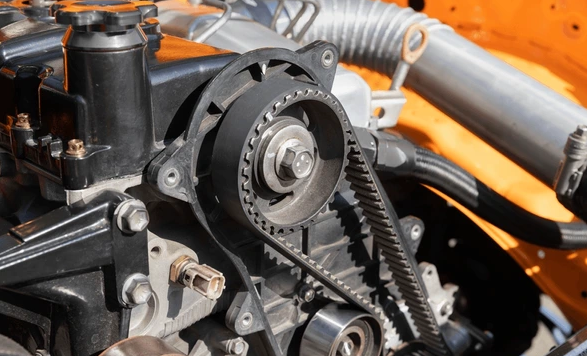
OEM-grade brands trusted especially on Japanese engines
- Mitsuboshi
Factory-installed on many Japanese vehicles
Very consistent manufacturing quality
Excellent durability when replaced on schedule
Often the original belt removed from Hondas, Toyotas, and Subarus - Bando
Another major Japanese OEM supplier
Strong rubber compounds that resist cracking
Teeth hold shape well over time
Quiet operation even at higher mileage
Strong alternatives with good track records
- Dayco
OEM supplier for multiple manufacturers
Good resistance to oil contamination
Popular in performance and racing environments
Reliable when paired with quality tensioners
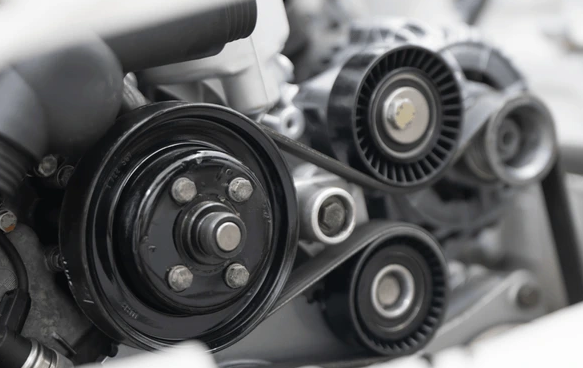
Now here’s where people mess up — the belt alone is not the whole story.
Common causes of timing belt failure even with a good brand:
- Cheap or reused tensioners
- Worn idler pulleys
- Seized bearings
- Ignoring age limits
- Oil or coolant leaks soaking the belt
That’s why professionals almost always recommend:
- Replacing the belt and tensioner together
- Using a complete timing belt kit
- Changing the water pump if it’s driven by the belt
Another thing most people overlook:
- A 7-year-old belt with low mileage can be more dangerous than a newer high-mileage belt
- Rubber and internal cords degrade with time, not just use
Brands to be cautious with
- No-name or generic belts
- Extremely cheap kits
- Brands with no OEM presence
- Belts that don’t specify material standards
These often fit fine, run fine — and then fail without warning.
So if you want a straight, no-BS summary:
Safest overall choices:
- Gates
- Continental
Best OEM-style Japanese options:
- Mitsuboshi
- Bando
Reliable alternative when installed properly:
- Dayco
Timing belts are not where you save money. They’re where you buy certainty. Paying slightly more upfront avoids the worst kind of repair bill — the one that didn’t need to happen.