
When Should I Replace My Brake Pads?
Drove around with grinding brakes for like two weeks before I finally dealt with it. Kept telling myself “I’ll get it checked next weekend” while my car sounded like a dying robot every time I stopped. My girlfriend refused to ride with me anymore because the noise was so embarrassing.
Finally took it to a shop and the mechanic just stared at me like I was an idiot. “Dude your pads are completely gone. You’ve been grinding metal on metal. Your rotors are trashed now too.”
Brake pad replacement that should’ve cost $150 turned into $600 because I destroyed the rotors. Could’ve just replaced the pads when I first heard squealing a month earlier but nope, I had to ignore it until everything was ruined.
That was expensive lesson number one about brake maintenance. I’ve learned several more since then, all the hard way. Let me save you from my mistakes.
The Actual Lifespan Nobody Tells You Straight
Brake pads supposedly last 40,000-80,000 km according to every source online. That’s like 25,000-50,000 miles for Americans. Cool. Super helpful range that tells you basically nothing about YOUR specific situation.
Reality is way more complicated:
City driving destroys pads fast – my commute is all stop-and-go traffic. I’m lucky to get 40,000 km out of front pads. My friend who drives highway miles gets like 70,000 km easy.
Your driving style matters huge – I used to brake hard constantly because I drove like an impatient asshole. Killed my pads way faster than necessary. Calmed down and they last longer now.
Front wears way faster than rear – front brakes do like 70% of the stopping work. My front pads died at 45,000 km while rears still had half their life left at 90,000 km.
Weight matters – drove a heavy truck for work once. Those brake pads lasted maybe 30,000 km under the constant load. Light cars are easier on brakes.
So yeah 40-80k km is the range but where you actually land in that range depends on a million factors. Not super useful for planning but at least gives you a ballpark.
I check my pads every 10,000 km now just to see where they’re at instead of guessing based on mileage.
The Sounds That Mean You Already Screwed Up
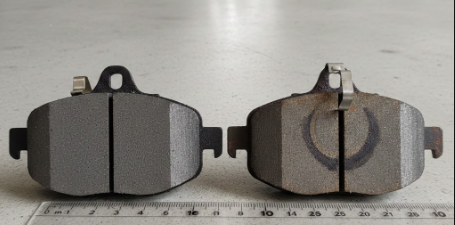
Squealing – that high-pitched screech when you brake? That’s a little metal indicator tab built into the pad specifically to warn you it’s getting thin. It’s literally designed to be annoying so you’ll fix it.
I ignored squealing for weeks thinking “eh it’ll go away” or “maybe it’s just moisture.” It was not moisture. It was my brake pads screaming for help.
Grinding – this is the sound of metal scraping metal because your pad material is completely gone. This is bad. Really bad. Stop driving immediately and get it fixed.
I drove on grinding brakes for those two weeks I mentioned. Every stop sounded like I was dragging a shopping cart full of rocks. People in parking lots would turn and stare. Humiliating.
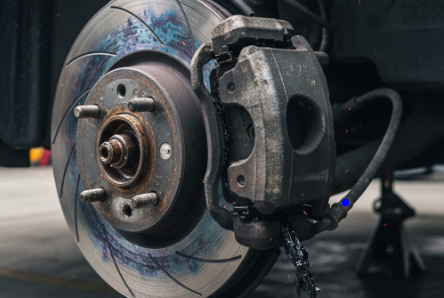
By the time I got to the shop I’d worn grooves into my rotors that couldn’t be resurfaced. Had to replace the rotors entirely. Turned a cheap fix into an expensive one.
Weird vibration – if your brake pedal or steering wheel vibrates when you brake, something’s wrong. Could be warped rotors from heat, could be uneven pad wear, whatever it is get it checked.
Don’t be like me waiting for things to get so bad you can’t ignore them anymore. Deal with squealing immediately before it becomes grinding.
How To Actually Check Them Yourself
Don’t need to be a mechanic to look at your brake pads. Just need eyes and a flashlight.
The easy method:
- Look through the spokes of your wheel at the brake caliper
- You’ll see the pad pressed against the rotor (the shiny metal disc)
- If the pad looks thinner than your pinky finger it’s probably getting low
- Less than a quarter inch thick? Definitely replace soon
I do this every month or so just to keep an eye on things. Takes literally 30 seconds per wheel.
The slightly harder method:
- Jack up the car and take the wheel off
- Now you can see everything clearly
- Measure the pad thickness with a ruler
- Less than 3-4mm (about 1/8 inch) and you’re due for replacement
Did this once and realized my rear pads still had tons of life while my fronts were toast. Would’ve replaced all four unnecessarily if I hadn’t checked.
Some cars make this impossible without removing the wheel. My current car has solid wheels with no spokes so I can’t see anything without jacking it up. Annoying but whatever.
If you can’t check easily or don’t want to, just ask when you get your oil changed. Takes the mechanic 10 seconds to look and tell you how much pad is left.
Warning Signs I Ignored Like An Idiot
Longer stopping distance – my car was taking noticeably more space to stop than it used to. Thought maybe I was imagining it or my tires were getting worn. Nope, just dying brake pads with less friction.
This is actually dangerous and I’m lucky nothing bad happened. If you notice this get your brakes checked immediately.
Brake warning light – some newer cars have a dashboard light that comes on when pads are low. Mine doesn’t but my friend’s does. He ignored it for months. Don’t do that. It’s there for a reason.
Pulling to one side – if your car pulls left or right when braking, one side might have way more pad wear than the other. Not normal. Get it checked.
Spongy brake pedal – this is usually air in the brake lines not pad wear, but it means something’s wrong with your brake system. Don’t ignore weird brake pedal feel.
I’ve ignored basically all of these at various points. Every time I regretted it and paid more money than if I’d just dealt with it when the first sign appeared.
Front vs Rear Is Actually Important
Your front brakes do most of the work because weight transfers forward when you stop. Physics or whatever.
What this means practically:
- Front pads wear out way faster
- You’ll replace fronts 2-3 times before replacing rears once
- Always replace pads in pairs (both front or both rear)
- Never mix old and new pads on the same axle
I made the mistake of replacing just one front pad once because only one was worn down. The car pulled hard to one side when braking because the pad friction was uneven. Had to redo it and replace both. Wasted money and time.
My front pads last about 40-50k km. My rear pads are still original at 90k km and probably good for another 30k. Completely different wear rates on the same car.
Don’t assume all four pads need replacing at once. Check them individually and replace as needed.
What Happens If You Just Don’t Replace Them
I know from experience what happens when you ignore worn brake pads:
You destroy your rotors – this is what I did. Metal brake backing grinding on rotors wears grooves and scoring that can’t be fixed. New rotors are like $100+ each plus labor. Way more expensive than just replacing pads.
Your stopping distance increases – less pad material means less friction means you don’t stop as well. This is how accidents happen.
Brake fluid gets contaminated – worn pads can let debris into the brake system. Contaminated fluid means the whole system needs flushing. More money.
The caliper can seize – extreme wear can damage the caliper. Now you’re replacing calipers too. Even more money.
Started with a $150 pad replacement. Ended up over $600 because I let it go too long. And that’s not counting the risk of getting into an accident from bad brakes.
Just replace the pads when they need it. It’s way cheaper than fixing all the damage from waiting too long.
How To Make Them Last Longer
After killing my first set of pads embarrassingly fast I learned some tricks:
Stop tailgating – I used to drive right on people’s bumpers in traffic. Constant braking to maintain that tiny gap. Backed off and gave more space, brakes lasted way longer.
Coast more – see a red light ahead? Take your foot off the gas early and coast instead of maintaining speed until the last second then braking hard. Saves pads and gas.
Engine braking on hills – downshift instead of riding your brakes going downhill. I used to burn through pads on mountain roads until I learned this. Huge difference.
Lighten your load – stopped driving around with 200 pounds of crap in my trunk. Less weight means less braking force needed. Marginal but it adds up.
Don’t brake and accelerate at the same time – some people rest their foot on the brake pedal while driving. Don’t do this. You’re wearing pads for no reason.
My current pads have lasted 60k km so far and still have life left. My old driving style would’ve killed them at 35k km. Driving smoother helps everything last longer.
The Different Pad Types And What They Mean
Didn’t know there were different types until I had to buy replacements. The parts guy asked what kind I wanted and I just stared at him blankly.
Organic/semi-metallic – standard pads, work fine for normal cars, wear at normal rates. This is what most cars come with. Cost like $30-50 per axle.
Ceramic – last way longer, make less dust, quieter, don’t work as well when cold. More expensive at like $80-150 per axle. I tried these once and they were great in summer but sketchy in winter.
Full metallic – super aggressive, wear rotors faster, loud as hell, great for track use or heavy vehicles. Don’t put these on a normal car.
I run standard semi-metallic pads now. They work fine and I don’t need fancy ceramics for my boring commuter car. Save the expensive stuff for cars that need it.
The parts guy tried to upsell me on ceramics saying they last twice as long. Maybe they do but they cost twice as much so it’s a wash. Plus I had winter performance issues.
What It Actually Costs To Replace
Did my front pads myself last time. Parts were $45. Took me like 2 hours because I’m slow and paranoid about brake work.
DIY costs:
- Brake pads: $30-80 per axle depending on type
- Brake cleaner: $5
- Maybe new hardware if yours is rusty: $10-20
- Tools if you don’t have them: $50-100 one time
Shop costs:
- Small car: $100-200 per axle
- SUV/truck: $150-300 per axle
- Luxury car: $250-500 per axle
- Add another $100-300 if rotors need replacing too
I’ve done it both ways. DIY saves money but brake work makes me nervous because if you screw up your brakes don’t work. That’s bad.
Paid a shop to do my rear brakes because they’re harder to access on my car. Cost $180 for pads and labor. Worth it to not deal with the hassle and know it was done right.
If you’re comfortable with car work and have the tools, brake pads are DIY-able. If not, pay someone. Don’t cheap out on brake work.
When To Just Pay A Mechanic
I’ll DIY a lot of car stuff but there are times I pay someone for brakes:
First time ever – if you’ve never done brake pads before, pay someone the first time and watch what they do. Or have a knowledgeable friend help. Don’t experiment on your only car’s brakes.
Rear drum brakes – these are way more complicated than disc brakes. Springs and adjusters and all kinds of stuff that can go wrong. I refuse to touch drum brakes myself.
If rotors need work – resurfacing or replacing rotors requires equipment I don’t have. If my pads are bad enough that rotors are damaged, I’m paying