
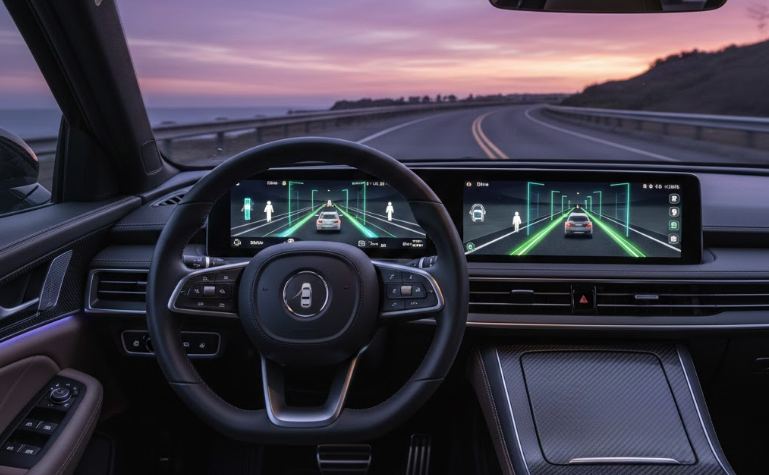
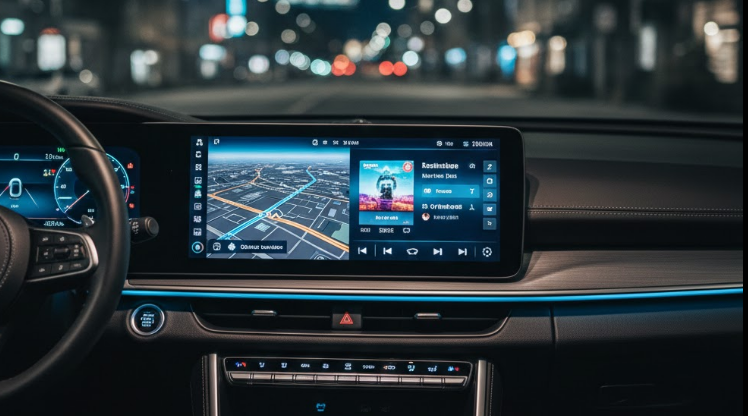
Car infotainment systems have changed a lot in the last few years, and honestly, some of them now feel more advanced than the phones we’re plugging into them. What used to be a small radio screen with clunky buttons is now basically the control center for your entire driving experience. Navigation, music, calls, car settings, cameras, even climate control — it’s all living on that screen now.
Here’s what’s actually new and worth knowing, without marketing fluff.
First big change: screens got huge, and they’re staying that way.
Most new cars now come with:
- 10 to 15 inch touchscreens
- Wide, tablet-style displays
- Curved or edge-to-edge glass in higher-end cars
Budget cars are catching up too. Even affordable models now get decent-sized screens instead of tiny ones. Physical buttons are disappearing fast, which some people love and some people hate. It looks clean, but yes, adjusting climate through a screen while driving can be annoying.
Second: wireless Apple CarPlay and Android Auto are basically standard now.
This is a big one. No more plugging your phone in every single time.
Latest systems offer:
- Wireless Apple CarPlay
- Wireless Android Auto
- Faster, more stable connections
- Better voice recognition
Your phone does most of the heavy lifting now. Maps, music, podcasts, messages — all smoother and quicker than older systems. Even cheaper cars are getting this, which is honestly one of the best upgrades in modern cars.
Third: built-in navigation is smarter, but still not everyone uses it.
Car manufacturers have improved their own navigation systems a lot:
- Real-time traffic updates
- Lane guidance
- EV charging station routing
- Over-the-air map updates
That said, many people still prefer Google Maps or Waze because they update faster and feel more familiar. Built-in nav is finally usable now, but phones still win for flexibility.
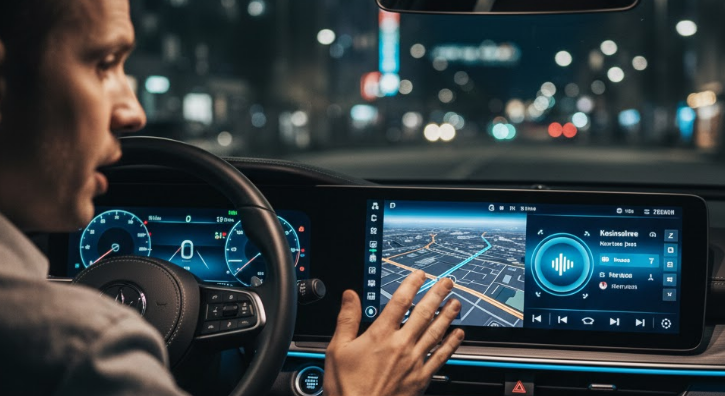
Fourth: voice control is actually usable now (most of the time).
Older voice systems were terrible. You’d say “call mom” and the car would start playing some random song.
New systems are much better:
- Natural language commands
- “Hey Google” or “Hey Siri” built-in
- Control music, navigation, calls, and climate by voice
It’s not perfect, but it’s good enough that you’ll actually use it instead of yelling at the screen.
Fifth: over-the-air updates changed everything.
Cars now update like smartphones.
Manufacturers can:
- Fix bugs remotely
- Improve performance
- Add new features
- Update the interface without a dealership visit
Tesla started this, but now brands like BMW, Hyundai, Ford, and Mercedes do it too. This means your infotainment system won’t feel outdated as quickly as older cars did.
Sixth: infotainment systems are now tied into vehicle controls.
This is where things get controversial.
Modern systems control:
- Climate settings
- Seat heating and cooling
- Drive modes
- Ambient lighting
- Vehicle diagnostics
It looks cool, but if the system glitches, you might lose access to basic functions until it resets. Some people miss physical knobs for this reason. Automakers are slowly bringing some buttons back because drivers complained.
Seventh: better displays and smoother performance.
New infotainment systems have:
- Higher resolution screens
- Faster processors
- Less lag
- Smoother animations
No more pressing a button and waiting three seconds for something to happen. This makes a massive difference in daily use.
Eighth: personalized driver profiles are becoming common.
Many systems now recognize:
- Different drivers
- Seat position
- Mirror settings
- Favorite apps
- Navigation history
You unlock the car, and everything adjusts automatically. It feels small until you share a car with someone, then it feels amazing.
Ninth: gaming, video, and app stores (yes, really).
Some new cars now allow:
- Streaming video when parked
- Simple games on the screen
- App stores built into the system
This is more common in EVs and luxury cars, but it’s spreading fast. Useful while charging or waiting, not while driving obviously.
What people still complain about (because it’s not all perfect)
Even the latest systems have issues:
- Too many features buried in menus
- Touch-only controls that distract while driving
- Software bugs after updates
- Learning curve for new users
A fancy infotainment system is only good if it’s intuitive. Some brands get this right. Some definitely don’t.
What actually matters when buying a car today
If you’re shopping for a car, focus on:
- Screen responsiveness (lag is a deal-breaker)
- Wireless phone integration
- Ease of basic controls
- Update support over time
Don’t get blinded by screen size alone. A smaller screen that works smoothly is better than a giant laggy one.
Real talk ending.
Modern infotainment systems are no longer just “nice to have.” They shape how enjoyable your car is every single day. The latest systems are faster, smarter, and way more connected than before — but they also demand better design so they don’t distract you.
The sweet spot right now is simple layout, fast performance, and strong phone integration. Everything else is extra.
If you want next, I can break down:
- best infotainment systems by brand
- which budget cars have the best screens
- systems people hate the most (and why)
- touchscreens vs physical buttons debate
Just say it.