
I used to think waxing and polishing were the same thing. Like shampoo and conditioner. You just do both and your car looks shiny, right? That’s what I believed for years. I’d walk into a car wash, pick the “wax + polish” option, feel responsible about car care, and never think about it again.
Then one day my black car started looking tired no matter how much I washed it. Swirl marks everywhere. Paint looked dull in sunlight. I asked a detailer why waxing “wasn’t working anymore” and he looked at me like I’d just said something deeply confused. That’s when I learned waxing and polishing are two very different things, and doing one when you actually need the other is basically pointless.
Let me break it down the way I wish someone had explained it to me from the start.
The Big Difference Most People Miss
Here’s the simplest way to understand it without getting technical.
Polishing fixes the paint.
Waxing protects the paint.
They don’t do the same job. They’re not interchangeable. And doing them in the wrong order makes zero sense.
Polishing removes problems. Waxing locks in results.
Once that clicked for me, car detailing finally made sense.
What Polishing Actually Does
Polishing is corrective. It’s not about shine first — it’s about repair.
Your car’s paint gets messed up over time from all kinds of stuff:
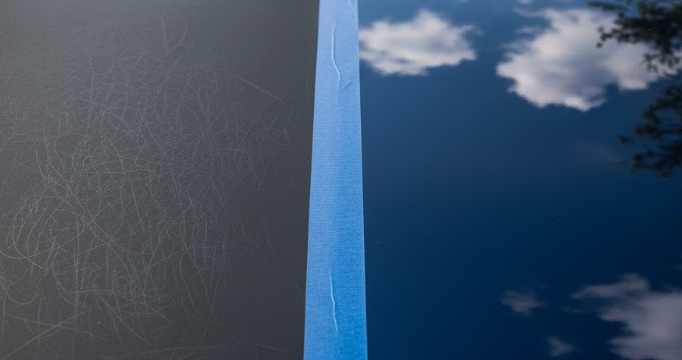
- Swirl marks from bad washing
- Light scratches
- Oxidation from sun exposure
- Dullness from age and contamination
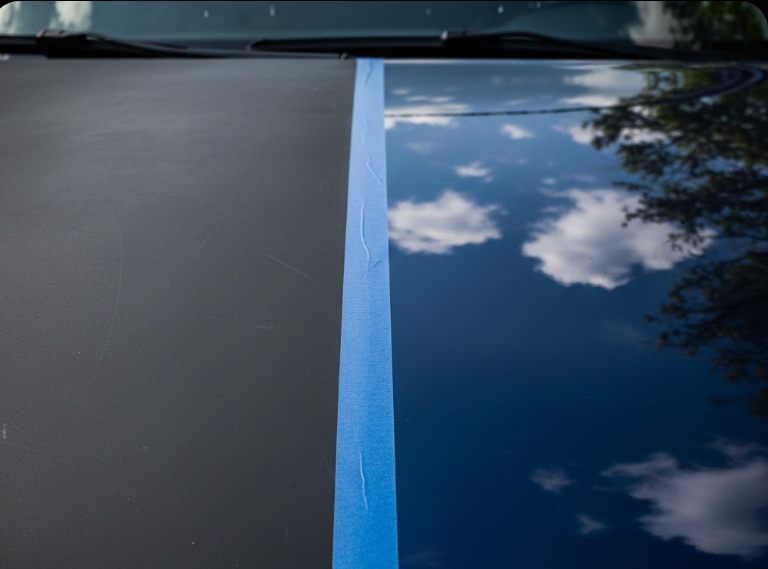
Polishing uses mild abrasives to remove a very thin layer of damaged clear coat. That sounds scary, but we’re talking microscopic levels. You’re not grinding your paint away. You’re leveling it.
When the surface becomes even again, light reflects properly. That’s where the gloss comes from.
After a proper polish:
- Swirl marks are reduced or gone
- Paint looks deeper and clearer
- Color pops again
- Surface feels smooth, not gritty
But here’s the key thing nobody tells beginners: polishing removes protection. Any wax or sealant that was on the paint is gone after polishing.
That means polished paint is exposed paint.
What Waxing Actually Does
Waxing doesn’t fix anything. It doesn’t remove scratches. It doesn’t correct swirl marks. If your paint is already dull, wax will just make dull paint shiny for a short while.
What wax does is protect.
It creates a thin barrier on top of the paint that:
- Protects from UV rays
- Helps repel water
- Reduces dirt sticking to the surface
- Adds slickness and shine
Wax also makes washing easier because grime doesn’t bond as strongly to the surface.
But waxing on damaged paint is like putting clear tape over a cracked phone screen. It might look better for a bit, but the problem underneath is still there.
Why People Get Disappointed With Wax
Most people wax when they actually need polish.
They see scratches, fading, or swirl marks and think “my car needs wax.” They wax it. The car looks better for a week. Then it’s back to looking bad. That’s when people say “waxing doesn’t last” or “wax is overrated.”
The wax didn’t fail. It just wasn’t the right solution.
If the paint is damaged:
- Wax won’t remove the damage
- Shine will fade quickly
- Problems will still show in sunlight
This was exactly my experience. I kept waxing a car that desperately needed polishing.
The Correct Order (This Matters)
This part is important.
If you’re doing both, the order is always:
- Wash the car
- Polish if needed
- Wax last
Never wax first and then polish. Polishing will just remove the wax you just applied, wasting your time and money.
You don’t need to polish every time. In fact, you shouldn’t. Polishing too often removes too much clear coat over the years.
How Often Each One Is Needed
This is where people overdo things.
Polishing:
- Usually once or twice a year max
- Only when paint actually needs correction
- More often if the car is badly neglected
Waxing:
- Every 2–4 months depending on wax quality
- More often if car sits outside
- Less often if you use synthetic sealants
I polish my car about once a year. I wax it every couple of months. That balance keeps the paint looking good without wearing it out.
Hand vs Machine Makes a Difference
Another thing I learned the hard way.
Hand polishing:
- Fine for very light correction
- Limited results
- Safe for beginners
Machine polishing:
- Much more effective
- Can remove deeper defects
- Requires knowledge and care
Waxing by hand is totally fine. Waxing by machine is faster but not necessary.
Polishing by machine gives dramatically better results, but it’s also easier to mess up if you don’t know what you’re doing. This is why people burn paint edges or create holograms.
If you’re unsure, polish lightly or let a pro handle it once, then maintain with wax yourself.
Wax Types Confuse Everyone
Quick breakdown without marketing nonsense:
- Natural carnauba wax: warm shine, shorter lifespan
- Synthetic wax/sealant: longer protection, slightly less “warm” look
- Spray wax: easy, short-lived, good for maintenance
I use synthetic wax because I’m lazy and want protection to last. Some people swear by carnauba. Both work.
Just don’t expect any wax to fix paint damage.
When You Only Need Wax
Wax alone is fine if:
- Paint already looks good
- No visible swirl marks
- No oxidation
- You’re maintaining shine
If your car looks good after washing, wax is perfect.
When You Actually Need Polish
You need polishing if:
- Paint looks hazy in sunlight
- Swirl marks show everywhere
- Color looks faded
- Wax doesn’t seem to “work” anymore
Waxing over that won’t solve anything.
My Real Take After Learning This Properly
Waxing and polishing aren’t rivals. They’re teammates with different jobs.
Polishing is the reset button.
Waxing is the maintenance.
Once I stopped using wax as a miracle cure and started using polish only when needed, my car started looking better for longer with less effort.
If you remember only one thing, remember this:
If the paint is damaged, wax won’t fix it.
If the paint is corrected, wax will keep it that way.
That’s it. That’s the difference.