Self-driving cars are no longer just a futuristic dream. They are becoming a real part of our roads, changing how we think about transportation, safety, and convenience. The technology behind autonomous vehicles (AVs) is evolving rapidly, and 2025 has brought some significant updates that every tech enthusiast and driver should know.
1. Advanced Sensor Fusion
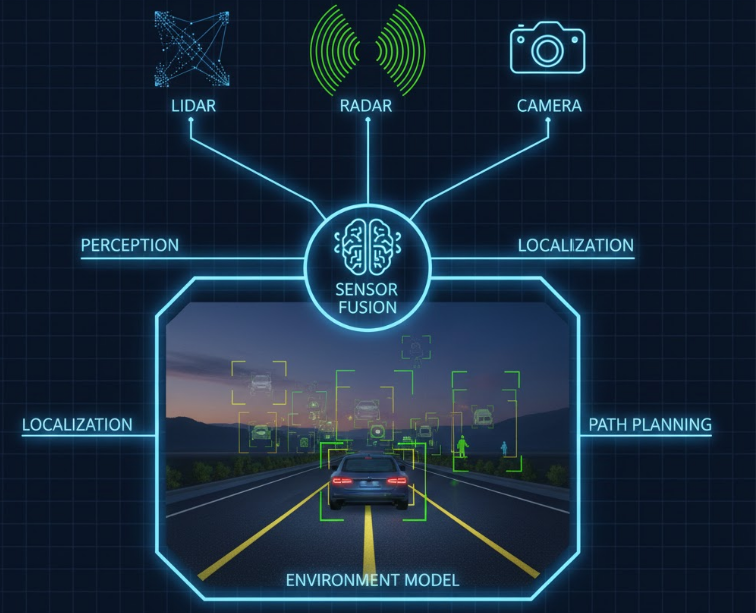
Autonomous vehicles rely on a mix of cameras, radar, LiDAR, and ultrasonic sensors to “see” the world. The latest advancements involve sensor fusion, where data from all sensors is combined to create a highly accurate 3D map of the environment.
This allows self-driving cars to:
- Detect pedestrians, cyclists, and small objects more reliably.
- Operate safely in complex environments like crowded city streets or highways.
- Improve decision-making in poor weather conditions such as heavy rain or fog.
2. AI and Machine Learning Upgrades
The brains of self-driving cars are artificial intelligence systems that interpret sensor data and make driving decisions. Recent breakthroughs include:
- Predictive AI: Modern AVs can anticipate the actions of nearby vehicles and pedestrians, reducing accidents.
- Reinforcement Learning: Cars continuously learn from each driving scenario, making the system smarter over time.
- Edge AI Processing: Real-time computations happen directly inside the car without needing cloud connections, improving safety and response time.
3. V2X Communication
Vehicle-to-everything (V2X) technology allows cars to communicate with other vehicles, traffic lights, and even road infrastructure. The newest developments include:
- Real-time hazard alerts: Cars can warn each other about accidents, roadblocks, or sudden braking.
- Cooperative driving: AVs can coordinate lane changes or merging on highways for smoother traffic flow.
- Smart city integration: Cities are beginning to integrate V2X-enabled traffic lights that optimize signals for autonomous vehicles.
4. Enhanced Safety Features
Safety remains the top priority for autonomous vehicles. Recent updates focus on reducing accidents and improving passenger protection:
- Redundant systems: Critical components like braking and steering now have backups in case of failure.
- Emergency maneuvers: AI can now perform evasive actions autonomously if a collision is imminent.
- Advanced monitoring: In-cabin sensors detect driver or passenger fatigue and adjust safety protocols accordingly.
5. Regulatory and Testing Milestones
Technology alone isn’t enough; regulation shapes how and where self-driving cars operate. Key trends in 2025 include:
- Governments are rolling out standardized testing protocols for Level 4 and Level 5 AVs.
- Some regions allow limited commercial autonomous taxi services, especially in controlled urban environments.
- Insurance companies are adapting to cover autonomous driving liabilities, a critical step toward mainstream adoption.
Final Thoughts
Self-driving cars are evolving faster than most drivers realize. The combination of advanced sensors, AI, V2X communication, and improved safety systems is creating vehicles that are safer, smarter, and more efficient than ever. While full autonomy is still being refined, the road ahead promises a major shift in how we travel.