
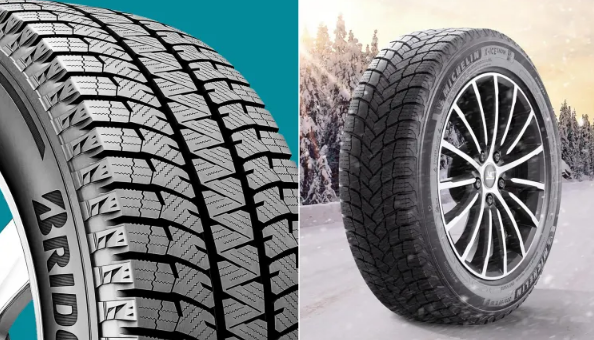
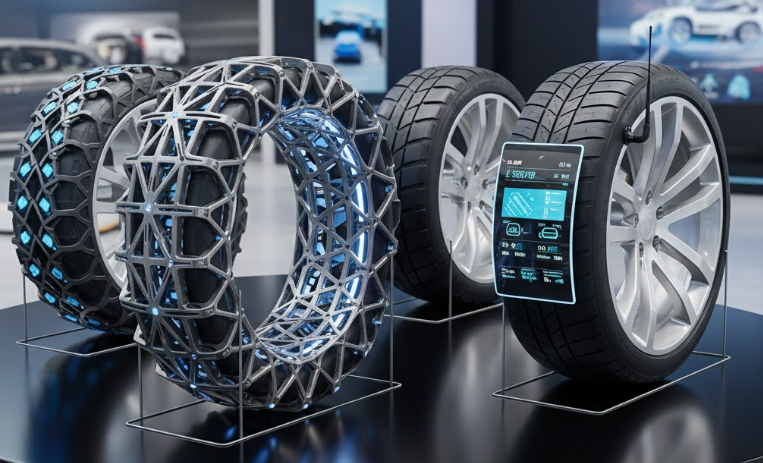
Went to get new tires last month and the sales guy starts pitching me all these fancy new tire technologies. Self-sealing tires, airless tires, smart tires with sensors, all this stuff I’d never heard of. I’m standing there nodding like I understand while internally panicking because I just wanted normal tires that don’t cost a fortune.
Ended up spending two hours researching tire tech in the Discount Tire waiting room because I’m neurotic and can’t make decisions without googling everything seventeen times. Learned way more about modern tire technology than I ever wanted to know.
Some of it’s actually legit innovative stuff that solves real problems. Some of it’s marketing hype for features nobody needs. And some of it’s genuinely cool but so expensive that only rich people or fleet vehicles will actually use it.
Let me break down what’s actually new in tire world, what’s worth caring about, and what’s just companies trying to justify charging you more money.
Airless Tires Are Finally Almost Real
This has been “coming soon” for like 15 years but it’s finally actually happening. Michelin’s Uptis (Unique Puncture-proof Tire System) is supposed to hit the market by 2024-2025. GM’s already testing them on some vehicles.
The concept is simple – no air inside means no flats. The tire has flexible spokes or a honeycomb structure that supports the weight instead of air pressure. Can’t go flat because there’s no air to lose. Genius.
Sounds amazing right? No more flats, no more checking tire pressure, no more getting stranded with a puncture. Just drive and forget about it.
Except there are catches obviously. Always are.
First catch – they’re heavy. Way heavier than regular tires. That affects fuel economy and handling. Your car will feel different and probably worse to drive.
Second catch – they can’t be repaired. Regular tire gets a nail, you patch it for $20. Airless tire gets damaged, you’re buying a whole new tire. They’re basically disposable.
Third catch – ride quality is supposedly worse. No air cushion means harsher ride over bumps. Some testing reviews say it’s noticeable, some say it’s fine. Won’t know until they’re widely available.
Fourth catch – they look weird. Stupid reason to care but people do. Those visible spokes make your car look like a concept vehicle or golf cart. Not exactly sleek.
I’m cautiously interested but skeptical. The flat-proof thing is appealing because I’ve been stranded with flats three times and it sucks every time. But I’m not paying a huge premium and accepting worse performance just to avoid occasional flats that cost $20 to fix.
My prediction – these will be big for commercial fleets, delivery vehicles, military. Maybe eventually trickle down to regular cars if they can solve the weight and ride issues. But we’re years away from these being standard.
Run-Flat Tires That Don’t Completely Suck
Run-flats have been around for a while but new versions are supposedly way better than the early ones that everyone hated.
The idea is the tire has reinforced sidewalls that support the car’s weight even when flat. You get a puncture and can drive 50 miles at 50mph to get somewhere safe instead of being stranded immediately.
Sounds great. Reality is more complicated.
I had run-flats on a BMW I used to own. They worked as advertised – got a nail, tire went flat, drove home on it no problem. Impressive.
But holy hell the ride quality was terrible. So harsh over every bump. Like driving a car with no suspension. Every crack in the road transmitted directly to my spine. Absolutely hated them.
Plus they were insanely expensive to replace. Like $300+ per tire. And they wore out faster than regular tires. And you couldn’t repair them even for minor punctures – had to replace the whole tire.
The new generation run-flats are supposedly better. Companies like Bridgestone and Michelin have improved the tech to reduce harshness while maintaining the run-flat capability. My friend just got some on his new car and says they’re not bad.
Still more expensive than regular tires though. And still can’t be repaired in most cases. And your car needs a TPMS system to warn you when they’re flat because you often can’t tell just by driving.
I’m not getting run-flats again unless they come standard on a car I buy. The convenience isn’t worth the cost and compromises for me. I’ll just carry a spare and AAA membership.
But if you live somewhere remote or do a lot of highway driving where a flat could be dangerous, run-flats make more sense. Just know what you’re signing up for.
Self-Sealing Tires Are Underrated
This tech is way less hyped but way more practical than airless or run-flat tires.
There’s a layer of sealant inside the tire that automatically plugs punctures as they happen. Works on holes up to about 1/4 inch. You get a nail, the sealant flows into the hole and seals it, you keep driving and never even notice.
I’ve had these on my current car for two years. Got a nail at some point – didn’t even know until a tire shop pointed it out during rotation. The sealant had sealed it perfectly. Still holding air pressure fine.
Way cheaper than run-flats. Maybe $20-30 more per tire than regular versions. No performance compromises. No harsh ride. Just works invisibly in the background.
Michelin, Continental, Pirelli all make self-sealing versions of their regular tires now. Not every model but common ones. Just look for “SealTech” or “ContiSeal” or whatever brand-specific name they use.
Limitations – only works on tread punctures not sidewall damage. Won’t save you from a blowout or major damage. And eventually the sealant can dry out if the tires are really old.
But for normal punctures from nails and screws and stuff? Works great. Have prevented at least two flats so far that I know of.
This is the tire tech I actually recommend to people. Costs barely more than regular tires, actually works, no downsides. Just get it.
Smart Tires With Sensors Are Coming
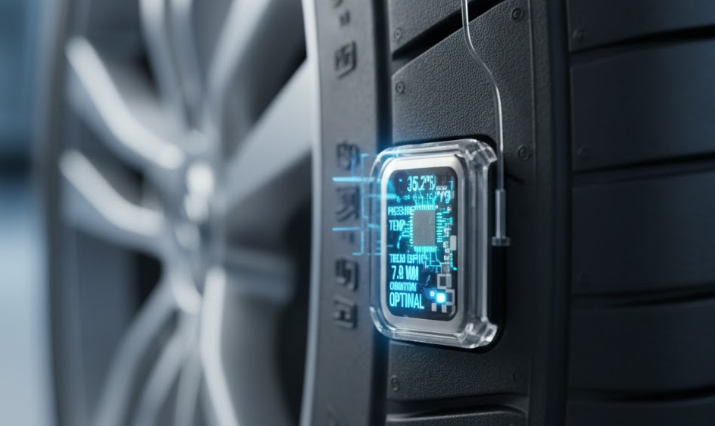
Tires with built-in sensors that communicate with your car to provide real-time data on pressure, temperature, tread depth, wear patterns, all that stuff.
Goodyear and Continental are both working on this. Some high-end cars already have basic versions. The full smart tire concept is still a few years out though.
The pitch is your car will know exactly what’s happening with your tires at all times. Pressure drops? Instant alert. Tread getting low? Warning before it’s dangerous. Tire about to fail? Predictive maintenance warning.
Also enables cool stuff like adjusting tire pressure on the fly for different conditions, or tires that communicate with autonomous vehicle systems to optimize performance.
Sounds futuristic and useful. Also sounds expensive and complicated and one more thing to break and cost money to fix.
I already have TPMS that warns me about pressure. I can check tread depth myself with a penny. Do I really need my tires sending telemetry data to my phone? Probably not.
But for fleet vehicles or people who are terrible at maintenance this could prevent accidents. If your car can literally tell you “tire 3 needs replacement in 500 miles” that’s legitimately helpful for people who ignore their tires until they explode.
Will this become standard eventually? Probably. Do I want it now? Not really. Not at whatever premium price they’ll charge.
I’m fine with dumb tires that just roll. Don’t need my tires to be part of the Internet of Things thanks.
Sustainable Eco-Friendly Tires
Tire companies are trying to make more environmentally friendly tires using sustainable materials and reducing emissions during manufacturing.
Michelin’s experimenting with tires made from like 45% sustainable materials including natural rubber, rice husk ash, recycled materials, stuff like that. Target is 100% sustainable materials by 2050.
Continental has similar initiatives. Goodyear too. Everyone’s doing the green thing because regulations and public pressure.
The tires perform basically the same as regular tires. Maybe slightly worse, maybe slightly better, hard to say. The differences are marginal.
Real question is whether people will pay more for eco-friendly tires. Because they’ll definitely cost more at first even if the performance is identical.
I’m generally pro-environment but also cheap. If eco tires cost the same as regular I’d buy them. If they cost noticeably more I probably wouldn’t unless forced by regulations or limited options.
My guess is this becomes standard over time and eventually there won’t be a choice. All tires will be made from more sustainable materials because that’s what regulations require and what manufacturers can produce economically.
Not really something consumers need to think about much right now. Just awareness that this is happening in the background.
All-Season Performance Tires That Don’t Suck
This isn’t new tech exactly but the latest generation of all-season tires is way better than old ones.
Used to be all-season meant mediocre at everything. Bad in snow, bad in summer heat, loud, short tread life. Just compromise tires for people who didn’t want to swap between summer and winter tires.
New all-season performance tires are actually good. Michelin CrossClimate 2, Continental CrossContact, Bridgestone WeatherPeak – these are legitimately capable in snow while also being decent in dry conditions.
I switched to CrossClimate 2 tires last year. They handle snow way better than my old all-seasons. Not winter tire level but good enough that I don’t need dedicated winter tires anymore. Plus they’re quiet and comfortable and getting decent tread life so far.
Only downside is they’re not as good as dedicated summer tires in hot dry conditions. Less grip, longer stopping distances. But the trade-off is worth it for me to not deal with swapping tires seasonally.
This is relevant tech because it’s actually changing what tires people buy. More people are going with these newer all-seasons instead of maintaining two sets of tires. Makes sense for most drivers who don’t live in extreme climates or drive aggressively.
If you’re in the market for tires and you don’t want to deal with seasonal swaps, check out the latest all-season options. They’re genuinely good now instead of just acceptable compromises.
Noise-Canceling Tires Are A Thing Now
Some premium tires have sound-absorbing foam inside them to reduce road noise. Continental PremiumContact, Pirelli Noise Cancelling System, Michelin Acoustic Technology – bunch of brands doing this.
There’s a polyurethane foam layer attached to the inside of the tire that absorbs sound vibrations before they reach the cabin. Supposedly reduces interior noise by like 20-30%.
My friend has these on his Lexus. Says his car is noticeably quieter inside. I drove it and yeah it’s quiet but his car’s also a luxury sedan with tons of sound insulation so hard to say how much is the tires versus everything else.
The tires cost more obviously. Like $50-100 per tire premium over non-acoustic versions. For the same exact tire just with foam added.
Worth it? If you’re already buying expensive premium tires for a luxury car and you value quiet, sure. If you’re buying budget tires for a 15-year-old sedan, definitely not.
I tried these on my car for one set. They were quieter I guess? Hard to tell honestly. Might have been placebo. When those wore out I went back to regular tires and saved the money. Didn’t miss the acoustic feature.
This feels like one of those premium features that’s nice to have but not essential. If it comes standard great. If you’re paying extra for it, probably not worth it for most people.
Color-Changing Tires For People With Too Much Money
Goodyear showed off concept tires that change color based on temperature or customizable LED patterns or whatever. They’re not actually available to buy but they’re working on it.
Why would you want this? No practical reason. Pure aesthetics. Your tires could match your car’s color scheme or change colors as you drive.
This is so dumb and I kinda want it. Not at any reasonable price but if these were like $50 per tire I’d absolutely buy color-changing tires just for the absurdity.
Reality is they’ll probably cost $500 per tire when they come out and only rappers and Instagram influencers will buy them. And they’ll probably break after six months and look terrible when dirty.
But I appreciate the innovation even if it’s completely pointless. Someone asked “what if tires could change colors” and actually made it happen. That’s cool even if it’s useless.
Not holding my breath for these to be available or affordable anytime soon. But if they ever do become cheap and reliable I’m 100% getting them just to annoy my girlfriend who already thinks my car hobby is ridiculous.
3D Printed Tires And Modular Designs
Michelin’s been showing off concept tires that are 3D printed and modular. You can replace just the tread when it wears out instead of the whole tire. The structure is permanent, the tread is swappable.
Also enables custom tread patterns for specific uses. Need more grip? Print aggressive tread. Need efficiency? Print low rolling resistance tread. Same tire, different treads.
This is brilliant if they can actually make it work. Would reduce waste massively and make tire maintenance way easier and cheaper.
But it’s very much still concept phase. Not available to buy. Maybe never will be. Tire companies love selling complete new tires, not just replacement treads. The business model doesn’t incentivize this even if the tech works.
I’m skeptical this comes to market anytime soon because it cannibalizes tire sales too much. Why would Michelin make tires that last forever and only need cheap tread replacements when they can keep selling complete new tires every few years?
Would be amazing for consumers though. Hope I’m wrong and they actually bring this to market. But not holding my breath.
Pressure-Adjusting Tires For Different Conditions
Some military and off-road vehicles have systems that can adjust tire pressure on the fly. Drive on pavement at normal pressure, hit sand or mud and automatically lower pressure for more traction, then pump back up for pavement.
This tech is slowly coming to consumer vehicles. Some high-end trucks have it. Rivian and some others are implementing it.
For normal people driving normal cars on normal roads this doesn’t matter. But if you do serious off-roading or live somewhere with varied terrain it’s genuinely useful.
I’ve manually aired down my tires for beach driving and it makes a huge difference. But doing it with a compressor is slow and annoying. Having it automatic would be awesome.
Not something most people need but cool that it exists and is becoming more available. Another thing that’ll probably be standard on adventure-focused vehicles eventually.
What’s Actually Worth Caring About
Most of this stuff is either not available yet, too expensive, or solving problems most people don’t have.
The technologies worth actually caring about right now:
Self-sealing tires – available now, reasonably priced, actually prevent flats. Just get these.
Modern all-season performance tires – if you don’t want to swap tires seasonally, the newest ones are actually good. Big improvement over old all-seasons.
TPMS – already standard on new cars but if you have an older car, add-on TPMS is cheap and useful. Monitoring tire pressure actually matters.
That’s basically it for current practical tech. Everything else is either:
Not available yet – airless tires, 3D printed tires, most smart tire features
Too expensive – run-flats, noise-canceling foam, fancy sensor systems
Unnecessary – color-changing tires, extreme off-road pressure systems if you’re not off-roading
Incremental improvement – sustainable materials are good but you won’t notice any difference
The tire industry is innovating but most of it hasn’t trickled down to normal consumer tires yet. Give it 5-10 years and some of this stuff will be standard. Right now it’s mostly concept vehicles and premium options.
What I’d Actually Buy
If I was shopping for tires today I’d get:
Modern all-season tire from a reputable brand with self-sealing technology. Michelin CrossClimate 2 with SealTech or equivalent from Continental or Bridgestone.
Costs maybe $150-200 per tire installed. Handles all weather reasonably well, prevents most flats, lasts 50-60k miles, rides comfortably, doesn’t make weird noise.
I wouldn’t pay extra for:
- Run-flat (too expensive, harsh ride)
- Noise-canceling foam (marginal benefit)
- Smart sensors beyond basic TPMS (unnecessary complexity)
- Any concept tech that isn’t proven yet
For most people this is the right balance of cost, performance, and new technology that actually helps.
If you live somewhere with brutal winters add dedicated winter tires. If you drive a performance car add summer performance tires for warm months. But for normal daily driving, modern all-seasons with self-seal is the move.
The Frustrating Reality
Tire technology has improved significantly but it’s not revolutionary. Tires are still round rubber things you replace every few years. The fundamental design hasn’t changed.
All this innovation is incremental. Slightly better in rain. Slightly longer lasting. Slightly quieter. Slightly more eco-friendly. Adds up to better tires overall but nothing game-changing.
The really cool stuff like airless tires and 3D printed modular designs is years away from being affordable and practical. Maybe I’ll see it before I die. Maybe not.
For now we’re stuck with regular tires that are marginally better than they used to be. Which is fine. Tires work pretty well already. They don’t need to be revolutionized.
Still gonna be excited if airless tires become affordable and practical though. Would love to never worry about flats again. Just not holding my breath waiting for it.
Stop Overthinking This And Just Buy Good Tires
Real talk – most people don’t need to care about tire technology. Just buy quality tires from reputable brands, maintain them properly, replace them when worn.
Michelin, Continental, Bridgestone, Goodyear, Pirelli – all make good tires. Get whatever’s on sale or recommended for your car and driving conditions. You’ll be fine.
The technology stuff is interesting but not essential. Self-sealing is worth getting if available. Everything else is optional based on your specific needs and budget.
Don’t let tire sales people upsell you on expensive tech features you don’t need. Most of it is marketing hype. Stick with proven reliable tires and spend your money elsewhere.
My tire journey – started with cheap garbage tires, upgraded to mid-range quality tires with self-seal, been happy ever since. All the fancy tech stuff is cool but hasn’t improved my actual driving experience enough to justify the cost.
Your tires need to be safe and appropriate for your climate. Beyond that you’re just optimizing at the margins. Get something good enough and move on with your life.
Now if you’ll excuse me I need to go check my tire pressure because I haven’t done that in like three months and I’m a hypocrite giving tire advice while neglecting basic maintenance. Do as I say not as I do or whatever.