
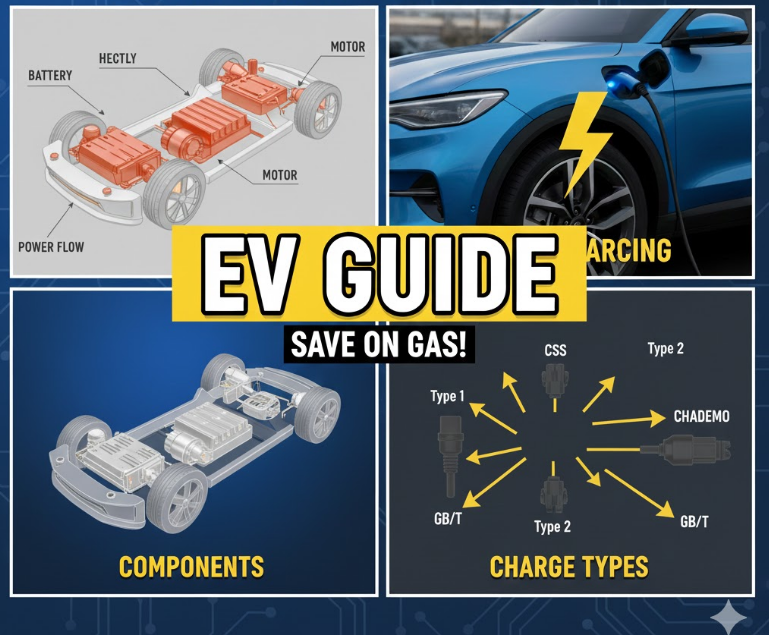
Electric vehicles (EVs) are no longer a futuristic concept — they’re on roads everywhere, from city streets to highways. But if you think an EV is just “a car with a battery,” you’re missing half the story. Understanding how they work and why they’re different helps you drive smarter, maintain them properly, and evaluate if one makes sense for you.
This guide breaks it all down: what an EV is, how it operates, the types of EVs, and why they’re reshaping the automotive world.
What Defines an Electric Vehicle?
At its core, an EV is a vehicle powered entirely or partially by electricity, not traditional gasoline or diesel. Unlike conventional cars, EVs don’t rely on an internal combustion engine to generate power. Instead, they use:
- Electric motors for propulsion
- Rechargeable batteries for energy storage
- Power electronics to manage energy flow
The result is smoother acceleration, less maintenance, and no tailpipe emissions.
Types of Electric Vehicles
EVs come in multiple forms, depending on how they integrate electricity with other power sources.
1. Battery Electric Vehicles (BEVs)
- Fully electric; no gasoline engine
- Examples: Tesla Model 3, Nissan Leaf
- Charged via plug-in charging stations or home outlets
2. Plug-in Hybrid Electric Vehicles (PHEVs)
- Electric motor plus small gasoline engine
- Can drive on electric power alone for short distances
- Example: Toyota Prius Prime, Ford Escape PHEV
3. Hybrid Electric Vehicles (HEVs)
- Primarily gasoline engine with electric assist
- Battery charges through regenerative braking; no plug-in
- Example: Standard Toyota Prius
The key difference is range and charging method. BEVs rely completely on battery; hybrids blend electric and gas for extended distance.
How an Electric Vehicle Works
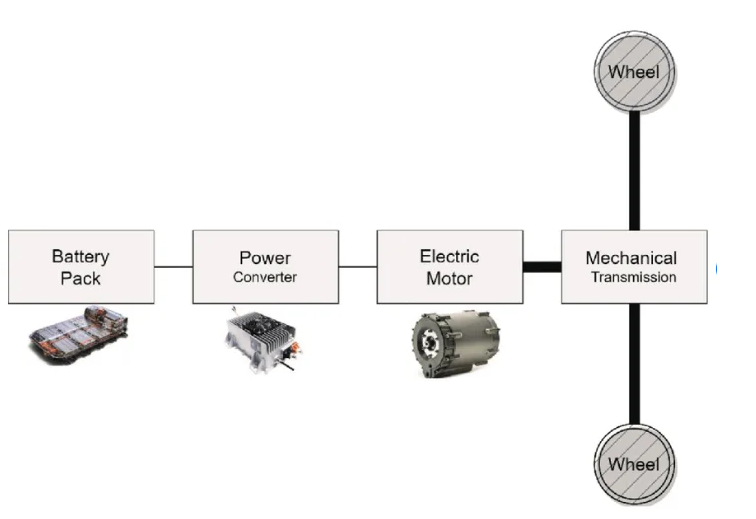
EVs operate differently from gasoline cars, but it’s not rocket science. Here’s the simplified flow:
- Battery stores electricity — large lithium-ion packs in modern EVs
- Power electronics regulate energy — controls motor speed, torque, and efficiency
- Electric motor drives wheels — instant torque delivers smooth acceleration
- Regenerative braking recycles energy — slows the car while charging the battery
Because EVs have fewer moving parts than combustion engines, maintenance is simpler: no oil changes, no timing belts, no fuel filters. That’s a major advantage many drivers underestimate.
Advantages of Electric Vehicles
- Environmentally friendly — zero tailpipe emissions
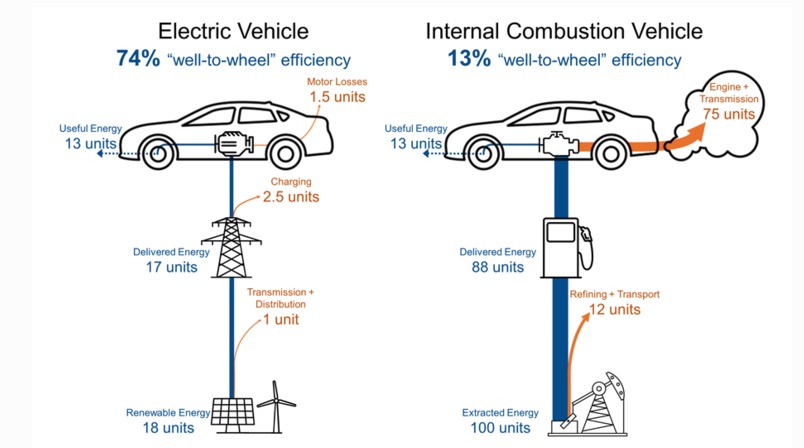
- Lower running costs — electricity is cheaper than gas; fewer maintenance needs
- Instant torque and smooth acceleration — EVs feel fast even at low speeds
- Quiet operation — no engine noise
- Energy efficiency — regenerative braking recovers energy lost in traditional braking
Limitations You Should Know
EVs aren’t perfect. Misunderstanding their limits is costly:
- Charging infrastructure — long-distance travel may require planning
- Battery degradation — performance slowly declines over years
- Higher upfront cost — EVs are more expensive initially, though incentives often help
- Cold weather efficiency — batteries perform worse in extreme temperatures
Understanding these limits prevents unrealistic expectations and frustration.
Why Electric Vehicles Matter Now
EVs aren’t just about tech trends — they’re a solution to growing environmental and economic pressures:
- Reduce greenhouse gas emissions
- Cut urban air pollution
- Lower reliance on fossil fuels
- Support renewable energy integration
Governments and manufacturers are heavily investing in EV adoption because it’s the future of transportation, and early understanding gives you a head start.
Final Reality Check
An electric vehicle is more than a plug-in car — it’s a different approach to mobility. It prioritizes efficiency, simplicity, and environmental responsibility. Knowing the types, mechanics, and limitations helps you:
- Choose the right EV for your lifestyle
- Avoid unexpected frustrations
- Maximize battery life and performance
Whether you want to own one or just understand them, EVs are no longer optional knowledge — they’re essential automotive literacy.