
What causes tire sidewall cracks? This is one of those things people notice while washing their car or checking air pressure and suddenly feel a knot in their stomach. The tread still looks okay. The car drives fine. But there they are — little lines, splits, or dry-looking cracks on the side of the tire. And the big question hits: Is this dangerous, or am I overthinking it?
The truth is, sidewall cracks don’t happen randomly. Tires crack because something has been slowly breaking the rubber down over time. And once sidewall cracking starts, it’s not cosmetic — it’s structural.
The most common cause, by far, is age. Even if a tire hasn’t been driven much, rubber doesn’t last forever.
• Tires harden as they age
• Oils in the rubber dry out
• Flexibility disappears
Most tires start showing signs of aging after about five to six years, sometimes sooner in hot climates. A tire can look “new” because the tread is deep, but the sidewall tells the real story.
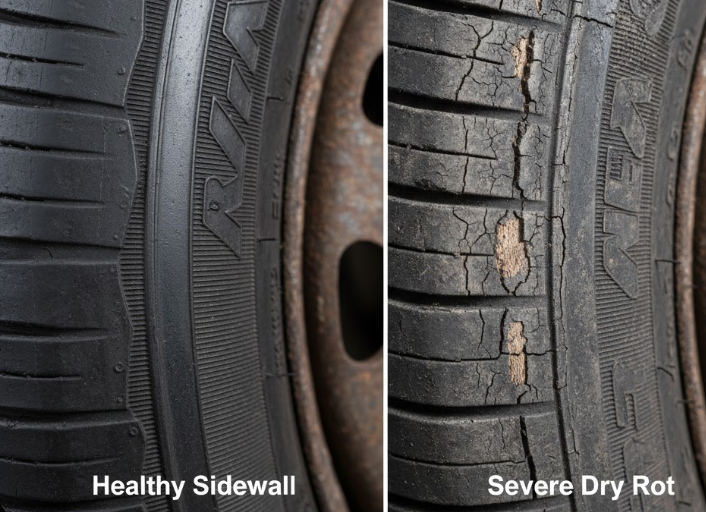
Another major cause is sun and heat exposure. Tires hate UV light.
• Constant parking in direct sunlight
• Hot climates
• Long periods of sitting outside
Heat speeds up rubber breakdown. Sunlight pulls moisture and protective oils out of the sidewall, causing it to dry, shrink, and crack. This is why cars parked outdoors age their tires much faster than garage-kept cars.
Underinflation plays a big role too.
• Low air pressure makes the sidewall flex more
• Excessive flex generates heat
• Heat weakens the rubber structure
When a tire runs low for long periods, the sidewall is doing extra work every time the wheel turns. That constant bending causes micro-cracks that slowly grow.
Overinflation can also contribute, though in a different way.
• Sidewalls become stiff
• Less ability to absorb impact
• Rubber becomes more brittle
Instead of flexing naturally, the sidewall takes stress directly, especially over bumps and potholes.
Poor road conditions matter more than people think.
• Potholes
• Curbs
• Rough or broken roads
Even if you don’t see damage right away, repeated impacts weaken the sidewall internally. Over time, that stress shows up as cracking.
Cheap or low-quality tires are another factor people don’t like admitting.
• Lower rubber quality
• Fewer protective compounds
• Faster aging
Budget tires can work fine short-term, but they often age faster than premium ones, especially in harsh conditions.
Improper storage causes cracking too, especially for spare tires.
• Sitting unused for years
• Exposure to moisture
• Temperature swings
A tire that doesn’t move still ages. In fact, sometimes it ages faster because the rubber never flexes evenly.
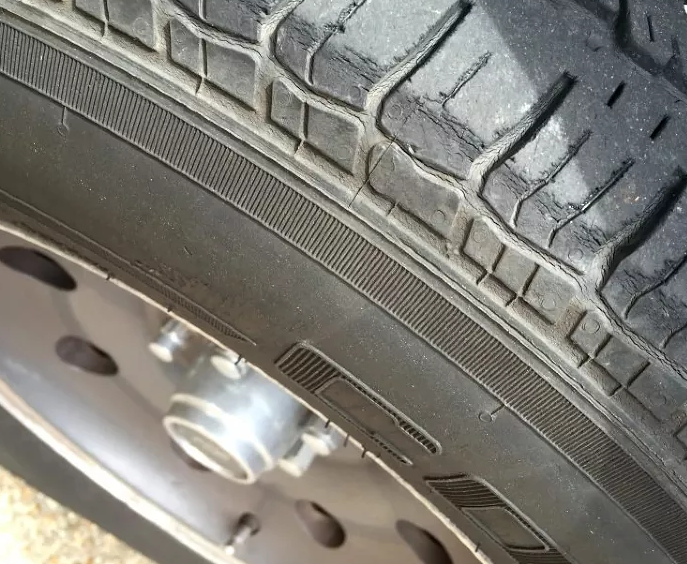
Chemical exposure is another sneaky cause.
• Harsh tire cleaners
• Petroleum-based products
• Road chemicals
Some shiny tire dressings look good but actually strip protective oils from the rubber over time, accelerating cracking instead of preventing it.
Now here’s the part people really want to know: are sidewall cracks dangerous?
Small surface cracks can start as cosmetic, but sidewall cracking is never something to ignore. The sidewall carries the load of the car. Once cracks deepen, the risk of a blowout increases — especially at highway speeds.
If cracks are:
• Deep
• Widespread
• Reaching into the rubber layers
The tire is no longer safe, even if it holds air.
The honest takeaway is this: sidewall cracks mean the tire is aging out, not wearing out. Tread depth doesn’t matter anymore at that point. The structure is compromised.
People often try to squeeze “a little more life” out of cracked tires. That’s a gamble, not a savings. Tires don’t usually fail slowly — they fail suddenly.