
Changed my spark plugs for the first time at like 120k miles because I’m terrible at maintenance and kept ignoring the misfires. Car was running like garbage – rough idle, hesitation, check engine light blinking at me. Finally admitted I needed new plugs.
Went to the parts store and stood in the spark plug aisle for like 20 minutes completely overwhelmed. Copper ones for $3 each. Platinum for $8. Iridium for $15. Double platinum, double iridium, whatever those mean. Every box claiming to last 100k miles.
Bought the cheapest copper ones because I’m cheap and figured spark plugs are spark plugs. Installed them myself, car ran great again. Felt like a genius saving money.
Those copper plugs lasted maybe 15k miles before the car started running rough again. Had to change them again way sooner than expected. Ended up spending more replacing them twice than if I’d just bought the good ones first time.
Finally learned my lesson and got iridium plugs. Been like 60k miles and they’re still going strong. Should’ve just done that from the beginning.
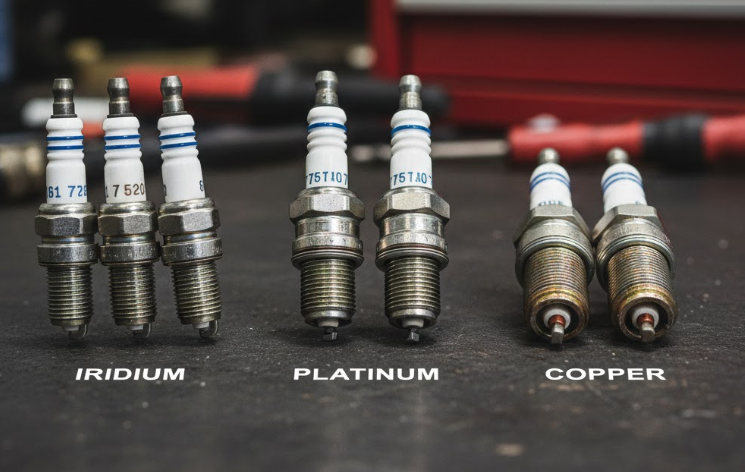
The Three Types And What Actually Lasts
Copper plugs – these are the cheap ones. Center electrode is copper (technically copper core with nickel alloy coating). They conduct electricity really well but wear out fast.
Lifespan is like 20-30k miles max. Some people say 10-15k. Depends on your engine and driving. Either way they’re the shortest-lived option.
I’ve used copper plugs twice. First time they lasted 15k miles. Second time maybe 20k. They work fine when new but degrade noticeably toward the end. Rough idle comes back, gas mileage drops, performance gets sluggish.
Only reason to buy copper is if you’re broke or your car specifically requires them (some older engines do). Otherwise they’re false economy – cheap upfront but you’re replacing them constantly.
Platinum plugs – center electrode has platinum tip. Way more durable than copper. Last maybe 60-80k miles typically.
These are the middle option. Cost more than copper but less than iridium. Last way longer than copper but not as long as iridium.
Never actually used platinum plugs myself. Went straight from copper to iridium after my first mistake. But my friend runs platinum in his truck and they’ve been fine for like 50k miles so far.
Iridium plugs – center electrode is iridium which is super hard and heat resistant. These last 80-120k miles depending on the plug and engine.
This is what I use now. Cost like $12-15 per plug which seemed expensive but they’ve lasted forever. 60k miles in and the car still runs perfect. No degradation in performance or fuel economy.
Some plugs are “double iridium” with iridium on both the center and ground electrode. Supposed to last even longer. I got regular iridium and they’re lasting plenty long already.
Brands That Actually Hold Up
Tried a few different brands over the years. Some lived up to the hype, some didn’t.
NGK iridium – these are what I’m running now. NGK IX plugs. Zero complaints after 60k miles. Car runs like new still. These are probably the most popular iridium plugs for good reason.
Japanese brand, been making plugs forever, OEM for tons of manufacturers. Hard to go wrong with NGK.
Denso iridium – also Japanese, also OEM for lots of cars. My neighbor runs these in his Honda and swears by them. Haven’t tried them personally but they have the same reputation as NGK.
Bosch platinum – had these in a previous car. Lasted about 70k miles before I sold the car. Worked fine the whole time. Bosch is German, makes quality stuff.
Champion – bought these once because they were on sale. Regretted it. One plug failed after like 8k miles. Maybe I got unlucky but I don’t buy Champion anymore.
Autolite – another budget brand. Used these copper plugs that died in 15k miles. They work but nothing special. Wouldn’t buy again.
Motorcraft – Ford’s brand. If you’ve got a Ford just get these. They’re OEM and priced reasonably. Friend has them in his F-150 and they’re fine.
Honestly just stick with NGK or Denso iridium and you’ll be happy. They cost a bit more but they’re worth it.
The Gap Thing Nobody Explains
Spark plug gap is the distance between the center and ground electrode. This matters for how well the plug fires.
Plugs come pre-gapped from the factory but the gap can change during shipping or installation. You’re supposed to check and adjust the gap before installing.
I didn’t know this for years. Just installed plugs straight from the box without checking. Sometimes they worked fine, sometimes the car ran weird.
Finally learned you need a gap tool to check and adjust. It’s like $3 at any parts store. Just measure the gap and bend the ground electrode carefully to match your car’s spec.
The spec is in your owner’s manual or you can Google it. Usually like 0.040″ to 0.060″ depending on the engine.
I gapped my current plugs properly before installing and the car runs noticeably better than when I didn’t bother. Takes an extra 10 minutes but makes a real difference.
Don’t gap iridium plugs by bending though – the electrode is too brittle and will break. Measure them but don’t adjust unless you absolutely have to. Buy pre-gapped iridium if possible.
Heat Range Confusion
Spark plugs have a “heat range” that needs to match your engine. Get it wrong and you’ll have problems.
Hotter plugs burn off deposits better but can cause pre-ignition in high-performance engines. Colder plugs resist pre-ignition but can foul in low-performance engines.
For stock engines just get the plugs your manual recommends and don’t overthink it. The manufacturer already figured out the right heat range.
I tried “one step colder” plugs once because some forum said it helps performance. It didn’t. They fouled after like 5k miles. Went back to stock heat range and everything was fine.
Unless you’ve heavily modified your engine, stick with OEM heat range specs. Don’t get creative.
Installation Mistakes I Made
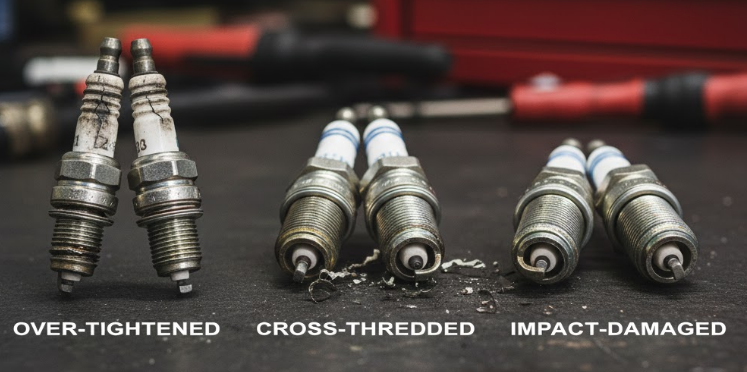
Over-tightening – did this on my first plug change. Thought more tight = more secure. Stripped the threads in one hole. Had to get it helicoiled which cost like $150.
Spark plugs have specific torque specs. Get a torque wrench and follow them. Usually like 15-20 ft-lbs depending on the plug.
Wrong gap – already mentioned this but bears repeating. Check and adjust gap before installing.
Not using anti-seize – some people say use it, some say don’t. I use a tiny amount on the threads. Helps with removal later. Don’t use too much though.
Installing dry – should’ve put a bit of dielectric grease inside the boot where it connects to the plug. Prevents moisture and makes removal easier.
Mixing old and new – replaced only the bad plugs instead of doing all of them. Different wear levels made the engine run uneven. Just do them all at once.
Dropping one – dropped a new iridium plug on concrete. Damaged the electrode. $15 down the drain. Be careful, they’re fragile.
When To Actually Replace Them
Don’t wait until your car runs like garbage like I did. Replace plugs at the recommended interval even if the car seems fine.
Signs you need new plugs:
- Rough idle
- Hesitation or stumbling when accelerating
- Misfires (check engine light flashing)
- Hard starting
- Reduced fuel economy
- Loss of power
But honestly by the time you notice these symptoms your plugs are already toast. Better to replace preventatively.
Check your manual. If it says 100k miles for iridium, maybe do them at 80-90k. Don’t push it to the absolute limit.
I pushed copper plugs way past their lifespan and paid for it with poor performance and wasted gas. Not worth trying to squeeze extra miles out of old plugs.
The Cost Math
Let’s say you drive 15k miles per year:
Copper plugs at $3 each (4-cylinder):
- $12 every 20k miles = $12 per 20k miles
- Over 100k miles = replace 5 times = $60 total
- Plus your time installing 5 times
Iridium plugs at $15 each:
- $60 once every 100k miles = $60 total
- Install once and forget
Same total cost but way less hassle with iridium. Plus iridium maintains performance better over time so your fuel economy stays good.
For 6 or 8 cylinder engines multiply everything but the logic stays the same. Iridium wins on convenience even if the upfront cost seems high.
This is before factoring in the value of your time. I’d way rather install plugs once than five times over 100k miles.
Specialty Situations
High-performance engines – might need specific plugs designed for the extra stress. Don’t cheap out here. Get what the manufacturer recommends.
Turbo/supercharged – same deal. These engines run hotter and harder. Use quality plugs rated for forced induction.
Old cars – some older engines actually run better on copper plugs. Check enthusiast forums for your specific car.
Modified engines – if you’ve done serious mods you might need different plugs. Consult whoever tuned your car.
Daily drivers – just get iridium and stop thinking about it. They last forever and work great.
My current car is a boring commuter so NGK iridium plugs are perfect. If I had a sports car or project car I’d research more carefully.
DIY vs Shop Installation
Spark plugs are DIY-friendly on most cars. Some are easier than others.
Easy cars:
- 4-cylinder with easy engine access
- Plugs right on top, nothing in the way
- Can do it with basic tools in an hour
Hard cars:
- V6 or V8 with rear plugs buried under intake manifolds
- Transverse V6 where back plugs are against the firewall
- Anything requiring removal of multiple components to access plugs
I’ve done plugs on easy cars and it’s fine. Takes an hour, saves like $100 in labor. On hard cars I pay someone because it’s not worth the frustration.
My current car is easy – 4-cylinder with plugs right on top. Takes 45 minutes including gap checking. Would definitely pay for labor on a harder car.
If you’re not confident doing it yourself, pay for installation. Messing it up costs way more than labor would’ve.
The Ceramic Warning
Spark plug ceramic can crack if you drop it or hit it wrong. Cracked ceramic means the plug is trash.
I’ve broken probably three spark plugs just from clumsiness. They’re more fragile than you’d think.
Handle them carefully during installation. Don’t drop them. Don’t bang them against anything. Don’t force them if they’re not threading in smoothly.
Once they’re installed properly they’re fine. Just be gentle getting them there.
Also don’t overtighten trying to “make sure they’re secure.” The ceramic will crack under too much torque. Use a torque wrench, follow specs, done.
Actual Durability Rankings
Based on my experience and research:
Most durable: Double iridium (100-120k+ miles)
Very durable: Single iridium (80-100k miles)
Decent: Platinum (60-80k miles)
Not durable: Copper (15-30k miles)
The durability gap between copper and iridium is massive. The cost gap is not. Get iridium unless you have a specific reason not to.
Even if you’re broke, spending an extra $50 for plugs that last 5x longer is worth it. You’ll save on labor (or your time) not having to change them constantly.
My Final Recommendation
Just get NGK or Denso iridium plugs for your car. Check the gap before installing. Torque them properly. Forget about them for 100k miles.
That’s it. Don’t overthink this.
I wasted money and time trying to save a few bucks on copper plugs. Then I wasted mental energy researching every plug option trying to find the “perfect” choice.
Iridium from a reputable brand is the answer for 95% of people. They last forever, they work great, they’re reasonably priced considering the lifespan.
Stop reading reviews trying to find the ultimate spark plug. They’re all pretty similar at the iridium level. Just pick one and move on.
Now go check when you last changed your plugs because I bet it’s been way longer than you remember and you’re probably due. Don’t be like me waiting until your car runs like crap before dealing with it.