
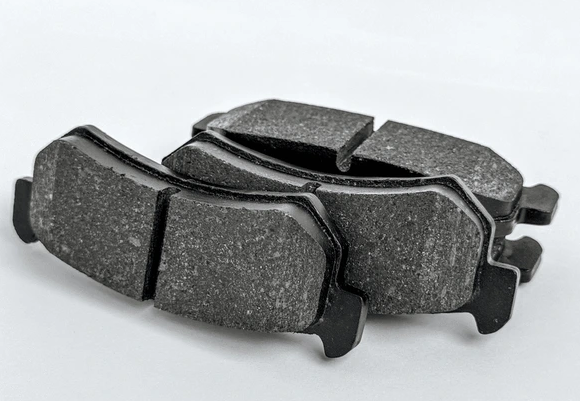
Had to replace my brake pads last year and went down this massive rabbit hole trying to figure out which brand to get. Turns out there’s like fifty different brands and everyone has a strong opinion about them.
My mechanic recommended one brand. The guy at AutoZone recommended another. Online forums were arguing about completely different brands. I spent three days reading reviews and watching YouTube videos before I finally just picked something.
Six months later I’m pretty happy with what I got, but I also learned way more about brake pads than I ever thought I’d need to know. The whole “best brand” question is way more complicated than it seems.
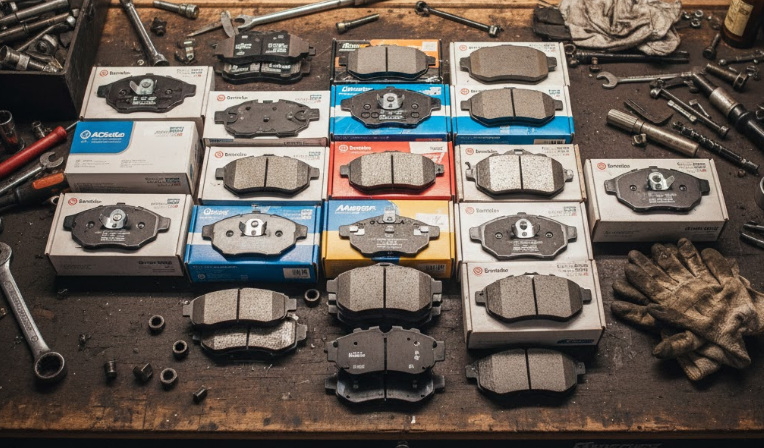
There’s No Single “Best” Brand
This is the frustrating part – the best brake pad brand depends on what you’re doing with your car and what you care about.
Someone daily driving a Camry has completely different needs than someone tracking a Mustang on weekends. The brake pads that are perfect for one person might be terrible for another.
I drive a Civic mostly in city traffic. My priorities are: don’t make noise, stop the car reliably, don’t cost a fortune, and don’t create a ton of brake dust. That narrowed down my choices significantly.
The Brands Mechanics Actually Recommend
Asked my mechanic and a few others what they use on their own cars. Here’s what kept coming up:
Akebono – Japanese brand, known for being quiet and low dust. Pricier but people say they last.
Wagner – Been around forever, solid mid-range option. Mechanics trust them.
Raybestos – Another old-school American brand. Lots of options for different driving styles.
Centric – Popular with shops, good quality for the price.
Bosch – European brand, decent quality, widely available.
These aren’t necessarily the “best” but they’re brands that mechanics see work well consistently. That counts for something.
The Premium Brands That Cost A Lot
Then there’s the expensive stuff that performance car people swear by:
Brembo – Italian brand, makes everything from OEM to race pads. Their premium stuff is $$$ though.
EBC – British company, tons of different pad compounds for different uses. Popular with car enthusiasts.
Hawk Performance – American brand focused on performance. Different compounds for street, track, etc.
StopTech – High-end stuff, mostly for performance applications.
I looked at EBC pads for my Civic. They were like $120 for the front when the Wagner pads were $45. For my daily driver that seemed excessive.
But if I had a sports car I tracked regularly? I’d probably spend the money on better pads.
My Experience With Different Brands
Over the years I’ve had various brake pads on different cars. Here’s what actually happened:
Generic AutoZone pads (Duralast) – First car, went cheap. They squealed constantly. Super annoying. Wore out faster than better pads too.
Akebono ceramic – Got these on my Accord. Quiet, smooth, minimal dust. Lasted like 60k miles. No complaints but they were expensive.
Wagner ThermoQuiet – What I have now on my Civic. Been really happy with them. Quiet, good stopping power, reasonable price around $50 for front pads.
OEM Honda pads – My friend pays dealership prices for original Honda pads. They work great but cost like triple what aftermarket costs. Not worth it in my opinion.
Unknown cheap pads on used car – Bought a used car that had sketchy pads on it. They made horrible grinding noises and barely stopped the car. Replaced immediately.
The pattern I noticed is that mid-range brand name pads work way better than cheap generic ones, but super premium pads aren’t necessarily worth the extra cost for normal driving.
Ceramic vs Semi-Metallic vs Organic
This confused me for a while. Brake pads come in different materials and each has tradeoffs:
Ceramic pads – Quietest, least dust, smoother braking feel. More expensive. Don’t work as well cold. What most people want for daily driving.
Semi-metallic – Better stopping power, work well in all temperatures. Noisier, more dust, harder on rotors. Good for performance use or towing.
Organic (NAO) – Softest, quietest, cheapest. Wear out fastest. Not great for modern cars.
I went with ceramic Wagner pads because I wanted quiet operation and low dust. They’ve been perfect for city driving.
My friend tows a trailer with his truck and uses semi-metallic pads for the extra stopping power. Makes sense for his use case.
The Noise Issue Is Real
Cheap brake pads squeal. It’s just a fact. That high-pitched squealing when you brake is embarrassing and annoying.
I had those cheap Duralast pads on my first car and they squealed every single time I braked. Sounded like I was murdering a pig. People would turn and stare.
Better pads with proper installation rarely squeal. The difference is dramatic.
That said, some squealing can be from installation issues – missing shims, not using brake grease, contaminated pads. Even good pads can squeal if installed wrong.
When I installed my Wagner pads I made sure to use the anti-squeal shims and brake grease on the backs. Zero noise issues since.
Brake Dust Is More Annoying Than You Think
Brake dust is that black grimy stuff that coats your wheels. It’s tiny particles of brake pad and rotor material.
Some pads create way more dust than others. Semi-metallic pads especially are dust factories.
My old Accord had ceramic Akebono pads and I barely had to clean my wheels. My friend’s car with cheap pads has wheels that turn black in like two weeks.
If you care about keeping your wheels clean, ceramic pads are worth the extra money just for the reduced dust alone.
I wash my car regularly and the Wagner ceramic pads have been great for keeping dust under control.
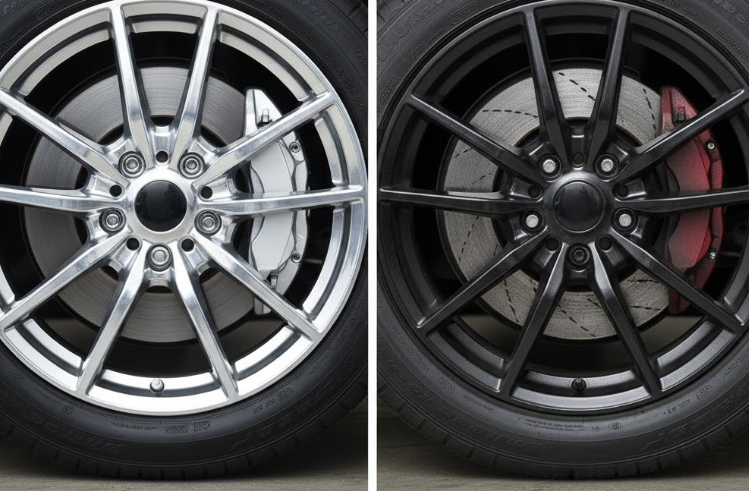
The Performance Car Situation
If you have a performance car or track your car, everything I’ve said goes out the window.
You need pads that can handle repeated hard stops from high speed without fading. That requires different materials and compounds.
EBC, Hawk, Brembo all make performance pads with different compounds for different track conditions. People get really nerdy about this.
I’m not qualified to recommend track pads because I don’t track cars. But I know the regular ceramic pads I use would turn into mush after a lap or two of hard driving.
If this is you, find forums or groups for your specific car and track conditions. The right pads matter way more for performance driving.
OEM vs Aftermarket Reality Check
Dealerships always push OEM brake pads. They’ll tell you aftermarket pads won’t work as well or will damage your car.
This is mostly BS. Quality aftermarket pads from good brands work just as well as OEM for way less money.
My Honda dealer wanted $280 for OEM front brake pads. I got Wagner pads that are probably made in the same factory for $50. They work identically.
The exception might be high-end sports cars where the brakes are specifically engineered and OEM pads are actually different. But for normal cars? Aftermarket is fine.
Save your money. Don’t let the dealer scare you into overpaying for OEM parts.
How Long Pads Actually Last
This varies wildly based on driving style and pad quality, but here’s what I’ve seen:
Cheap pads: 20-40k miles Mid-range pads: 40-60k miles
Premium pads: 60-80k+ miles
City driving wears pads faster than highway driving because you brake more. Aggressive driving destroys pads quickly.
My Wagner pads are at about 18k miles now and look like they have plenty of life left. I’m expecting to get 50k+ out of them.
The cheap Duralast pads on my first car were done at like 25k miles. Total waste of money because I had to replace them twice as often.
Better pads lasting longer often makes them cheaper in the long run despite higher upfront cost.
Installation Matters As Much As Brand
You can buy the best brake pads in the world and they’ll suck if installed wrong.
Critical installation steps:
- Clean the caliper slides and re-grease them
- Use new pad shims and anti-squeal compound
- Don’t get grease on the friction surface
- Compress the caliper piston properly
- Bed in the pads correctly after installation
I learned this when I did my own brakes the first time. Didn’t clean and grease the caliper slides. Pads wore unevenly and started squealing after a month.
Second time I did it right and everything has been perfect since.
If you’re paying someone to install them, make sure they’re doing it properly and not just slapping pads in as fast as possible.
The Bedding-In Process Nobody Mentions
New brake pads need to be bedded in properly or they won’t work right. This means a series of controlled stops from moderate speed to transfer a thin layer of pad material to the rotor.
The instructions usually say something like: make 6-10 stops from 40-45 mph down to 15-20 mph with moderate pressure. Then drive around for a bit to let everything cool down.
I didn’t do this with my first brake job. Pads never felt quite right and took forever to stop normally.
With the Wagner pads I followed the bedding procedure exactly. Huge difference. Brakes felt great immediately.
This is the kind of thing that separates good brake jobs from mediocre ones.
When To Actually Replace Brake Pads
Don’t wait until you hear grinding. That means you’re metal-on-metal and damaging your rotors.
Most pads have a wear indicator that squeals when they’re getting low. That’s your warning to replace them soon.
I check my pads visually every time I rotate my tires. If they look less than 3-4mm thick, I start planning to replace them.
Caught mine getting low once before the squealer started making noise. Replaced them before any damage was done to the rotors.
Rotors are expensive. Brake pads are cheap. Don’t penny pinch and end up needing new rotors because you waited too long.
The Brake Pad and Rotor Relationship
Brake pads and rotors wear together. Sometimes you need to replace both, sometimes just pads.
General rule: you can usually do pads twice before needing rotors. But if rotors are badly worn or damaged, replace them with the pads.
I had my rotors turned (resurfaced) when I did pads. Cost like $20 per rotor and reset the wear pattern. Makes the new pads work better.
Some people say never turn rotors, just replace them. Rotors are cheap enough now that it’s often not worth the machine work to turn them.
I’m not a mechanic so I just follow what my shop recommends on this.
What I’d Buy Right Now
If I needed brake pads today for normal daily driving, I’d get Wagner ThermoQuiet ceramic pads. They’re what I have now and they’re great.
If money was tight I’d consider Raybestos or Bosch ceramic pads. Decent quality for less money.
If I had a performance car I’d probably go with EBC Redstuff or Hawk HPS pads. But I’d also ask on forums specific to that car.
For a truck that tows I’d look at semi-metallic pads from Wagner or Raybestos for the extra stopping power.
Main criteria for me:
- Ceramic compound for daily drivers
- Good reviews for noise and dust
- Mid-range price ($50-80 for front pads)
- Available locally so I can get them quickly
That eliminates a lot of options and makes the choice pretty simple.
The Brands I’d Avoid
Based on experience and research, brands I’d skip:
Ultra-cheap no-name brands – The $25 pads at discount auto stores. They squeal, dust heavily, wear fast. False economy.
Import knockoff brands – Lots of sketchy Chinese brands with fake reviews on Amazon. Quality is all over the place.
Overpriced boutique brands – Some brands charge premium prices for pads that aren’t actually better. You’re paying for marketing.
Stick with established brands that have been around for decades. They’re not exciting but they work.
Buying Online vs Local Auto Parts Store
I usually buy brake pads locally even though they’re often cheaper online. Here’s why:
If there’s a problem I can return them immediately. With online orders I’m dealing with shipping and waiting.
I can see the actual pads and verify they’re right for my car. Online sometimes you get the wrong parts.
I can pick them up same day when I need them. Planning ahead isn’t my strong suit.
The price difference is usually only $10-15. Worth it for the convenience.
That said, if you’re organized and can wait for shipping, Amazon and RockAuto have good prices on brake pads.
My Actual Recommendation For Most People
For a normal daily driver where you just want reliable braking without drama:
Get mid-range ceramic pads from Wagner, Akebono, or Raybestos. Expect to pay $50-80 for front pads, $40-60 for rear.
Have them installed properly by someone who knows what they’re doing, or do it yourself correctly following all the steps including bedding them in.
Don’t overthink it beyond that. You don’t need the most expensive pads unless you’re doing something specific that requires them.
The difference between $50 Wagner pads and $150 Brembo pads for daily driving is not worth the extra $100. Save your money.
I stressed about this decision way too much. In hindsight, any mid-range ceramic pad from a known brand would’ve been fine.
The most important thing is proper installation and maintenance, not obsessing over which brand is 3% better at something you won’t notice during normal driving.
Just get decent pads, install them right, and stop worrying about it. Your car will stop fine and you won’t have noise or dust issues.
That’s the real answer that took me way too long to figure out.