
By Engine Dynamo
Most drivers don’t think about their tires until something feels wrong. A vibration on the highway. Longer braking distance. A tire shop telling you, “These are done,” when you thought they were fine.
That’s a problem — because tires aren’t just another consumable part. They’re the only thing keeping your car connected to the road.
This 2025 tire replacement timeline cuts through the confusion. No vague advice. No marketing fluff. Just when tires actually need replacing, why they wear out faster than you expect, and how to avoid gambling with your safety.
Why Tire Replacement Gets Ignored (Until It’s Too Late)
Tires wear slowly. You don’t notice the decline day to day. Grip fades gradually. Rubber hardens quietly. By the time most drivers realize something’s wrong, performance is already compromised.
Heat, friction, UV exposure, road quality, and driving habits are constantly breaking down the rubber — even if the tread still “looks okay.”
So how long do tires really last?
The Realistic Tire Replacement Timeline
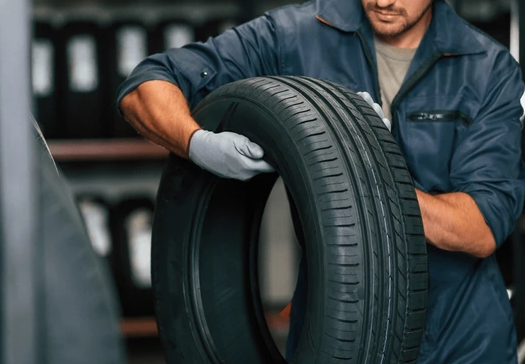
Under normal conditions, most passenger car tires last 5 to 6 years, or around 60,000 to 80,000 kilometers. That’s the realistic window — not a guarantee.
Different tires wear differently:
All-season tires usually make it to the 5–6 year mark
Performance tires trade longevity for grip and wear out faster, often in 3–4 years
SUV and off-road tires fall somewhere in between
Winter tires wear quickest if driven outside cold conditions
Mileage matters, but time matters just as much. Rubber degrades whether you’re driving daily or barely at all.
If your tires are approaching six years old, you should already be planning replacement — not waiting for a failure.
What Actually Shortens Tire Life
Tires don’t die randomly. They’re worn down by patterns.
Aggressive driving — hard launches, sharp cornering, sudden braking — eats tread fast. Smooth driving does the opposite.
Road conditions matter more than people admit. Rough pavement, potholes, broken asphalt, and gravel chew through rubber far faster than clean highways.
Climate plays a huge role. Hot regions accelerate rubber aging. Cold regions stiffen compounds and cause cracking. Tires suffer in both extremes — just in different ways.
And quality matters. Premium brands last longer because the rubber compounds are engineered to resist heat and deformation. Cheaper tires save money upfront and cost you sooner.
Signs You Should Replace Tires — Not “Soon,” Now
Waiting for bald tires is how accidents happen.
If tread depth drops below 1.6 mm, grip in wet conditions is already gone. At that point, braking distance increases dramatically.
Sidewall cracks aren’t cosmetic. They mean the tire structure is breaking down internally.
Bulges are worse. They signal internal separation and can fail without warning — especially at speed.
Uneven wear isn’t just a tire problem. It usually means alignment or suspension issues, and replacing tires without fixing the cause wastes money.
Multiple puncture repairs weaken the tire. Sidewall damage in particular is non-negotiable. That tire is finished.
Tire Age Still Matters — Even If You Barely Drive
This is where many drivers fool themselves.
A tire with “good tread” but bad rubber is still unsafe.
Manufacturers generally recommend replacing tires after 6 years, regardless of mileage. Ten years is the absolute maximum — and that’s pushing it.
Rubber oxidizes. It hardens. It loses elasticity. None of that shows clearly until grip is already compromised.
Check the DOT code on the sidewall. The last four digits tell you when the tire was made. If that date is creeping past six years, don’t argue with physics.
Maintenance That Actually Extends Tire Life
Tires don’t fail early by accident. They’re neglected into it.
Rotation every 8,000–10,000 km evens out wear between axles.
Balancing matters more than people think. Vibration doesn’t just feel bad — it grinds tread unevenly.
Alignment keeps tires from scrubbing themselves away. One bad pothole can throw it off.
Tire pressure is the silent killer. Underinflation overheats tires and increases fuel use. Overinflation reduces grip and wears the center tread prematurely.
Do the basics consistently and you can add 20–30% more life to a set.
EVs and SUVs Wear Tires Faster — Period
Electric vehicles are heavy and deliver instant torque. That combination is brutal on tires. Expect 20–30% shorter tire life compared to equivalent petrol cars.
EV-specific tires exist for a reason. Using standard tires is false economy.
SUVs and trucks carry more mass and often see rougher use. Their tires usually need replacement earlier — especially if driven aggressively or off-road.
Before You Buy New Tires, Check This
Replace tires in pairs at minimum — ideally all four. Mixing old and new tires compromises stability.
Match the correct size, load index, and speed rating. Guessing here is how handling gets unpredictable.
Don’t skip alignment and balancing after installation. New tires on bad geometry wear just as fast as old ones.
And don’t forget the spare. A cracked spare is useless when you need it most.
Simple Habits That Keep Tires Alive Longer
Drive smoothly. Tires reward restraint.
Keep them properly inflated.
Park out of direct sunlight when possible.
Wash off oil, grime, and road chemicals occasionally.
Store unused tires in cool, dry conditions away from heat and UV.
None of this is complicated — it’s just ignored.
Where Tire Technology Is Headed
Tires are getting smarter.
Manufacturers are developing tires that monitor wear, pressure, and temperature in real time. EVs are pushing quieter, more durable compounds. Airless designs are being tested to eliminate punctures entirely.
Longevity will improve — but physics will still win if maintenance doesn’t.
The Bottom Line
Tire replacement isn’t optional maintenance. It’s risk management.
Plan to replace tires around 5–6 years or 60,000–80,000 km. Inspect them monthly. Maintain them properly. Don’t stretch their life to save money — because that savings disappears fast when grip does.
Follow the timeline. Respect the wear. Drive with confidence.
For more real-world tire guides, maintenance breakdowns, and no-nonsense car advice, keep reading EngineDynamo.com.