
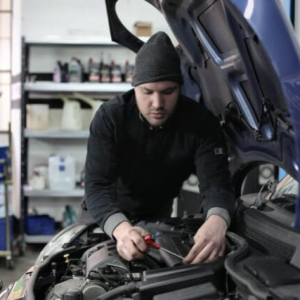
DIY car maintenance sounds empowering. It’s cheaper. It feels smart. YouTube makes it look easy.
But the truth is more nuanced than “yes” or “no.”
Some car maintenance absolutely should be DIY.
Some should never be DIY unless you’re trained.
And a large middle ground depends on your skills, tools, and tolerance for risk.
This guide explains what you should do yourself, what you shouldn’t, and how to decide intelligently — without damaging your car or your confidence.
Why people consider DIY car maintenance
Most people turn to DIY for three reasons:
- To save money
- To avoid unnecessary shop upsells
- To understand their car better
Those are all valid reasons.
But saving money only works if the DIY job is done correctly. One mistake can erase years of savings.
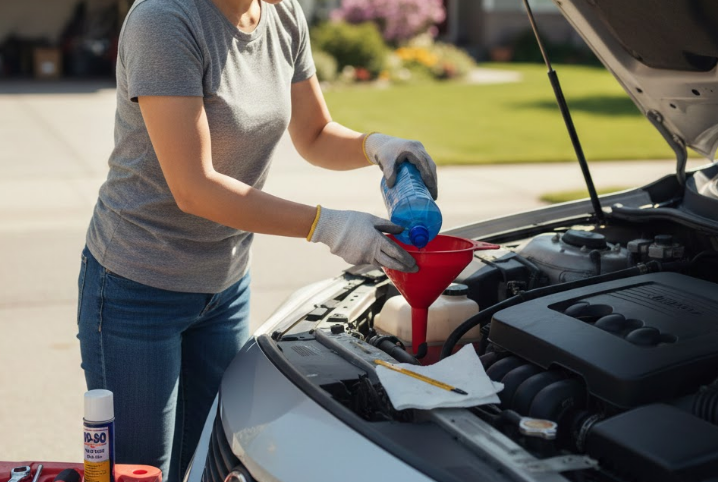
The maintenance you SHOULD DIY (for most car owners)
These jobs are low risk, high value, and easy to learn.
1. Checking and topping up fluids
This should not require a mechanic.
You can safely DIY:
- Engine oil top-ups
- Coolant reservoir checks
- Windshield washer fluid
- Power steering fluid (if accessible)
Mistakes here are rare and usually reversible.
2. Engine oil changes (with basic care)
Oil changes are one of the best DIY wins.
Why it’s DIY-friendly:
- Straightforward steps
- Immediate feedback if done wrong
- Huge cost savings over time
You need:
- Correct oil type
- Correct filter
- Torque awareness (not brute force)
If you double-check your work and don’t rush, this is safe DIY maintenance.
3. Air filter and cabin filter replacement
This is nearly foolproof.
Benefits:
- Improves performance and airflow
- Takes 5–10 minutes
- No tools required on many cars
Skipping this service costs performance. DIY saves money.
4. Tire pressure, rotation, and visual inspection
You should be doing this anyway.
DIY tasks:
- Monthly tire pressure checks
- Visual inspection for wear or damage
- Tire rotation if you have jack stands and torque wrench
Mistakes are obvious and easy to correct.
5. Battery replacement and terminal cleaning
Battery maintenance is well within DIY range.
You can:
- Replace batteries
- Clean corrosion
- Tighten terminals
Just follow polarity rules and disconnect the negative terminal first.
The maintenance you SHOULD NOT DIY (unless trained)
This is where people get burned.
1. Brakes (beyond pads, and even then cautiously)
Brakes are a safety system.
DIY mistakes here can cause:
- Brake failure
- Uneven braking
- Pulled steering
- Accelerated wear
Pad replacement alone requires:
- Proper torque
- Caliper alignment
- Correct bedding procedure
If you’re not confident, brakes belong to professionals.
2. Transmission service and repairs
Transmission systems are unforgiving.
DIY risks include:
- Wrong fluid type
- Incorrect fill levels
- Contamination
- Internal damage
Flushes especially should not be DIY. One error can destroy a transmission.
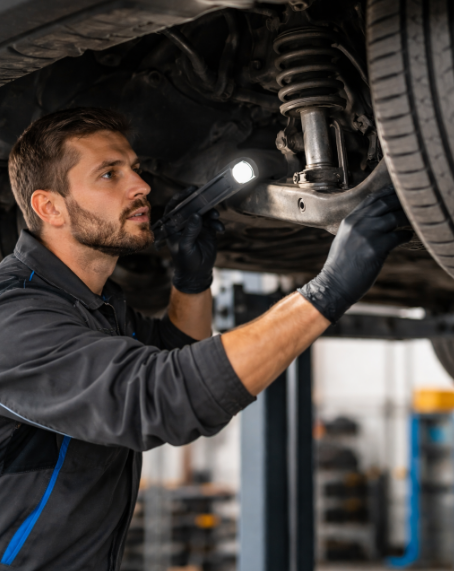
3. Suspension and steering components
Control arms, ball joints, tie rods, and struts require precision.
Mistakes here cause:
- Poor handling
- Tire destruction
- Loss of control at speed
These jobs often require alignment afterward, which DIY cannot replace.
4. Engine timing components
Timing belts and chains are zero-margin systems.
One tooth off means:
- Poor performance
- Engine damage
- In interference engines, catastrophic failure
If you mess this up, the engine pays the price.
5. Electrical diagnostics
Modern cars are software-driven machines.
DIY electrical work risks:
- Short circuits
- Sensor misdiagnosis
- Expensive module damage
Replacing parts blindly is not diagnosis. It’s gambling.
The hidden cost of DIY mistakes
People often compare DIY cost vs shop cost.
They forget to compare DIY mistake cost.
Common mistake outcomes:
- Stripped bolts
- Broken sensors
- Fluid leaks
- Misinstalled parts
- Safety failures
A $50 savings can become a $1,500 repair very quickly.
How to decide if a job should be DIY or not
Ask yourself these questions honestly:
- If I mess this up, what’s the worst outcome?
- Does this affect safety or engine survival?
- Do I have the correct tools — not just “some tools”?
- Can I verify my work afterward?
- Am I doing this to learn, or to gamble?
If the worst outcome is inconvenience, DIY is fine.
If the worst outcome is danger or engine damage, stop.
The smart DIY mindset (this matters more than skill)
Good DIY car owners:
- Research before touching anything
- Use torque specs
- Replace seals and washers
- Stop when unsure
- Accept professional help when needed
Bad DIY car owners:
- Rush
- Guess
- Reuse damaged parts
- Ignore warning signs
- Refuse to admit mistakes
Skill grows. Judgment matters first.
The real takeaway
Yes — you should DIY car maintenance.
But only the right maintenance.
DIY saves money, builds knowledge, and increases confidence when done selectively.
Trying to DIY everything is how cars get damaged.
The smartest car owners know:
- What to do themselves
- What to leave alone
- When to ask for help
That balance is what keeps cars reliable long-term.