
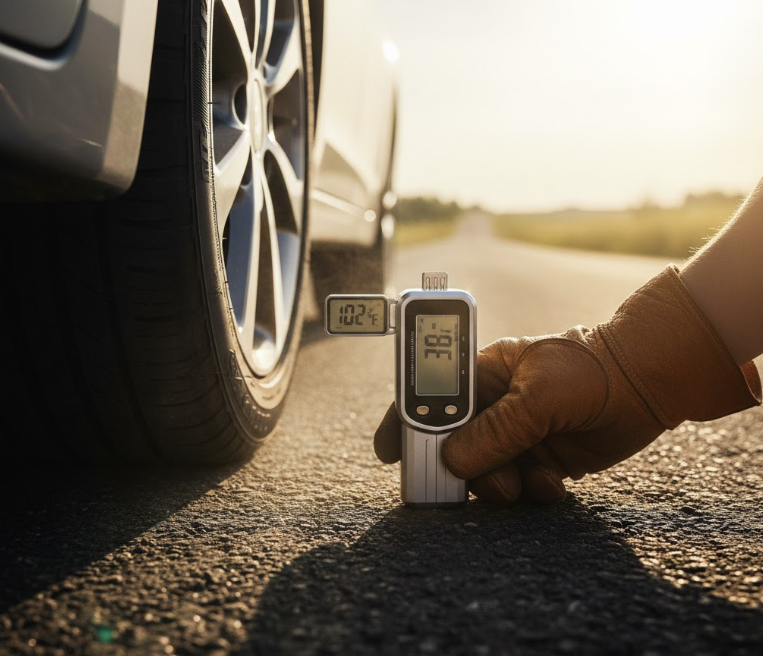
Almost reduced my tire pressure last summer because I read online that “air expands in heat so you need to let some out.” Made total sense to me. Was literally standing in my driveway with the valve cap off ready to do it when my neighbor walked over and was like “what are you doing?”
Explained my brilliant plan. He just stared at me for a second then said “dude no, that’s backwards, don’t do that.” Then explained why I was about to make my tires dangerous.
Felt like an idiot but also glad I didn’t actually do it. Spent the next hour researching tire pressure and heat because apparently I know nothing. Turns out lots of people have this same confusion and do the wrong thing.
Let me save you from my almost-mistake.
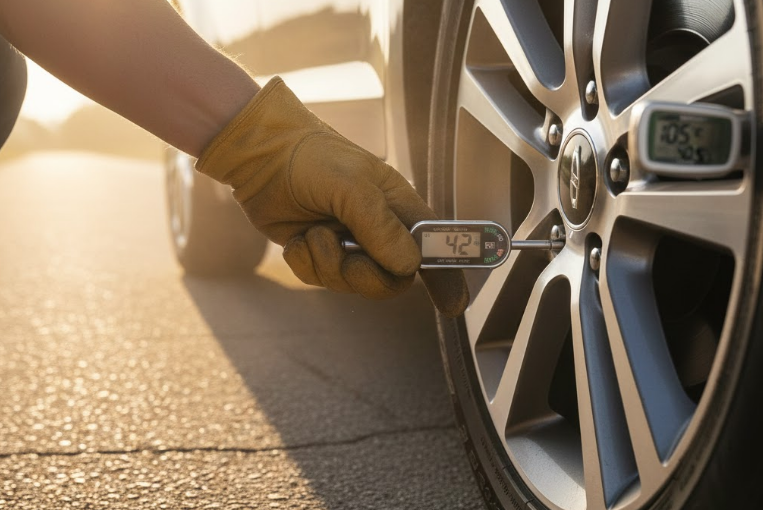
The Short Answer Is No
Don’t reduce your tire pressure for summer. Keep it at the recommended PSI on your door jamb sticker. The tire manufacturers already account for heat expansion when they set those numbers.
I know it seems logical – air expands when hot, so lower the pressure to compensate. But that logic is wrong for how tires actually work.
Your tires are designed to run at a certain pressure when they’re at operating temperature. The door jamb number assumes your tires will heat up during driving. It’s already factored in.
Reducing pressure in summer means you’re starting lower than intended, and when the tires heat up from driving they’ll be way under-pressurmed. That’s dangerous.
What Actually Happens With Heat
Yeah, tire pressure increases in hot weather. You might see like 3-5 PSI difference between cold morning and hot afternoon. That’s normal and expected.
If your tires are 35 PSI cold in the morning, they might read 38-40 PSI after driving in hot weather. This is fine. The tire is designed for this.
The tire sidewall rating is way higher than your door jamb recommendation specifically to handle heat expansion safely. Like if your door says 35 PSI, your tire sidewall probably says max 50-55 PSI. There’s tons of safety margin.
I freaked out when I checked my tires after a long drive and they were 5 PSI higher than normal. Thought something was wrong. Nope, just physics doing its thing.
Why Under-Inflation Is Worse Than Over
Running low pressure is way more dangerous than running slightly high from heat:
Low pressure problems:
- Tire flexes too much and generates excessive heat
- Sidewalls can fail from overheating
- Blowout risk goes way up
- Tire wears on the edges faster
- Fuel economy tanks
- Handling gets sloppy
Slightly high from heat:
- Basically fine, tires are designed for this
- Might wear the center slightly faster if really overinflated
- Ride might be marginally firmer
I’d way rather have tires slightly high from heat than low from me purposely letting air out. One is designed into the system, the other is creating problems.
My friend used to run his tires 5 PSI low in summer thinking he was being smart. Had two blowouts in one summer. Coincidence? Probably not.
What You Should Actually Do
Check pressure when cold – first thing in the morning before driving. That’s when you should be at the door jamb number.
Don’t adjust for heat – if your tires are at recommended pressure cold, leave them alone. They’ll go up during driving and that’s fine.
Check monthly – tires naturally lose air over time. Check every month and add air if needed to get back to spec when cold.
Don’t let air out after driving – I see people do this. They check tires after driving, see they’re 5 PSI high, and let air out. Now they’re under-inflated when cold. Wrong.
I keep a tire gauge in my car and check pressure on weekend mornings. Takes 2 minutes. If I’m low I hit a gas station and add air. Simple.
The Temperature Swing Thing
If you live somewhere with huge temperature swings between seasons, you will need to adjust:
Summer to winter – tire pressure drops as it gets cold. You’ll probably need to add 3-5 PSI in winter.
Winter to summer – pressure goes up as it warms. Might need to let out a bit if you overfilled in winter.
But this is seasonal adjustment, not “it’s hot today so I should lower pressure.” Big difference.
When it dropped from 80 degrees to 30 degrees last fall my tire pressure went from 35 to 30 PSI just from the temp change. Had to add air. Physics works both ways.
When You Actually Would Lower Pressure
There are specific situations where you intentionally run lower pressure, but daily summer driving isn’t one of them:
Off-roading in sand – lower pressure gives more traction. Then air back up for pavement.
Heavy towing – sometimes you increase rear pressure when towing. Then reduce back to normal when done.
Track driving – some people adjust for track conditions. Not relevant for street driving.
Winter ice/snow – some people run slightly lower for more grip. Debatable if this actually helps.
Notice “summer heat” isn’t on this list. Summer heat is when you definitely keep normal pressure.
The TPMS Light Confusion
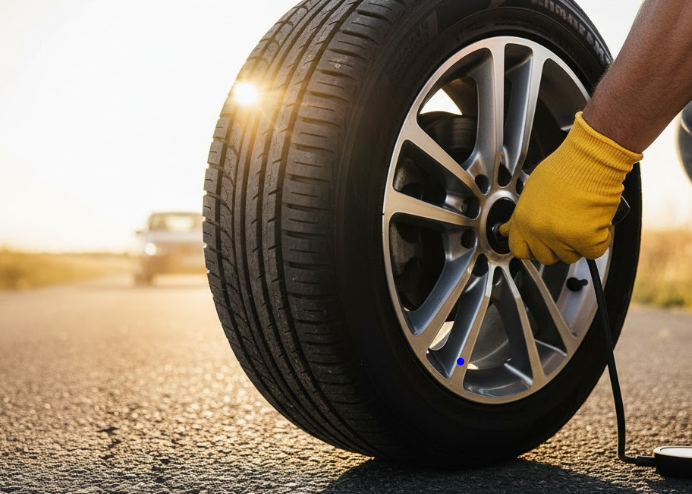
Your tire pressure monitoring system will warn you if pressure is too low. It usually triggers around 25% under recommended.
Some people see the light come on in winter (pressure dropped from cold), add a bunch of air to make the light go off, then wonder why their tires feel overinflated in summer.
Right way: Add just enough air to get back to door jamb spec when cold. The light goes off and you’re at correct pressure.
Wrong way: Pump tires way over spec to make the light go away. Now they’re overinflated.
I did the wrong way for years before I understood how this works. Always wondered why my ride was so harsh in summer.
Real Dangers I’ve Seen
Blowout from under-inflation – friend ran his tires low in summer heat. Sidewall overheated and failed on the highway. Scary as hell.
Rapid wear – coworker “adjusted for summer” by running 5 PSI low. Destroyed his tires in like 15k miles.
Handling issues – low pressure makes your car feel sloppy and unpredictable. Especially dangerous in emergency maneuvers.
These are all preventable by just keeping normal pressure year-round.
What Actually Matters In Summer
Instead of messing with your tire pressure, focus on things that actually help in summer heat:
Check pressure more often – heat makes pressure fluctuate more. Check monthly or even more.
Look for damage – hot pavement and UV exposure can crack sidewalls. Inspect for damage.
Don’t overload your car – extra weight in heat makes tires work harder. Travel light if possible.
Avoid driving on super hot pavement – if possible don’t drive during peak afternoon heat when pavement is 140+ degrees.
Make sure tires aren’t old – heat accelerates aging. If your tires are 6+ years old, consider replacing regardless of tread.
I do a walk-around check of my tires weekly in summer. Just looking for anything weird – bulges, cracks, uneven wear, whatever. Takes 30 seconds.
The Door Jamb Sticker Is Your Friend
Seriously just follow the door jamb sticker. The engineers who designed your car spent forever calculating the correct pressure. They factored in:
- Your car’s weight
- Tire size and type
- Expected operating temperatures
- Safety margins
- Handling characteristics
- Fuel economy
- Tire wear patterns
They did all the math so you don’t have to. Just follow their numbers.
I used to think I was smarter than the engineers and would adjust pressure based on “feel” or internet advice. I was not smarter than the engineers. Following the sticker works way better.
What About Max Pressure On The Tire?
The max pressure on your tire sidewall (like “MAX 50 PSI”) is NOT what you should run. That’s the maximum the tire can safely handle, not the recommended operating pressure.
Your door jamb number is usually like 30-35 PSI. That’s what you should use. The 50 PSI max is just the safety limit.
I’ve met people running their tires at max sidewall pressure thinking they were being safe. They weren’t. They were riding on overinflated tires that wore funny and handled badly.
My Current Summer Tire Routine
This is what works for me:
- Check pressure first thing Sunday morning when cold
- If low, add air to door jamb spec
- Visual inspection while I’m there
- That’s it
No adjusting for heat. No compensating for weather. Just maintain the recommended pressure and let the tires do their thing.
Been doing this for three years. Zero tire problems. No blowouts, even wear, good fuel economy. It’s almost like following the manufacturer recommendations works.
Stop Overthinking This
Tire pressure shouldn’t be complicated but people make it way harder than it needs to be.
Door jamb sticker = correct pressure when cold. End of story.
If it’s summer and hot outside, check pressure in the morning when tires are cold. If they’re at spec, you’re good. If not, add air to get to spec.
Don’t reduce pressure for summer. Don’t increase pressure beyond recommendations. Don’t adjust based on the weather. Just maintain the spec.
That’s it. That’s the whole guide.
Now go check your tire pressure because I bet you haven’t done it in months and you’re probably low. Don’t be like past me almost sabotaging my own tires based on backwards internet logic. Just follow the sticker and move on with your life.