
Changing your car’s oil at home isn’t about saving a few bucks. It’s about control. You know what oil goes in, you know the filter is replaced properly, and you know nothing was rushed by a shop trying to push cars through.
Do it right, and you extend engine life. Do it wrong, and you cause damage that doesn’t show up until it’s too late. This guide walks you through the process properly — not the shortcut version that ruins engines quietly.
Why Regular Oil Changes Matter More Than You Think
Engine oil does four critical jobs:
- Lubricates moving parts
- Cools internal components
- Cleans contaminants
- Prevents corrosion
Over time, oil breaks down, collects debris, and loses viscosity. When that happens, metal starts touching metal. The damage doesn’t happen instantly — it accumulates, which is why neglected engines “randomly” fail later.
Changing oil on time is not optional maintenance. It’s survival.
Tools and Supplies You’ll Need
Before touching the car, get everything ready. Stopping halfway through because you forgot a wrench is amateur behavior.
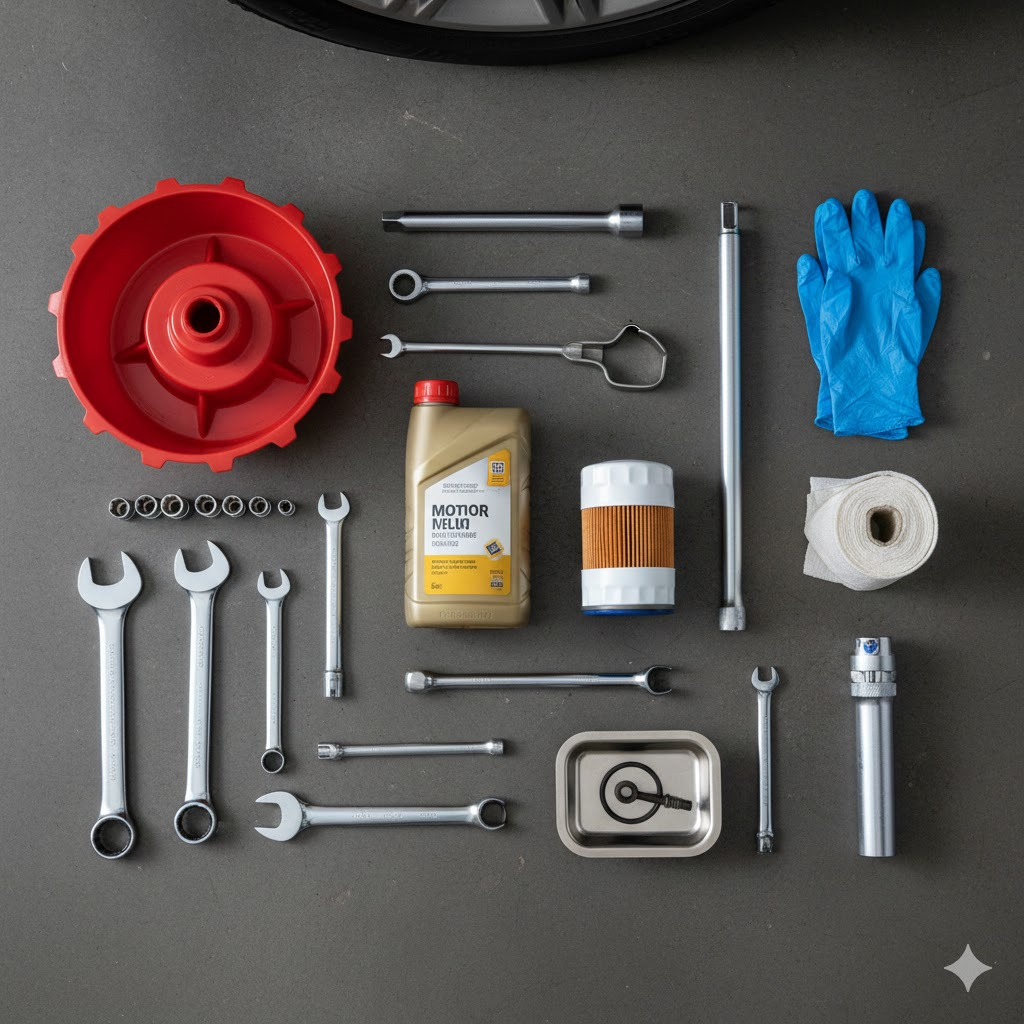
Required Items
- Correct engine oil (type and quantity per owner’s manual)
- New oil filter
- Oil filter wrench
- Socket or wrench for drain plug
- Drain pan
- Funnel
- Gloves and rags
Optional but smart:
- Jack and jack stands or ramps
- Torque wrench
- Crush washer (if required)
Step 1: Prepare the Car Safely
Warm the engine for 3–5 minutes. Warm oil drains faster and carries more contaminants with it. Do not work on a hot engine — warm, not scorching.
Park on level ground. Engage the parking brake. If lifting the car, use jack stands, not faith.
Open the hood and remove the oil filler cap. This allows oil to drain smoothly instead of glugging out slowly.
Step 2: Drain the Old Oil Properly
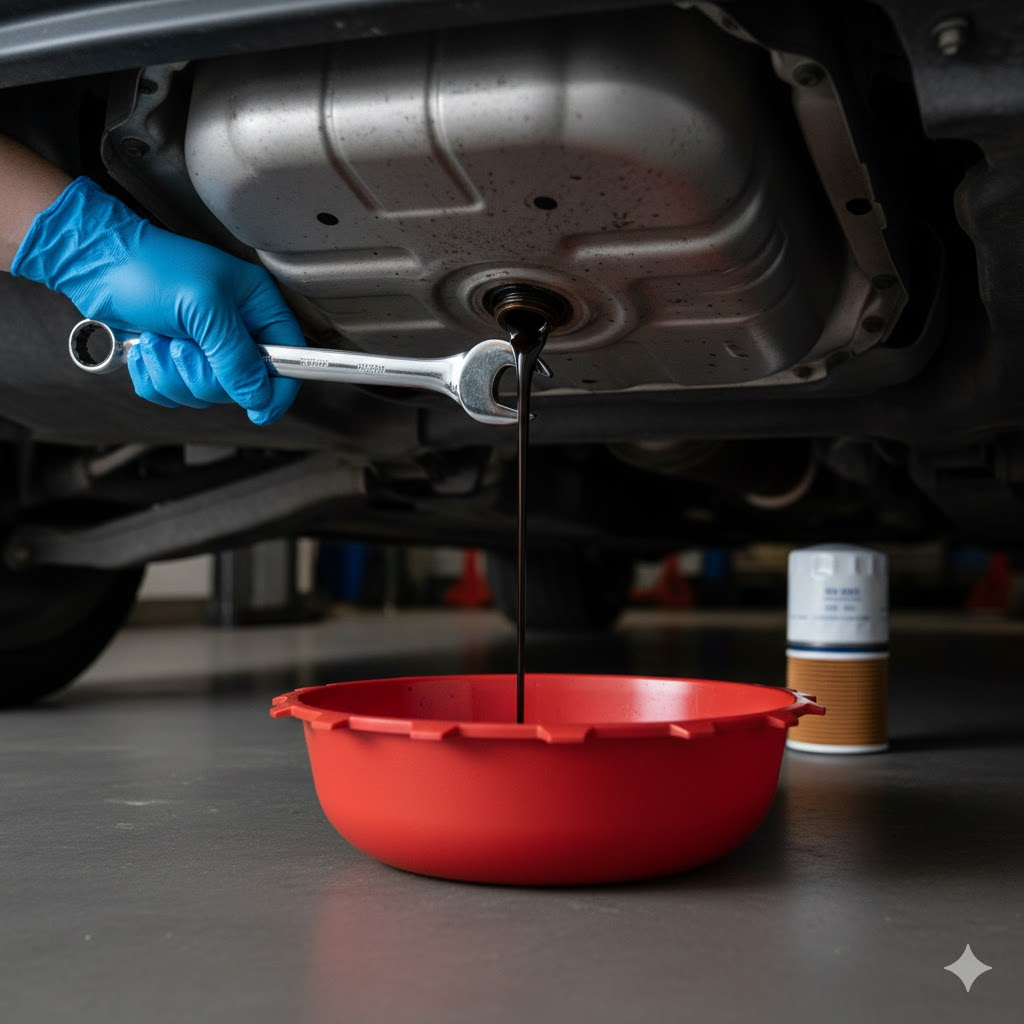
Position the drain pan under the oil pan drain plug. Loosen the plug carefully — oil may shoot out with force.
Let the oil drain completely. This takes several minutes. Rushing this step leaves contaminated oil inside the engine.
Inspect the drain plug:
- Check for damaged threads
- Replace the crush washer if required
- Clean off metal particles
Reinstall the drain plug and tighten it to spec. Overtightening strips threads. Undertightening causes leaks. Both are expensive mistakes.
Step 3: Remove and Replace the Oil Filter
Oil filters hold old oil. If you skip this, you just contaminated your fresh oil.
Use an oil filter wrench if needed. Expect oil to spill — position the drain pan accordingly.
Before installing the new filter:
- Lightly oil the rubber gasket
- Thread it on by hand
- Tighten until snug, then an additional ¾ turn (or per manufacturer spec)
Never use tools to tighten a filter. That’s how filters get crushed or stuck.
Step 4: Add New Oil (Correctly)
Use a funnel and pour in most, not all, of the recommended oil amount. You’ll top it off later.
Reinstall the oil filler cap.
Start the engine and let it idle for 30–60 seconds. This circulates oil and fills the new filter.
Turn off the engine and wait a few minutes.
[Image Placeholder: Pouring fresh engine oil into engine]
Step 5: Check Oil Level and Inspect for Leaks
Pull the dipstick, wipe it clean, reinsert, and check the level.
Top off oil gradually until it reaches the correct mark — not above it. Overfilling causes:
- Increased oil pressure
- Seal damage
- Foaming and poor lubrication
Look under the car for leaks around:
- Drain plug
- Oil filter
If you see drips, fix them now. Ignoring leaks is not “monitoring.”
Step 6: Reset the Oil Life Monitor
Most modern cars track oil life electronically. If you don’t reset it, the car will assume you ignored maintenance.
The reset procedure varies by vehicle:
- Some use dashboard menus
- Others require pedal sequences
- Some need scan tools
Check your owner’s manual. Guessing here makes you look careless.
Common Oil Change Mistakes That Kill Engines
Avoid these, or don’t bother doing it yourself:
- Using the wrong oil viscosity
- Forgetting to replace the oil filter
- Overtightening the drain plug
- Leaving the old gasket stuck to the engine
- Overfilling the crankcase
- Forgetting to check for leaks
Most engine damage from oil changes isn’t immediate — it’s cumulative. That’s why people deny responsibility when failure happens later.
Proper Disposal of Used Oil
Used engine oil is toxic. Dumping it is illegal and irresponsible.
Pour used oil into sealed containers and take it to:
- Auto parts stores
- Recycling centers
- Municipal hazardous waste facilities
Most places accept it for free. There’s no excuse to dump it.
Final Reality Check
An oil change at home isn’t hard — discipline is.
If you:
- Follow specs
- Work clean
- Don’t rush
- Respect torque values
You’ll extend engine life and avoid mistakes that quick-lube shops routinely make.
If you cut corners, overfill, or guess — you’re not “saving money,” you’re just delaying a repair bill.
Do it properly, or don’t do it at all.