
Self-maintaining your car isn’t about becoming a mechanic or owning expensive tools. It’s about understanding how your car wears over time, spotting problems early, and handling the maintenance that actually extends its life.
Most cars don’t fail suddenly. They decline slowly — because small things were ignored.
This guide walks you through what to check, why it matters, how often to do it, and what happens if you don’t.
Why self-maintenance matters more than people think
I’ve seen engines ruined by low oil that could’ve been caught in 30 seconds.
I’ve seen brake jobs triple in cost because pads were ignored too long.
I’ve seen overheating engines turned into scrap because someone kept driving “just a little more.”
Self-maintenance isn’t about saving money short-term.
It’s about avoiding catastrophic failure long-term.
Engine oil: the single most important habit
What oil actually does
Engine oil:
- Lubricates moving parts
- Carries heat away
- Cleans internal surfaces
- Prevents metal-on-metal contact
When oil runs low or breaks down, engine wear accelerates fast.
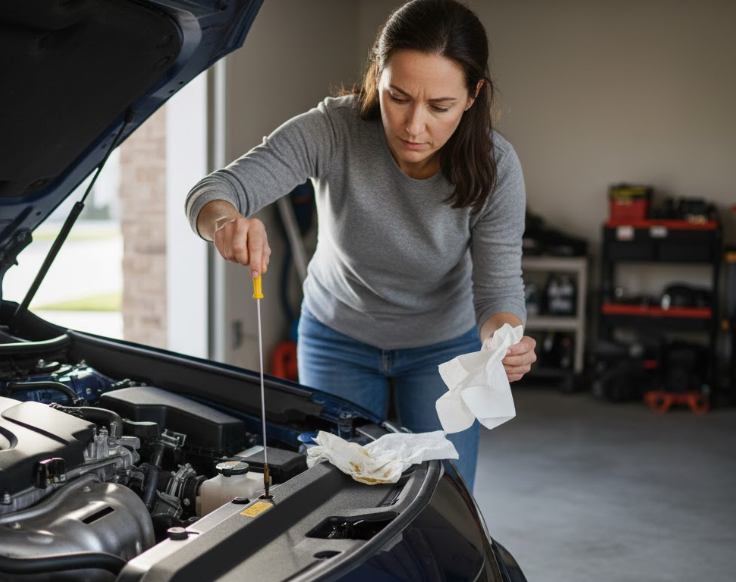
How to check oil correctly
- Park on level ground
- Turn engine off
- Wait 5 minutes
- Pull dipstick, wipe clean
- Reinsert fully, pull again
What to look for
- Level between MIN and MAX
- Color should be amber to dark brown
- Gritty or sludgy oil means overdue service
How often
- Check every 2–4 weeks
- Change oil:
- Conventional: 3,000–5,000 miles
- Synthetic: 7,000–10,000 miles
- Short trips = shorter intervals
Low oil does not give second chances.
Cooling system: preventing engine death by heat
Engines run hot. Coolant keeps temperatures stable.
What to check
- Coolant level in reservoir
- Color should be clean (green, orange, pink depending on type)
- No oily film or rust color
Warning signs
- Temperature gauge rising
- Steam from hood
- Sweet smell
- Coolant puddles
Never open a hot radiator.
If your engine overheats, stop driving immediately. Overheating can warp heads or blow head gaskets in minutes.
Tires: safety, fuel economy, and suspension health
Tires are the only thing touching the road. Poor tire care affects everything.
Monthly checks
- Tire pressure (cold tires)
- Uneven wear
- Cracks or bulges
What uneven wear tells you
- Inside wear: alignment issues
- Center wear: over-inflation
- Edge wear: under-inflation
Rotate tires every 5,000–7,000 miles.
Ignoring tires shortens their life and damages suspension components.
Brakes: catching wear before it becomes expensive
Brake systems wear gradually. The car warns you if you listen.
Early warning signs
- Squealing noises
- Grinding sounds
- Steering wheel vibration when braking
- Brake pedal feels soft or sinks
Why early action matters
Replacing pads early is cheap.
Waiting too long damages rotors and calipers — doubling or tripling cost.
If brakes make noise, don’t turn up the radio. Investigate.
Air filters: small parts with big impact
Engine air filter
- Affects fuel economy and performance
- Dirty filters restrict airflow
Check every 10,000–15,000 miles.
Cabin air filter
- Affects AC airflow and air quality
- Causes musty smells and weak ventilation
Most people forget this completely — until AC performance drops.
Battery and electrical basics
Batteries fail suddenly, but the signs come first.
Watch for
- Slow engine cranking
- Flickering lights
- Random electrical glitches
Clean battery terminals once a year.
Replace battery every 3–5 years depending on climate.
A weak battery stresses the starter and charging system.
Fluids most people forget
Check these every few months:
- Brake fluid
- Power steering fluid (if applicable)
- Transmission fluid (if accessible)
- Windshield washer fluid
Low or contaminated fluids damage seals, pumps, and internal components.
Listen to sounds, smells, and vibrations
Cars communicate constantly.
Pay attention to:
- New ticking or knocking
- Burning smells
- Fuel odors
- Vibrations at idle or speed
If something feels off consistently, it usually is.
Keep a maintenance record (this is underrated)
Write down:
- Oil changes
- Tire rotations
- Brake service
- Repairs and warning lights
This helps you:
- Avoid missed maintenance
- Spot patterns early
- Increase resale value
You don’t need an app. A notebook works.
What self-maintenance cannot replace
You still need professionals for:
- Engine diagnostics
- Transmission issues
- Alignments
- Complex electrical faults
Self-maintenance reduces how often you face those problems.
The real takeaway
Cars last when they are observed, not ignored.
You don’t need deep mechanical knowledge.
You need consistency, awareness, and basic discipline.
Five minutes of checking prevents weeks of repairs.