

First thing to know: engine noise isn’t one problem. It’s a symptom. And until you figure out where the noise is coming from, throwing fixes at it just wastes money.
I’ve seen people replace half their car chasing noise, when the real issue was something simple they ignored.
Let’s slow it down and do this properly.
Step one: understand what kind of noise you’re hearing
This matters more than people think.
- Deep rumbling → usually exhaust or mounts
- Ticking or tapping → valves, injectors, low oil
- Knocking → serious issue (don’t ignore this)
- Whining or humming → belts, bearings, accessories
- Loud vibration → mounts, loose components, poor insulation
Different noise = different fix.
Start with the simplest (and cheapest) fixes
Check engine oil (this alone fixes a lot)
Low oil or old oil makes engines loud. Metal parts rely on oil to cushion contact. When that cushion disappears, noise shows up fast.
If your oil is:
- Low
- Too thin
- Past its service life
The engine will sound harsher. Fresh, correct-grade oil can noticeably quiet things down.
No exaggeration — I’ve seen engines sound “broken” just because the oil was wrong.
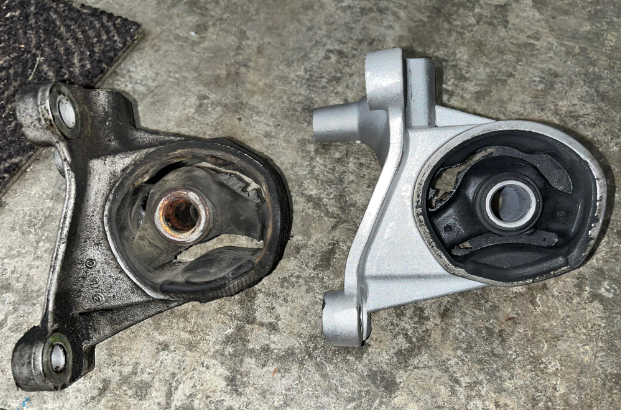
Inspect engine mounts
Worn engine mounts don’t make the engine louder — they let vibration travel into the cabin.
That’s why the noise feels worse at idle or when accelerating.
If the car vibrates when stopped or clunks when shifting, mounts are a prime suspect.
Reduce noise at the source
Fix exhaust leaks
A small exhaust leak can make a car sound aggressive in a bad way.
Cracks, loose clamps, or failing gaskets amplify engine noise and create that raspy sound people mistake for “engine problems.”
Exhaust leaks are louder under acceleration and quieter at idle — a classic sign.
Replace worn belts and pulleys
A squealing or whining sound usually isn’t the engine itself. It’s accessories.
Serpentine belts, tensioners, and pulleys wear out and transmit noise directly into the engine bay.
They’re cheap compared to the noise they cause.
Reduce noise entering the cabin
Sometimes the engine is fine — you’re just hearing too much of it.
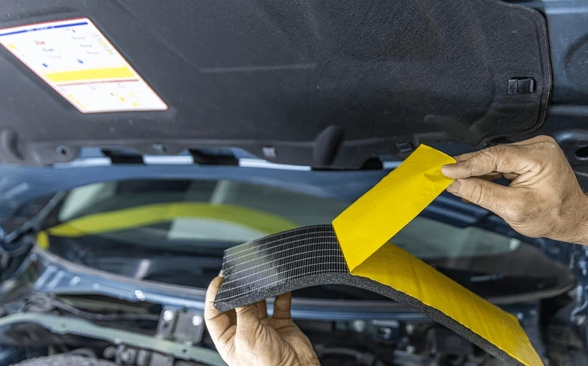
Add sound insulation
Older cars especially suffer from dried-out insulation.
Places that help the most:
- Hood liner
- Firewall insulation
- Door panels
- Floor mats with sound-deadening layers
You don’t need race-car-level insulation. Even modest damping reduces harshness noticeably.
Driving habits matter more than people admit
This part usually gets ignored.
- Constant high RPM driving increases perceived noise
- Lugging the engine (low RPM, high load) causes knocking
- Hard acceleration exposes every weak component
Smooth throttle and correct gear selection genuinely make engines sound quieter.
It’s not just mechanical — it’s behavioral.
When noise means “stop driving”
This is important.
If you hear:
- Knocking
- Metal-on-metal sounds
- Sharp ticking that increases with RPM
Do not try to “reduce” the noise. Diagnose it immediately.
Some noises aren’t comfort issues — they’re warnings.
The honest takeaway
There’s no single trick to reducing engine noise.
The quietest engines are:
- Properly lubricated
- Properly mounted
- Properly maintained
- Properly insulated
Anyone promising a magic additive or quick fix is selling hope, not solutions.