
A dead car battery usually strikes at the worst possible time. The car won’t crank, the dashboard lights flicker or stay dark, and suddenly you’re stuck. Jump-starting (boosting) a battery is simple — but only if you follow the correct order and understand what you’re doing.
This guide walks you through how to safely boost a dead battery, avoid common mistakes, and know when boosting is pointless.
When Boosting a Battery Makes Sense (And When It Doesn’t)
Boosting works only if the battery is discharged, not damaged.
Boosting Will Work If:
- Lights were left on
- Car sat unused for weeks
- Cold weather weakened the battery
Boosting Will NOT Work If:
- Battery is leaking or swollen
- Battery is more than 5–6 years old and repeatedly dies
- Car dies immediately after removing cables
If the battery won’t hold a charge, boosting is just delaying replacement.
What You’ll Need
Before touching anything, get the basics right.
Required Items
- Jumper cables (thick, good quality)
- A second vehicle with a healthy battery or a jump starter
- Safety gloves (recommended)
Turn off both vehicles. Set parking brakes. Do not let the vehicles touch.
Step-by-Step: How to Boost a Dead Battery Safely
Follow this order exactly. The sequence matters.
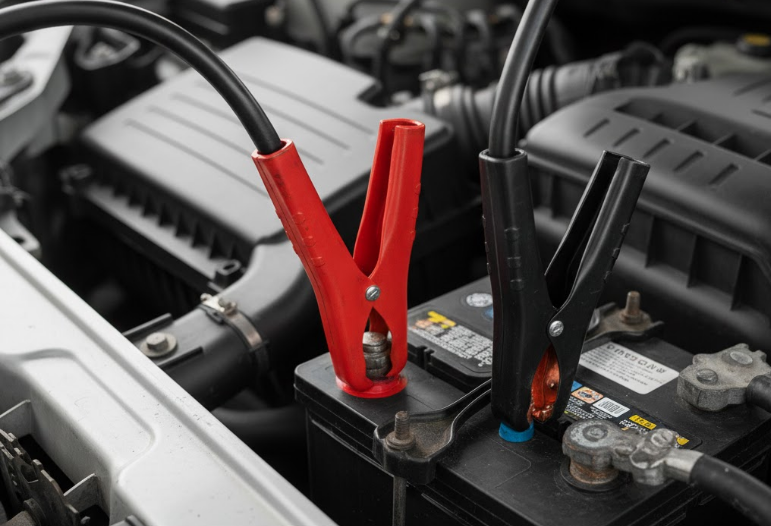
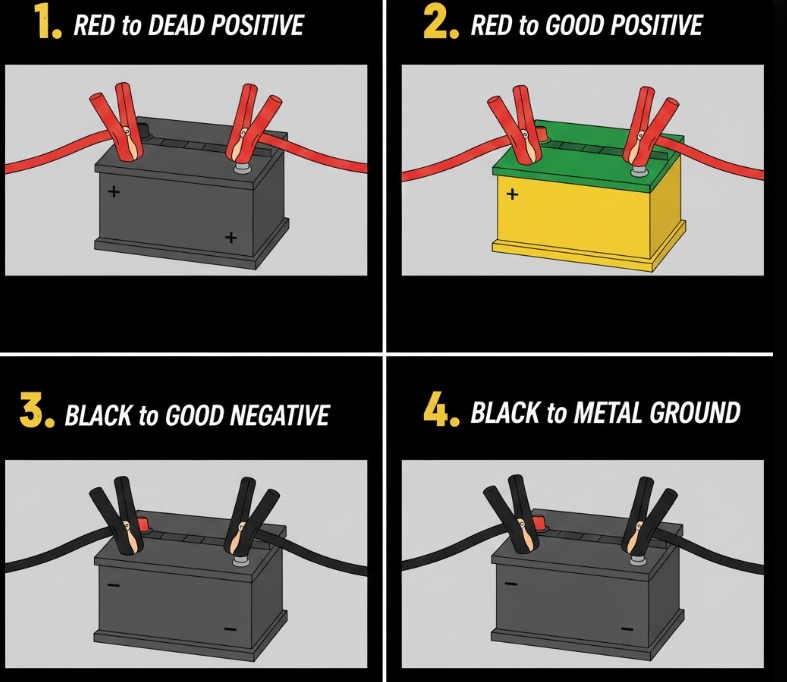
Step 1: Connect the Positive Terminals
- Attach red clamp to the positive (+) terminal of the dead battery
- Attach the other red clamp to the positive (+) terminal of the good battery
Step 2: Connect the Negative Terminal (Correctly)
- Attach black clamp to the negative (–) terminal of the good battery
- Attach the other black clamp to bare metal on the dead car’s engine block or chassis
Do NOT connect the black clamp to the dead battery’s negative terminal.
This reduces spark risk near battery gases.
Step 3: Start the Cars in the Right Order
- Start the vehicle with the good battery
- Let it run for 2–3 minutes
- Start the car with the dead battery
If it doesn’t start:
- Wait another minute
- Try again once
- Stop if nothing changes
Cranking endlessly overheats starters and cables.
Step 4: Disconnect the Cables Safely
Remove cables in reverse order:
- Black clamp from engine/chassis
- Black clamp from good battery
- Red clamp from good battery
- Red clamp from boosted car
Keep cables from touching each other or moving parts.
Step 5: Keep the Car Running
Once started:
- Let the engine run 15–30 minutes
- Drive if possible — don’t just idle
This allows the alternator to recharge the battery. Turning the car off immediately puts you back at zero.
Common Jump-Starting Mistakes That Cause Damage
Avoid these unless you enjoy expensive repairs:
- Reversing polarity (instant ECU damage)
- Letting clamps touch
- Connecting negative to negative on the dead battery
- Jump-starting a cracked or leaking battery
- Revving aggressively during boosting
Modern cars are packed with electronics. One careless spark can destroy sensors or control modules.
What to Do If the Car Dies Again
If the car starts but dies shortly after:
- Battery is failing
- Alternator isn’t charging
- Parasitic drain exists
At that point, boosting again is pointless. Diagnose the real problem.
Using a Portable Jump Starter
Portable jump packs work the same way but eliminate the second car.
Basic rules:
- Charge the jump pack fully
- Follow polarity markings exactly
- Disconnect immediately after starting
They’re safer, faster, and worth owning if you drive regularly.
Final Reality Check
Boosting a dead battery is not a fix — it’s a test.
If the car runs fine afterward, the battery was discharged.
If it dies again, the battery or charging system is failing.
Do it correctly, stay calm, follow the order, and don’t improvise.
Most battery damage happens because people rush, guess, or copy half-remembered advice. You don’t need luck — you need the right sequence.