
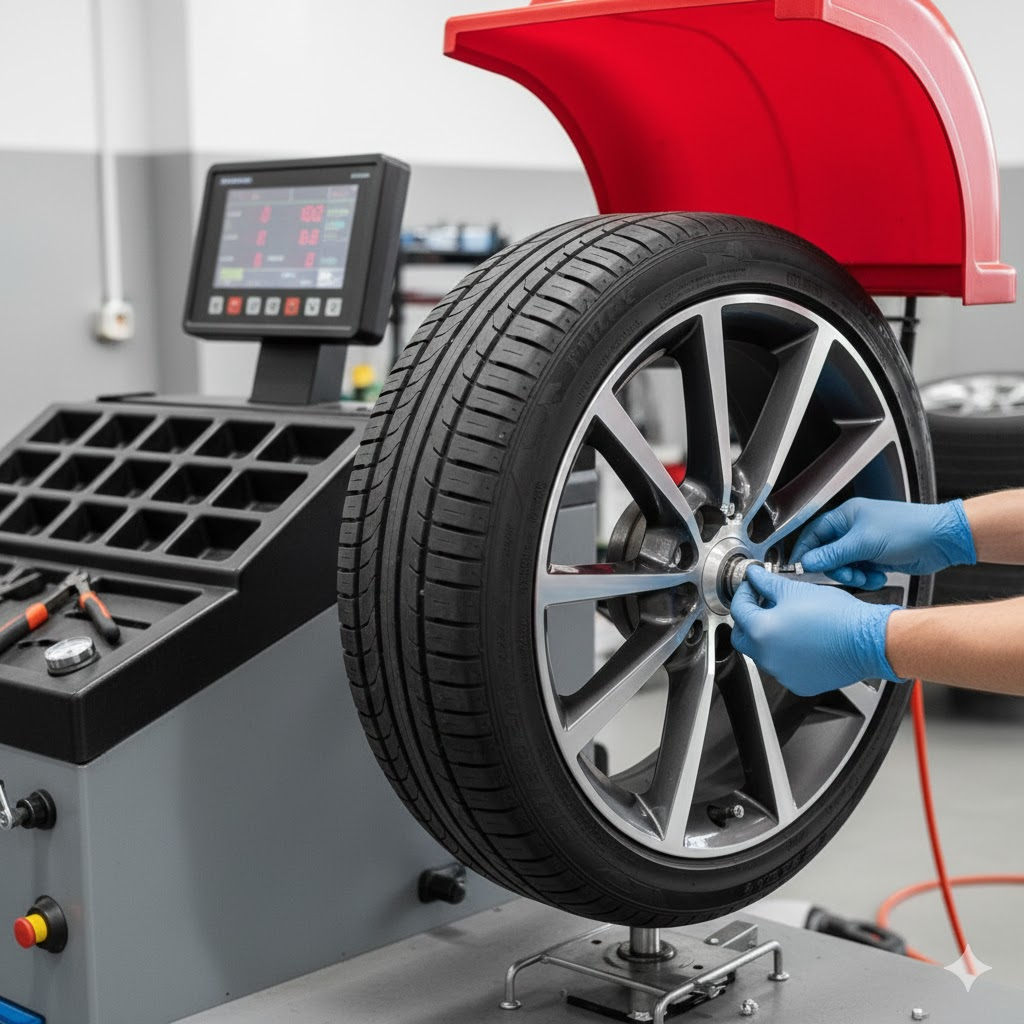
The short answer: Every 5,000 to 7,500 miles, or roughly every six months.
Most manufacturers recommend rotating your tires at this interval, and it’s genuinely worth following. I learned this after ignoring the advice for two years and ending up with wildly uneven wear that forced me to replace all four tires at once instead of gradually over time.
Why Tire Rotation Actually Matters
Your tires don’t wear evenly. The front tires on most vehicles handle steering, which means they wear down faster on the outer edges. They also bear more weight during braking. Meanwhile, your rear tires typically wear more evenly but can develop different patterns depending on your vehicle’s drivetrain.
Without rotation, you’ll notice the front tires getting significantly more worn than the rears. This creates handling problems, reduces fuel efficiency, and means you’ll need to replace tires in pairs or sets rather than individually when the time comes.
When to Rotate Based on Your Driving
The 5,000-7,500 mile rule works for most people, but your specific situation might call for adjustments:
Rotate more frequently if you: Drive aggressively with hard acceleration and braking, regularly carry heavy loads, frequently drive on rough or unpaved roads, or own a performance vehicle with staggered tire sizes.
You might stretch the interval slightly if: You drive mostly highway miles with gentle acceleration, keep your tires properly inflated, and drive a lighter vehicle.
That said, I wouldn’t push it past 8,000 miles even under ideal conditions. The cost of rotation is minimal compared to premature tire replacement.
Different Rotation Patterns for Different Vehicles
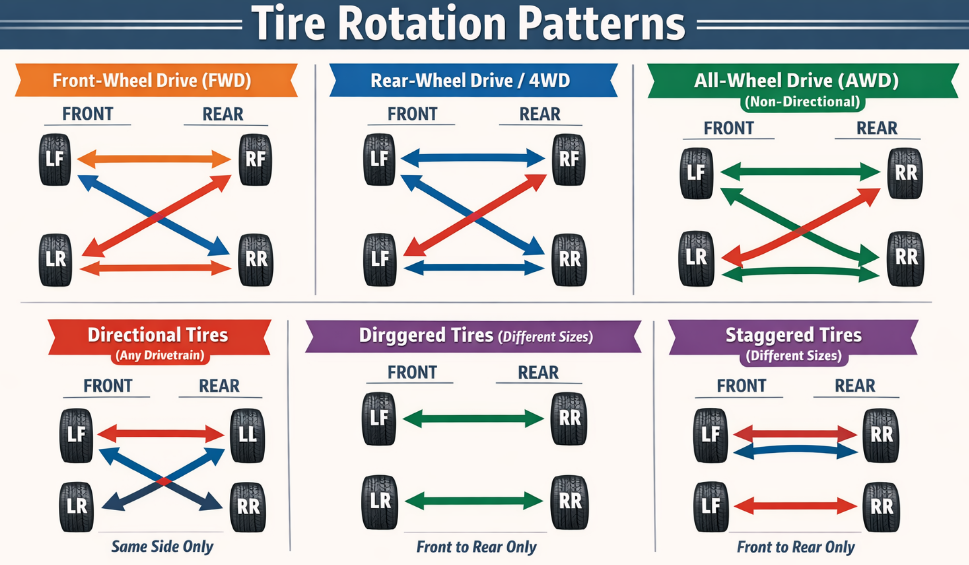
Not all tire rotations are the same. The pattern depends on whether your vehicle is front-wheel drive, rear-wheel drive, all-wheel drive, or has directional tires.
For front-wheel drive vehicles, the most common pattern moves the front tires straight to the back, while the rear tires cross to the front. Rear-wheel drive typically does the opposite. All-wheel drive vehicles usually follow an X-pattern where all four tires cross positions. If you have directional tires with a specific tread pattern, they can only move front to back on the same side.
Your owner’s manual will specify the correct pattern for your vehicle. Most shops know this automatically, but it doesn’t hurt to double-check.
Combine It With Oil Changes
Here’s the easiest way to remember tire rotation: do it every other oil change. If you’re changing your oil every 3,000-5,000 miles, alternating with tire rotations puts you right in that sweet spot of 6,000-10,000 miles between rotations.
Many quick-lube places and dealerships will rotate your tires for free or cheap when you’re already there for an oil change. I’ve found this approach keeps me consistent without having to track mileage separately.
Signs You’ve Waited Too Long
Sometimes life gets busy and maintenance falls through the cracks. Watch for these warning signs that your tires desperately need rotation:
Your steering pulls to one side even on flat roads. You feel vibrations through the steering wheel at highway speeds. One or two tires look noticeably more worn than the others. Your fuel economy has decreased without explanation. You hear unusual road noise that wasn’t there before.
If you’re seeing any of these symptoms, get your tires rotated immediately and have a mechanic check the alignment as well.
The Cost Reality
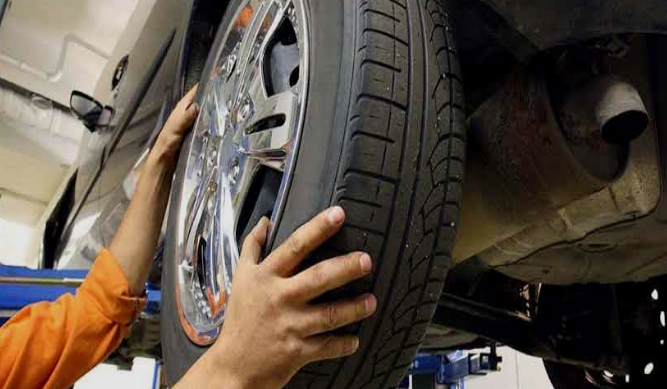
Tire rotation typically costs between $35 and $50 at most shops. Many dealerships include it free with other services. Compare that to a set of quality tires running anywhere from $400 to $1,200 or more, and the math becomes pretty obvious.
I now budget about $100 annually for tire rotations, which has extended my tire life by an estimated 10,000-15,000 miles per set. That translates to an extra year or two before replacement, saving me hundreds of dollars in the long run.
Final Thoughts
Rotating your tires every 5,000 to 7,500 miles isn’t just a recommendation from car manufacturers trying to sell you services. It’s practical maintenance that extends tire life, improves safety, and saves money. Mark it on your calendar, tie it to your oil changes, or set a mileage reminder on your phone.
After my expensive lesson with uneven tire wear, I never skip this maintenance anymore. The few minutes and dollars spent on rotation beat the frustration of premature tire replacement every single time.