
Filling your car tires sounds simple, but it’s one of the most commonly misunderstood parts of car maintenance. Many people inflate based on guesswork, tire sidewall numbers, or gas station advice — and all three can be wrong.
Correct tire pressure affects safety, braking, fuel economy, tire life, and ride comfort. Getting it wrong causes problems long before you notice them.
This guide explains exactly how much to fill your tires, where to find the right number, and what mistakes to avoid.
The short, correct answer
Fill your car tires to the pressure listed on the vehicle, not the tire.
That number is set by the vehicle manufacturer, based on:
- Vehicle weight
- Suspension design
- Tire size
- Handling and braking balance
Where to find the correct tire pressure
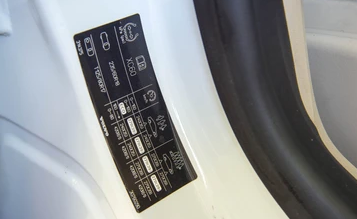
Look for the tire pressure placard, usually located:
- Inside the driver-side door jamb
- On the door itself
- Inside the fuel door
- Occasionally in the glove box
This sticker lists:
- Front tire pressure
- Rear tire pressure
- Sometimes a different value for heavy loads
The pressure is listed in PSI (pounds per square inch).
Typical ranges:
- Small cars: 30–35 PSI
- Sedans: 32–36 PSI
- SUVs and light trucks: 35–42 PSI
Always trust the sticker over guesses.
Why the tire sidewall number is NOT what you should use
Every tire has a number like “Max Pressure 44 PSI” printed on the sidewall.
This number means:
- The maximum safe pressure for the tire
- NOT the recommended driving pressure
Inflating to the sidewall maximum often causes:
- Harsh ride
- Reduced traction
- Uneven center tread wear
- Longer braking distances
The vehicle manufacturer’s number is what keeps the car balanced and safe.
When and how to check tire pressure properly
Check when tires are cold
Cold tires mean:
- Car has been parked for at least 3 hours
- Or driven less than 1 mile at low speed
Driving heats the air inside the tire, raising pressure by 3–6 PSI and giving a false reading.
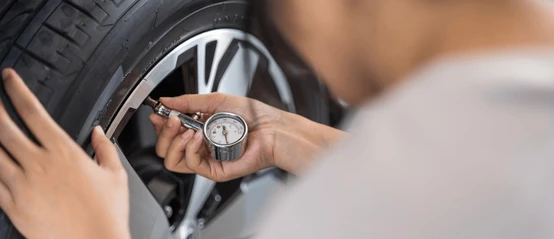
How to check
- Remove valve cap
- Press gauge firmly onto valve stem
- Read PSI
- Add or release air as needed
- Replace valve cap
Check tire pressure once a month and before long trips.
Front and rear tires may require different pressure
Many cars specify:
- Higher pressure in front (engine weight)
- Slightly lower pressure in rear
Never assume all four tires use the same PSI.
Follow the placard exactly.
What happens if tire pressure is too low
Underinflated tires cause:
- Poor fuel economy
- Sluggish steering
- Increased stopping distance
- Excessive heat buildup
- Premature tire failure
Low pressure is one of the leading causes of blowouts.
What happens if tire pressure is too high
Overinflated tires cause:
- Reduced grip
- Uneven center tread wear
- Harsher ride
- Increased risk of impact damage
Overinflation reduces the tire’s contact patch with the road.
What about temperature changes?
Air pressure changes with temperature.
Rule of thumb:
- Pressure drops about 1 PSI for every 10°F temperature drop
- Pressure increases with heat
That’s why tire pressure warnings often appear in cold weather.
Adjust pressure seasonally if needed.
Tire pressure warning light explained
The TPMS light means:
- One or more tires are significantly underinflated
- Or there is a sensor issue
It does NOT tell you the correct pressure.
Always verify with a gauge.
Do not ignore this light — driving on low pressure damages tires quickly.
Should you inflate above recommended pressure?
Only in specific situations:
- Heavy loads
- Towing (if specified in the manual)
Never exceed:
- Manufacturer’s maximum recommendation
- Tire sidewall maximum
For normal daily driving, stick to the placard number.
The real takeaway
Correct tire pressure is not a guess.
It’s not the sidewall number.
It’s not what the gas station suggests.
It’s the number set by the vehicle manufacturer for your specific car.
Checking tire pressure takes five minutes and prevents:
- Uneven tire wear
- Poor handling
- Reduced braking performance
- Expensive tire replacements
Few habits deliver more safety for less effort.