
Look, I’m not going to sugarcoat this—Nissan’s CVT has a reputation, and it’s not exactly a glowing one. If you’ve spent any time on car forums or talked to mechanics, you’ve probably heard the horror stories. But here’s the thing: the reality is more nuanced than “all Nissan CVTs are terrible.”
What Makes Nissan’s CVT Different
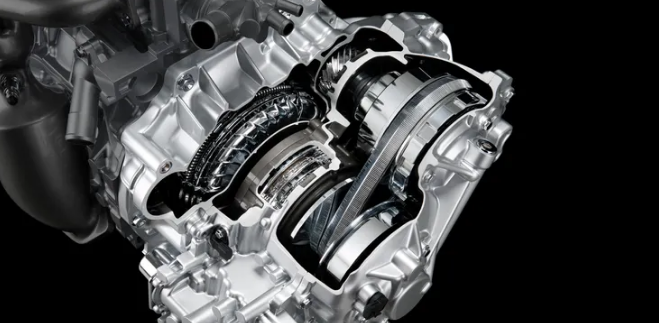
Nissan was one of the first mainstream manufacturers to go all-in on continuously variable transmissions. Unlike traditional automatics with fixed gears, CVTs use a belt and pulley system to provide infinite gear ratios. The idea sounds brilliant on paper—smoother acceleration, better fuel economy, and no gear hunting.
The execution? That’s where things get complicated.
Nissan’s Xtronic CVT, which you’ll find in models like the Altima, Rogue, Sentra, and Pathfinder, has been plagued with issues over the years. We’re talking premature failures, shuddering, overheating, and that dreaded “rubber band” feeling during acceleration. Some owners report problems as early as 60,000 miles, while others cruise past 150,000 without major issues.
The Problem Years You Should Know About
If you’re shopping for a used Nissan, pay close attention to model years between 2013 and 2017. These years saw the highest concentration of CVT complaints and warranty claims. The 2013-2016 Altima and 2014-2017 Rogue are particularly notorious for transmission failures.
Nissan extended warranties on many of these vehicles and issued multiple service bulletins addressing CVT problems. They knew there were issues—the question is whether they fixed them adequately.
Has Nissan Actually Fixed the CVT Issues?
Here’s where opinions split pretty hard. Nissan claims they’ve made significant improvements to their CVT design and fluid formulations since around 2019. The newer transmissions supposedly have better cooling systems and more robust internal components.
Some owners of 2020+ models report much better experiences. The transmission feels more responsive, runs cooler, and doesn’t exhibit the same shuddering problems. Others remain skeptical, arguing that it’s simply too early to know if these improvements will hold up long-term.
From what I’ve gathered talking to mechanics and reading through owner experiences, the jury’s still out. We won’t really know if Nissan solved the CVT reliability problem until these newer models start hitting 100,000+ miles in significant numbers.
Real-World Ownership Experience
The people who seem happiest with their Nissan CVTs are those who stay on top of maintenance religiously. That means changing the CVT fluid every 30,000-40,000 miles instead of following Nissan’s “lifetime fill” recommendation (which, let’s be honest, is marketing nonsense).
Proper fluid changes can make a massive difference. The transmission fluid breaks down over time, especially if you do a lot of city driving or towing. Fresh fluid keeps things running cooler and smoother, potentially adding tens of thousands of miles to the transmission’s lifespan.

The Competition Does It Better
If we’re being totally honest, other manufacturers handle CVTs more successfully. Honda and Toyota have CVT transmissions that generally prove more reliable and durable. Subaru’s CVTs aren’t perfect, but they have fewer catastrophic failure reports than Nissan’s.
The frustrating part is that Nissan makes solid engines and chassis. The VQ V6 engines are legendary, and their trucks are genuinely capable. But the CVT situation has damaged the brand’s reputation significantly over the past decade.
Should You Buy a Nissan With a CVT?
This depends entirely on your situation and risk tolerance.
Go for it if: You’re buying or leasing new with a full warranty. You plan to keep the car under 60,000 miles. You’re committed to strict maintenance schedules including frequent fluid changes. You’re getting an incredible deal that accounts for potential issues.
Run away if: You’re looking at a used model from 2013-2017. The vehicle has high mileage without documented CVT fluid changes. You need a vehicle for heavy towing or aggressive driving. You can’t afford a potential $3,000-$5,000 transmission replacement.
The Bottom Line
Nissan’s CVT isn’t the worst transmission ever made, but it’s definitely not among the best. The technology itself isn’t inherently bad—other brands prove CVTs can work reliably. Nissan’s specific implementation and quality control have been the real problems.
If you love everything else about a particular Nissan model, just go in with your eyes wide open. Budget for regular CVT fluid changes, baby the transmission during the break-in period, and maybe set aside an emergency fund for potential repairs down the line. Or, you know, just buy a Honda instead and sleep better at night.