
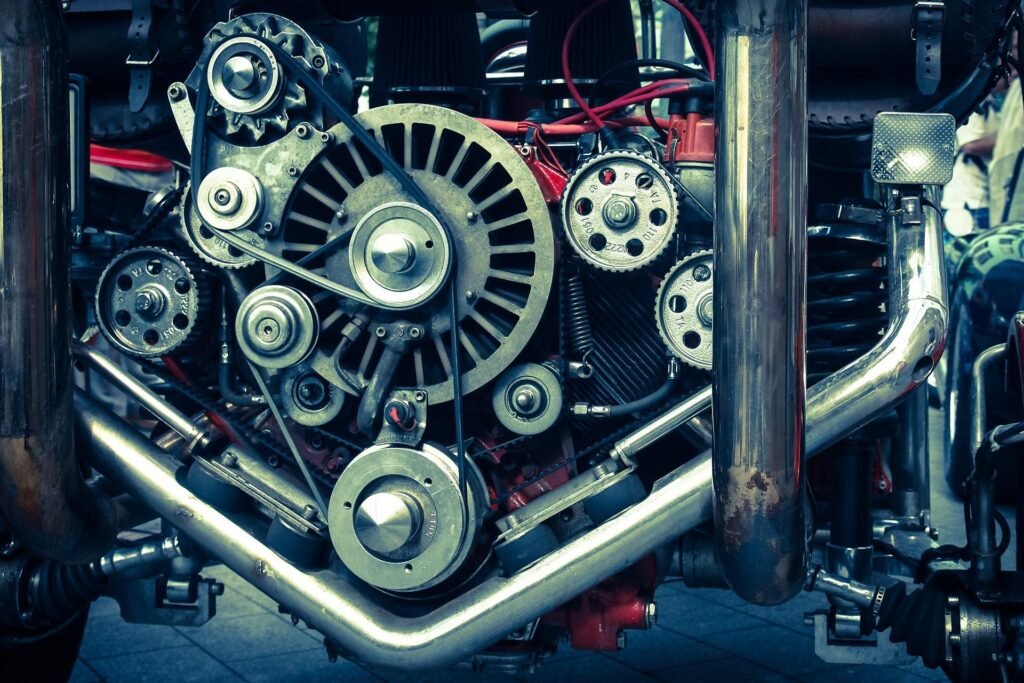
How does a vehicle’s transmission system work? Most people drive their entire lives without really knowing. They know the basics — P, R, N, D — but what’s happening underneath feels like black magic. The truth is, it’s mechanical logic, not magic, and once it clicks, everything from strange noises to gear behavior starts making sense.
At its simplest, the transmission’s job is this:
• Take power from the engine
• Adjust that power for speed and torque
• Deliver it to the wheels in a usable way
Engines are bad at flexibility. They like spinning within a narrow RPM range. Wheels need very different speeds depending on whether you’re starting from a stop, cruising, or climbing a hill. The transmission sits in the middle and makes that possible.
Here’s the key idea most people miss: the engine can’t directly drive the wheels at all speeds efficiently. Without a transmission, the car would stall at low speed and over-rev at high speed.
Now let’s break it down step by step.
First, the engine produces rotational power. That power exits the engine through the crankshaft. On a manual car, that power goes into a clutch. On an automatic, it goes into a torque converter. Both do the same basic job:
• Allow power transfer
• Smooth engagement
• Let the engine keep running when the car stops
From there, power enters the transmission itself.
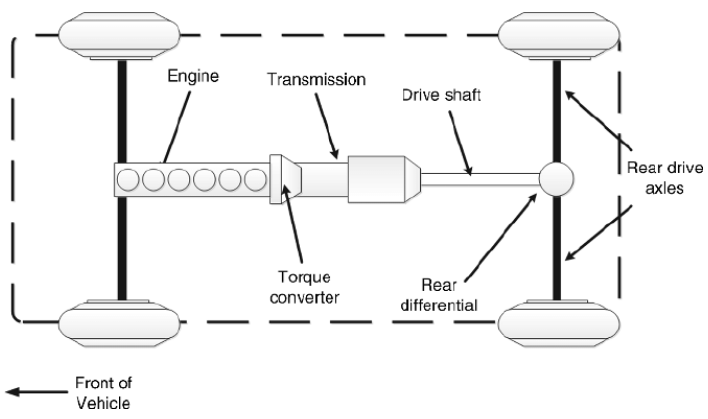
Inside the transmission are gears or gear-like systems. Gears change speed and torque.
• Low gears = more torque, less speed
• High gears = more speed, less torque
When you’re starting from a stop, the transmission uses a low gear so the car can move without stalling. As speed increases, it shifts into higher gears so the engine doesn’t scream itself to death.
In a manual transmission, the driver controls this directly.
• You press the clutch
• Select a gear
• Release the clutch
• Power flows through that gear ratio
You are literally choosing how engine speed connects to wheel speed.
In a traditional automatic transmission, the car does this for you.
• Hydraulic pressure engages clutches
• Planetary gearsets change ratios
• Shifts happen based on speed, load, and throttle input
You feel shifts because clutches are engaging and disengaging inside.
Now here’s where people get confused: CVTs and hybrid transmissions.
A CVT (Continuously Variable Transmission) doesn’t have fixed gears.
• It uses belts or chains and pulleys
• Ratios change smoothly instead of shifting
• Engine RPM doesn’t always match speed changes
That’s why CVTs feel like the engine is revving without shifting. It’s not broken — it’s just working differently.
A hybrid transmission, especially Toyota’s, is different again.
• Uses electric motors and a planetary gearset
• Blends engine power and electric power
• No traditional shifting at all
The system constantly decides the most efficient way to move the car, which is why hybrids feel smooth but strange to new drivers.
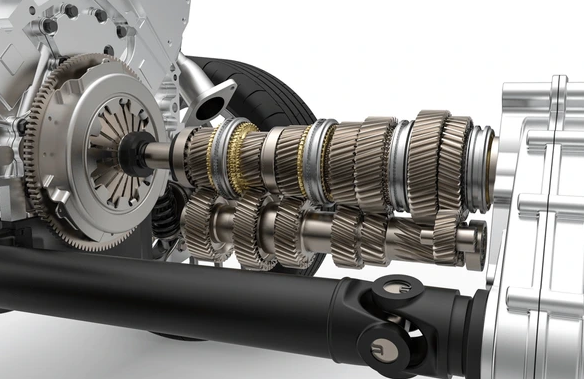
Once power leaves the transmission, it goes to the driveshaft or axles, then to the wheels. From there, friction between tires and road turns rotation into motion.
A few important points people don’t realize about transmissions:
• Transmissions generate heat constantly
• Transmission fluid isn’t just lubrication — it’s hydraulic power
• Cooling is critical for long life
• Most transmission problems start as heat problems
That’s why fluid condition and cooling systems matter so much.
Different driving situations stress the transmission differently:
• Stop-and-go traffic causes more heat than highway driving
• Towing increases load and temperature
• Hard acceleration increases internal pressure
That’s also why some transmissions last forever while others fail early — usage and maintenance matter as much as design.
So if we boil the whole thing down into a simple mental model:
• Engine makes power
• Transmission adapts that power
• Gears or ratios match speed and torque needs
• Wheels receive usable motion
Everything else is just how different manufacturers choose to solve that same problem.
The big takeaway is this: the transmission is not just a box of gears. It’s a constantly adjusting system balancing power, speed, heat, and efficiency every second the car is moving — and even when it’s not.