
So I almost died on the highway once. Well okay that’s dramatic, I didn’t almost die but I definitely had a moment where I thought “this is how it ends, killed by my own stupidity and bald tires.”
It was pouring rain, like absolutely dumping, and I’m doing maybe 60 on the highway when traffic suddenly slams on the brakes. I hit my brakes and my car just… kept going. Like the brakes were doing something but the tires had completely given up on gripping the road. Just full hydroplane mode gliding toward the car in front of me while I’m having a religious experience.
Managed to steer onto the shoulder and miss everyone but holy hell that was terrifying. Got home, looked at my tires, and they were absolutely cooked. Like I could barely see any tread grooves left. Had probably been driving on them way too long because I kept thinking “eh they’re probably fine for another month.”
They were not fine. Not even close. Learned a bunch of lessons that day about actually checking your tires before the universe forces you to learn them the hard way.
The Penny Test Everyone Mentions (And Why It’s Actually Too Late)
You’ve probably heard about sticking a penny in your tire tread upside down. If you can see all of Lincoln’s head, your tread’s too low and you need new tires. This works and it’s easy but here’s the thing nobody tells you – by the time you fail the penny test, you’ve already been driving on sketchy tires for a while.
The penny test checks for 2/32″ of tread depth, which is the legal minimum in most states. But that’s not the “you should replace your tires now” number, that’s the “you should’ve replaced your tires a while ago and now you’re technically illegal” number.
I use a quarter instead now. Stick it in upside down and if you can see the top of Washington’s head, you’re at 4/32″ which is where you should actually start thinking about new tires. Especially if you drive in rain a lot or god forbid snow.
Because here’s what they don’t tell you – your tire’s ability to channel water away drops off a cliff once you get below 4/32″. Like it’s not a gradual decline, it’s pretty dramatic. At 4/32″ you’ve lost like 50% of your wet traction compared to new tires. At 2/32″ you’re basically driving on racing slicks except racing slicks are designed for that and your worn out all-seasons definitely aren’t.
The difference between 4/32″ and 2/32″ in the rain is the difference between stopping and not stopping. Between maintaining control and hydroplaning into someone’s bumper. I know this because I’ve experienced both ends of that spectrum and one is significantly more terrifying than the other.
Tread Wear Bars Are Built Right Into Your Tires
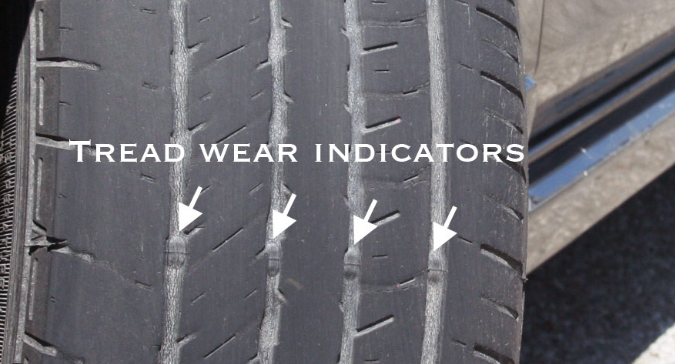
Okay so this blew my mind when someone first pointed it out to me. Look between the tread grooves on your tire and you’ll see these little raised rubber bars going across perpendicular to the tread pattern. They’re molded into the tire at 2/32″ depth.
When your tread wears down level with those bars, that’s the tire literally telling you it’s done. Like the manufacturer built in a warning system and most people have no idea it exists.
Once I knew they were there I couldn’t unsee them. Check your tires right now, seriously. Look in the tread grooves and you’ll spot them – little bars connecting one tread block to another. On most tires there’s also a little triangle or “TWI” (tread wear indicator) symbol on the sidewall pointing to where the wear bars are located.
If your tread is flush with those bars, you’re at the legal limit and you need tires like yesterday. If you’re getting close to the bars – maybe a millimeter or two away – start shopping for tires because you’ll need them soon.
I ignored the wear bars on my last set of tires because “they still look fine” until one day I actually looked closely and realized the tread was basically level with the bars. Whoops. Had been driving around on illegal tires for who knows how long.
The Visual Check You Should Do Monthly
You don’t need fancy tools to know when your tires are getting low. Just eyeball them once in a while. Crouch down and look at the tire from the side. Can you clearly see deep grooves and tread pattern? Good. Does it look kinda flat and shallow with barely visible grooves? Not good.
New tires have like 10/32″ to 12/32″ of tread depending on the tire. That’s almost half an inch of rubber. Your finger probably won’t even reach the bottom of the groove. After a few years and thousands of miles that groove gets shallower and shallower until it’s barely there.
I try to check mine every time I’m at a gas station just out of habit now. Takes literally 10 seconds. Just a quick glance at each tire while I’m standing there pumping gas. If they look shallow or worn, I know I should probably do an actual measurement soon.
The other thing to look for is uneven wear. Sometimes one part of the tire is way more worn than another – usually the inside or outside edge wears faster. That’s an alignment issue but it also means you need tires sooner because even if part of the tire has good tread, you can’t keep driving on the bald part.
Had this on my last car where the inside edges were completely gone but the middle and outside still looked decent. Couldn’t really see it without getting down and looking under the car at the inside edge. Found it when I rotated my tires myself and was like oh… oh no. This is bad.
The Magic Numbers And What They Actually Mean
Let me break down tread depth in a way that actually makes sense instead of just throwing numbers at you:
10/32″ to 12/32″ – New tires. Feel good, grip great, life is good. Enjoy this while it lasts.
8/32″ – Still plenty of tread. These tires are barely broken in. If someone’s selling used tires at this depth they basically gave you new tires.
6/32″ – This is where I start paying attention. Not concerned yet but keeping an eye on them. Probably still good for another year or two depending on how much you drive.
5/32″ – Starting to think about when I’ll need tires. Not urgent but it’s on the radar. Start watching sales and budgeting for it.
4/32″ – Time to buy tires soon, especially if you see rain or snow. I wouldn’t take a road trip on tires this worn. Your wet traction is significantly compromised at this point.
3/32″ – Really should buy tires like now. You’re one bad rainstorm away from a sketchy situation. Winter driving is not happening on these.
2/32″ – Legal minimum and you’re an idiot if you’re still driving on these. Seriously stop reading this and go order tires.
Below 2/32″ – Illegal in most places and genuinely dangerous. The tire cords might be showing through. If you can see the actual fabric structure of the tire you’ve gone way too far.
I’ve been guilty of running tires down to 3/32″ because I was broke and kept putting it off. Do not recommend. The anxiety every time it rained wasn’t worth whatever money I thought I was saving.
Different Tires Wear At Different Rates
This is something I wish someone had explained to me earlier. Not all tires wear the same. Performance summer tires might last 20k-30k miles. Cheap economy tires maybe 40k. Premium touring all-seasons could go 60k-80k.
The treadwear rating on the sidewall gives you some idea. It’s a number like 400 or 600 or whatever. Higher number theoretically means longer lasting. But it’s not exact because it depends on how you drive, where you drive, tire pressure, alignment, all kinds of stuff.
My Michelin Pilot Sport 4S summer tires lasted about 25k miles before they were cooked. But they gripped like crazy the whole time and were fun to drive on. My boring Michelin CrossClimate all-seasons are at 35k now and still have like 5/32″ left, probably good for another 20k.
Front tires on FWD cars wear way faster than rears because they handle steering, acceleration, most of the braking, everything. I’ve had fronts at 4/32″ while the rears were still at 7/32″. That’s why you rotate tires – to even out the wear.
If you’ve got a performance car or you drive aggressively, your tires are gonna wear faster. My friend does autocross and goes through tires like every 15k miles because he’s constantly pushing them hard. I drive like a grandma and get way more miles.
Weight matters too. Heavier vehicles wear tires faster. My buddy’s F-250 eats tires because it weighs like 7000 pounds. My little sedan is way easier on tires.
The Actual Tools If You Want To Be Precise
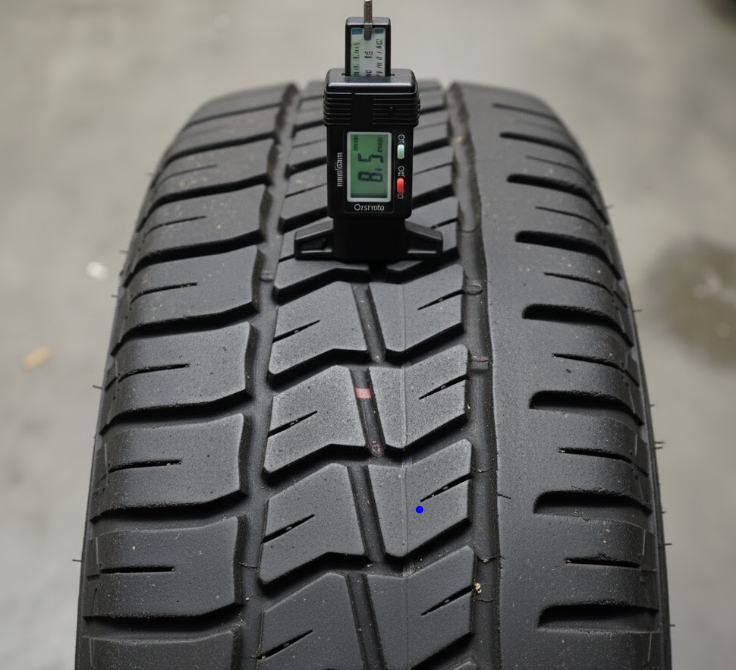
You can buy a tread depth gauge for like $5-10. It’s a little tool that measures the exact depth. Way more accurate than the penny or quarter method.
I’ve got one in my glovebox now. Takes 30 seconds to check all four tires and I know exactly where I’m at. No guessing, no squinting at Lincoln’s head trying to figure out if I can see it or not.
The digital ones are even easier to read but cost more like $20-30. Totally worth it if you’re the kind of person who wants exact numbers and likes tracking things over time.
Most tire shops will check your tread for free when you’re there for other stuff. They’ve got the fancy gauges and they’ll measure it in like 10 seconds. Just ask. Though obviously they want to sell you tires so they might be a bit pushy about it.
My mechanic checks my tread every time I’m in for an oil change and writes the depths on my invoice. Super helpful for tracking how fast they’re wearing and predicting when I’ll need replacements.
What Different Wear Patterns Tell You
The way your tires wear can tell you what’s wrong with your car. It’s like tire forensics or whatever.
Center wear – that’s overinflation. You’re running too much air pressure so the middle of the tire bulges out and wears faster. Let some air out and stop being so obsessive about fuel economy.
Edge wear – underinflation. Not enough air so the tire sags and the edges take all the load. I had this happen once and didn’t notice until I’d already damaged the tires. Check your pressure monthly people.
One edge wear – alignment problem. If the inside or outside edge is way more worn than the rest, your camber or toe is off. Need an alignment and probably need tires soon because uneven wear kills them fast.
Cupping or scalloping – suspension issues. Usually worn shocks or struts that let the tires bounce excessively. Creates a wavy wear pattern. Looks weird, makes noise, drives terrible. Fix your suspension then get new tires.
Patchy wear – could be a few things. Maybe your tires were out of balance for a while. Maybe you lock up the brakes a lot. Creates flat spots or patches of wear.
I’ve experienced basically all of these at various points because apparently I’m terrible at car maintenance. The inside edge wear from bad alignment was the most expensive because I wore through a set of tires in like 30k miles when they should’ve lasted 60k.
When Tread Depth Isn’t The Whole Story
You can have decent tread depth but still need new tires if:
They’re old as hell – rubber degrades over time even if the tread looks fine. Check the DOT code on the sidewall. Last four digits are week and year of manufacture. Anything over 6 years old is questionable. Over 10 years and I don’t care how much tread is left, those tires are expired.
My dad had tires on his truck with great tread depth but they were 9 years old. Sidewalls were dry rotted and cracking. I made him replace them even though he complained about “wasting good tread.” Those tires were a blowout waiting to happen.
Visible damage – cracks in the sidewall, bulges, cuts, punctures that can’t be repaired. Doesn’t matter if the tread’s good, the tire’s compromised. Had a bulge appear after hitting a pothole once. Tread was fine but that tire was done.
They’ve been driven flat – if you drove on a flat tire even briefly, the sidewall got damaged internally. Might look fine externally but the structure’s wrecked. Replace it.
Dry rot – shows up as fine cracks in the rubber, usually in the grooves between tread blocks or on the sidewall. Means the rubber’s breaking down. Seen this on cars that sit for long periods or are parked outside in the sun constantly.
The Oh Crap I Need Tires But I’m Broke Dilemma
Been there. It sucks. Tires are expensive – anywhere from $400 to $1200+ for a set depending on your car and what tires you get.
If you absolutely have to stretch it because money’s tight, here’s the least terrible ways to do it:
Replace the most worn ones first. Usually the fronts on a FWD car. Get two new tires and put them on the rear (counterintuitive but safer), move the better rear tires to the front. Not ideal but better than driving on four bald tires.
Look for rebates and sales. Tire shops run promotions constantly. I got $100 back on my last set through a Michelin rebate. Costco usually has good tire deals if you’re a member.
Consider cheaper brands for non-performance vehicles. You don’t need Michelins on your Camry. A set of decent mid-range tires from Cooper or General or Hankook will be fine and cost way less.
But don’t cheap out with sketchy no-name brands from that weird tire shop that also does tax preparation. Your tires are literally the only thing connecting your car to the road. This is not where you want to save $100.
And definitely don’t do the “I’ll just drive on them a bit longer” thing past the wear bars. I did this once and it’s not worth the anxiety and danger. Better to put tires on a credit card than risk an accident or getting stranded with a blowout.
The Different Rules For Different Climates
If you live somewhere that gets real winter, your tread depth matters even more. Snow and ice need way more tread to grip properly. I’d want at least 6/32″ going into winter, preferably more.
Some places with harsh winters actually require winter tires by law. And those need to have at least 6/32″ to be effective. Running winter tires down to 4/32″ defeats the whole purpose.
All-season tires in snow are already sketchy. All-season tires with low tread in snow are a disaster waiting to happen. My cousin tried driving on worn all-seasons in a snowstorm and ended up in a ditch. Not hurt thankfully but his car was messed up.
If you live somewhere hot and dry like Arizona, tread depth isn’t quite as critical because you’re rarely dealing with wet roads. But you still need functional tread for braking and heat dissipation and not, you know, blowing out at highway speeds.
I’m in the northeast so I deal with everything – summer heat, winter snow, spring rain, fall leaves (which are slippery as hell btw). Keeping good tread year-round is non-negotiable. Seen too many people slide off roads in the rain or snow because they were driving on bald tires.
How To Actually Check Your Own Tires Properly
Here’s my routine that takes maybe 5 minutes total:
Walk around the car and do a quick visual on each tire. Looking for obvious stuff – any flat, any visible damage, tread look super shallow?
Pick one tire and actually measure it. I use my depth gauge and check in like 3-4 spots across the tread – inside, middle, outside. Tells me if wear is even or if I’ve got alignment issues.
Look at the tread wear bars. Are they getting close to the tread surface? How close?
Check for weird wear patterns. Any cupping or scalloping? One edge more worn than the other?
Look at the sidewalls. Any cracks, bulges, or damage?
If I’m being thorough I’ll do this on all four tires. Usually I just spot-check one or two and assume the others are similar unless I know I’ve got uneven wear happening.
Takes barely any time and gives me peace of mind that I’m not driving on tires that are about to catastrophically fail.
When You Should Just Replace All Four
Even if only two tires are worn, sometimes you should replace all four:
AWD vehicles – the tire diameters need to be really close or you can damage the drivetrain. If your two new tires are significantly different diameter from the old ones, bad things happen. Subaru and Audi are especially picky about this.
Performance cars – you want matched grip levels front and rear. Mixing old and new tires creates unpredictable handling. The back end might lose grip before the front or vice versa.
If the “good” tires aren’t that good – if your rears have 5/32″ left, yeah they’re technically above the limit but they’re also getting close. Just replace all four and get another 50k miles instead of replacing two now and two in 6 months.
I made the mistake once of replacing just two tires on my car when all four were getting low. Six months later I had to replace the other two. Should’ve just done all four at once and saved myself a trip to the tire shop and extra mounting/balancing fees.
The Real Cost Of Waiting Too Long
Driving on worn tires isn’t just about the tires themselves. When I hydroplaned that time I mentioned, I easily could’ve rear-ended someone and been looking at thousands in repairs, insurance rate increases, potential injuries, all because I didn’t want to spend $600 on tires.
I know people who’ve gotten in accidents directly caused by bald tires. One friend slid through a red light in the rain and got t-boned. Totaled his car, injured the other driver, got sued. All could’ve been avoided with proper tread.
Even if you don’t crash, worn tires increase your stopping distance significantly. In an emergency that extra 20-30 feet could be the difference between stopping in time and not.
Plus you’re more likely to get a flat or blowout on worn tires. And if that happens at highway speed it can get ugly real fast. Seen pictures of cars that rolled after a blowout. Not fun.
The stress of knowing your tires are sketchy also sucks. Every time it rains you’re white-knuckling the wheel hoping you don’t hydroplane. Every time you have to brake hard your heart rate spikes. Not worth it.
Just Check Your Damn Tires
Look I get it. Tires are boring. They’re expensive. Checking them is easy to forget about. I’m guilty of all of this.
But they’re also the most important safety item on your car that you’re actually responsible for maintaining yourself. Your brakes, your airbags, your seatbelts – those are all engineered to work. Your tires are only as good as you keep them.
Set a reminder on your phone to check them monthly. First of the month, check tire pressure and tread depth. Takes 5 minutes. Do it while you’re getting gas or whatever.
If you’re not sure if your tread is too low, go get them checked. Free at most tire shops. They’ll tell you exactly where you’re at and approximately how many miles you’ve got left.
And when they say you need tires, don’t do what I did and put it off for months. Just order the tires and get it done. Future you will appreciate not hydroplaning into traffic or getting stranded with a blowout.
I’ve learned this lesson multiple times now because apparently I’m slow. Don’t be like me. Be smarter. Check your tread, replace your tires before you absolutely have to, and don’t drive around on bald tires thinking “it’s probably fine.”
It’s not fine. It’s never fine. Just get new tires. Your life is worth more than $600.