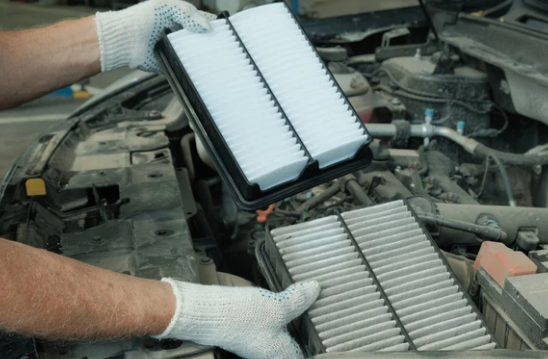
Your engine is basically a giant pump. It needs a precise mix of air and fuel to fire up efficiently. If that air is dirty, your engine has to work harder, it burns more fuel, and it ages faster. Imagine running with a clogged nose—breathing feels heavy, your energy drops, and eventually, your body complains. That’s exactly what your engine feels with a clogged filter.
Even small amounts of dust, sand, or pollen getting past a dirty filter can scratch the cylinder walls, foul spark plugs, and over time, reduce compression. That’s fuel going to waste, power being lost, and tiny, invisible wear happening every time you drive. It might not kill the engine overnight, but over months and years, it’s cumulative.
1. Mileage and Time Are Your First Clues
Manufacturers usually suggest replacing the air filter every 12,000–15,000 km or roughly once a year. But here’s the catch: those numbers assume you’re driving mostly on clean, paved roads in moderate conditions.
If you live in Dhaka or any city with heavy traffic, constant dust, construction sites, or unpaved roads, those numbers shrink drastically. In dusty conditions, an air filter might be clogged at 6,000–8,000 km. Waiting for the “official” interval is just asking for trouble.
Tip: If your car’s service history is hazy, or you bought it used, inspect the filter immediately. Don’t rely on guesswork or hope—it’s cheap insurance against engine wear.
2. Visual Inspection Is Your Most Reliable Tool
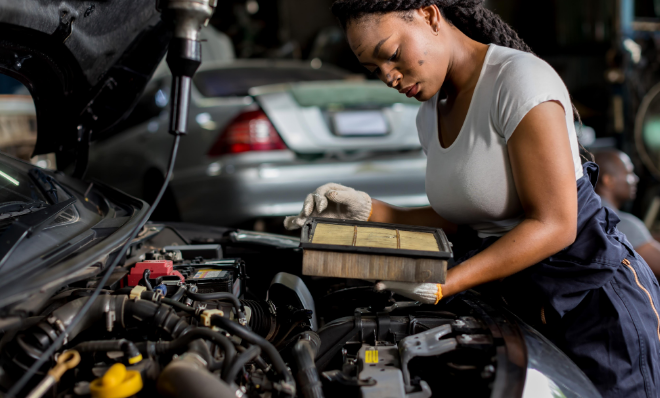
Nothing beats taking the filter out and looking at it. Here’s what to do:
- Open the air filter housing (usually easy, sometimes requires a screwdriver).
- Remove the filter carefully.
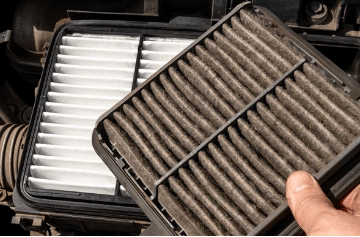
- Hold it up to light: if you can’t see light through it, it’s clogged.
- Look at the color: new filters are generally white or off-white. If it’s dark gray, black, or coated in dust, it’s time to change it.
- Check for debris: leaves, oil stains, or packed dust are immediate red flags.
Even if the filter looks only moderately dirty, consider replacing it if you’ve been driving in challenging conditions. Filters don’t just get “dirty”—they compact over time, reducing airflow even if they don’t look terrible.
3. Pay Attention to How Your Car Feels
A dirty filter doesn’t just sit there quietly. It shows its presence subtly at first:
- Acceleration drops: the car feels sluggish, especially when merging onto highways or overtaking.
- Rough idling: at stops, the engine may feel uneven or vibrate more than usual.
- Fuel efficiency dips: you might notice you’re filling up more often.
These symptoms are easy to ignore. Many drivers shrug and think, “Yeah, maybe traffic is heavy.” But if these signs appear, the filter is likely restricting airflow. Your engine is literally starving for air.
4. Listen to Your Engine
A clogged air filter can affect the sound of your engine:
- It may sound louder than usual.
- You might hear a wheeze, cough, or strain when pressing the accelerator.
This happens because the engine is pulling air through a tight, obstructed path. The harder it works, the louder and more stressed it sounds. Over time, this stress wears out other components like sensors, valves, and even the throttle body.
5. Don’t Ignore the Check Engine Light
Modern cars have airflow sensors. When the air filter is dirty, these sensors notice low airflow and may trigger the check engine light.
Many people panic when this light comes on. But a dirty air filter is a common, easy fix. Checking and replacing the filter may turn the light off immediately. Ignoring it, thinking it’s “probably nothing,” is exactly how small problems turn into expensive repairs.
6. Extra Care for Dusty or Polluted Cities
If you drive daily in dusty or congested cities:
- Check your air filter every 5,000–6,000 km. Waiting for the standard 12,000–15,000 km interval is risky.
- Combine air filter checks with oil changes to save time.
- Keep a spare filter at home or in your trunk if your car allows easy replacement. Some filters are so cheap and quick to replace that it’s practically free insurance.
7. Cost vs. Consequence
Replacing an air filter is cheap: usually a few hundred to a couple thousand BDT, depending on your car. Compare that to:
- Fouled spark plugs that cost several thousand to replace.
- Reduced fuel efficiency eating into your wallet every month.
- Engine wear that may lead to costly repairs down the line.
It’s an absolute no-brainer. The worst-case scenario is that you spent a few minutes and a small amount of money to keep your engine healthy. The alternative is ignoring it until problems snowball.
8. DIY Replacement Made Easy
Most cars make air filter replacement simple:
- Open the housing.
- Remove the old filter.
- Insert the new one.
- Close the housing.
Done in 5–10 minutes for most vehicles. Some cars have filters tucked behind engine covers or hard-to-reach spots. Even then, a mechanic can swap it in under 15 minutes.
Pro tip: Always make sure the new filter seats properly. A loosely fitted filter lets dust bypass it, defeating the purpose.
9. Real-Life Stories
I once had a customer come in complaining that their car “felt weak” and was using more fuel than usual. Visual inspection revealed a filter so packed with dust that it looked like a miniature black carpet. Swapping it out instantly restored power and mileage. The cost? 700 BDT. The lesson? A tiny piece of paper saved the engine from months of strain and fuel waste.
Another friend ignored his filter for 40,000 km. Engine started misfiring. Spark plugs were fouled, throttle sensor affected, fuel consumption shot up. Total repair? Over 25,000 BDT. All because he thought the filter “didn’t matter.”
10. Bottom Line
The air filter is small, cheap, and easy to replace—but it keeps your engine alive. Ignoring it is like ignoring your own lungs: you don’t notice until it starts costing you.
Key takeaways:
- Track mileage and time. Replace on schedule.
- Inspect visually, don’t guess.
- Pay attention to subtle performance drops and engine noises.
- Don’t ignore the check engine light.
- Drivers in dusty or polluted environments need frequent checks.
By keeping the air filter in top shape, your car will:
- Accelerate smoothly.
- Idle quietly.
- Burn fuel efficiently.
- Avoid unnecessary engine wear.
A simple, small, cheap step that makes a massive difference. Don’t skip it.