
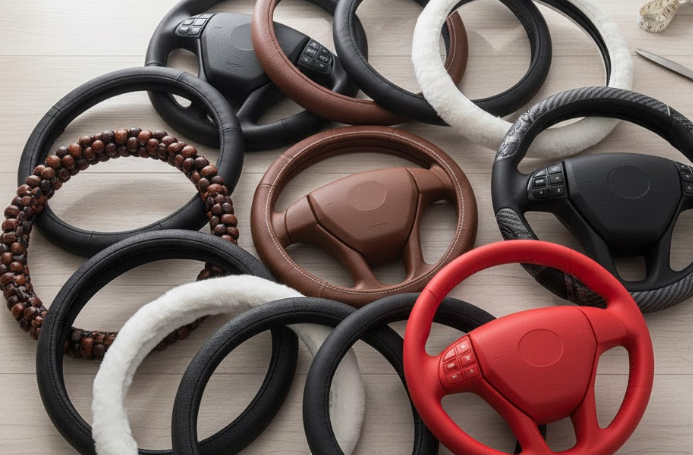
Alright so this is gonna sound dumb but I bought like seven different steering wheel covers before I finally found one that didn’t suck. Seven. I have a drawer full of rejected steering wheel covers that I keep meaning to throw away but never do because maybe someday I’ll need a backup? I don’t know why my brain works this way.
The whole thing started because my car sits outside in the Arizona sun and the steering wheel gets so hot in summer that I literally cannot touch it without burning my hands. Like genuinely painful. I’d have to wait 10 minutes with the AC blasting before I could even drive. My girlfriend kept a spare towel in the car to hold the wheel through. It was ridiculous.
So I went on Amazon and bought the first steering wheel cover that looked decent. Got it in the mail, tried to put it on, and spent 45 minutes wrestling with this thing before I gave up sweating and frustrated. It was like trying to put jeans on after Thanksgiving dinner – technically possible but absolutely miserable and you question all your life choices.
Tried a different one. Too loose, kept spinning around. Another one smelled like a tire factory for weeks. One was so thick I could barely grip the wheel properly. One looked cool but made my hands slip constantly. It was a whole journey of failure and wasted money.
Eventually figured out what actually matters and found one that works. But man, I wish someone had just explained this stuff to me upfront instead of me learning through expensive trial and error. So let me save you from my mistakes because steering wheel covers seem simple but they’re actually weirdly complicated.
Why You Even Want One In The First Place
Let me just start here because not everyone actually needs a steering wheel cover. Car companies spend millions designing steering wheels. Most of them are fine as-is. So why cover it?
Heat protection – this is my reason. If you live somewhere hot and park outside, your steering wheel becomes a torture device in summer. Leather and plastic steering wheels absorb heat like crazy. A cover provides a barrier that doesn’t get as hot. Still warm but not “searing flesh” hot.
My friend in Texas has the same problem. Says without a cover he’d have to use oven mitts to drive in July. I thought he was exaggerating until I visited and touched his steering wheel in a parking lot. Nope. Not exaggerating. That thing was legitimately dangerous.
Cold protection – opposite problem. If you live in frozen tundra states and your car sits outside, your steering wheel in winter is like grabbing an ice cube. Painful and unpleasant. A cover provides insulation.
My cousin in Minnesota uses a fuzzy steering wheel cover in winter specifically for this. Says it makes a huge difference on those -20 degree mornings when everything metal in your car is actively trying to kill you.
Worn/damaged wheel – if your original steering wheel is cracked, peeling, worn smooth, or just gross, a cover hides that. Way cheaper than replacing or repairing the actual wheel.
I bought a used car once where the previous owner had literally worn through the leather on the wheel. Like there were holes. It was disgusting. $15 steering wheel cover solved the problem immediately.
Grip improvement – some factory steering wheels are too smooth or slippery. Adding a textured cover improves grip. Useful if you have sweaty hands or do spirited driving.
Aesthetics – some people just don’t like how their steering wheel looks. Want different color, different texture, whatever. Fair enough.
Comfort – maybe your steering wheel’s too thin or too thick or the shape hurts your hands on long drives. A cover can change the feel.
If none of these apply to you, don’t bother. Your stock steering wheel is probably fine. I see people putting covers on perfectly good steering wheels for no reason and I’m like… why? Just extra bulk and hassle for zero benefit.
Material Matters Way More Than You Think
This is where I screwed up the most. I just bought whatever looked decent without thinking about materials. Huge mistake. The material determines everything – how it feels, how it wears, how hard it is to install, all of it.
Genuine leather – the fancy option. Feels premium, looks nice, ages well if you take care of it. But also expensive, requires maintenance, and can get slippery when your hands sweat.
I tried one of these and honestly it felt great. Really nice in the hands, looked classy. But in Arizona heat it still got pretty warm and my hands would slip on it after like 20 minutes of driving. Also cost like $50 which felt insane for a steering wheel cover.
If you’ve got a nice car and want something that matches the quality, leather makes sense. But for my beat-up daily driver it felt like putting a tuxedo on a scarecrow. Overkill.
Synthetic leather – tries to look and feel like real leather but costs way less. This is what most “leather-look” covers actually are. Quality varies wildly.
I’ve had good synthetic leather covers and terrible ones. The cheap ones crack and peel after a few months in the sun. The decent ones hold up fine and you honestly can’t tell the difference from real leather unless you’re a leather expert.
If you’re going this route, spend at least $20-25. The $10 ones are trash. False economy. They’ll fall apart in six months and you’ll end up buying another one anyway.
Microfiber – soft, comfortable, good grip, doesn’t get as hot or cold. This is what I ended up settling on for my daily driver.
Feels nice, doesn’t slip, survives the heat without melting or getting gross. Not as fancy looking as leather but way more practical for actual daily use. Only downside is it shows dirt easier and you have to clean it occasionally.
My microfiber one cost like $18 and has lasted two years so far. Best money-to-value ratio I’ve found. Not fancy but it works.
Rubber/silicone – grippy as hell, easy to clean, durable. But can feel weird and sticky, and the texture might annoy you on long drives.
Had one of these for like a week before I couldn’t stand the feel anymore. The grip was insane – like your hands stick to it – but it felt so weird. Like holding a giant rubber band. Some people love this, I hated it.
Good for trucks or work vehicles where you need maximum grip and don’t care about comfort. Not great for daily driving in my opinion.
Fabric/cloth – cheap, comfortable, comes in every pattern imaginable. But wears out fast, absorbs sweat and dirt, gets gross over time.
My first steering wheel cover was fabric. Lasted maybe eight months before it was visibly dirty and worn. Tried washing it and it just never felt clean again. Plus it provided zero heat protection which was literally the whole point.
Fine for a cheap temporary solution but don’t expect it to last. You get what you pay for.
Wood bead covers – those ones that look like a bunch of wooden beads strung together. Popular with taxi drivers for some reason.
Never tried one personally but I’ve ridden in cars with them. They feel weird, make noise when you turn the wheel, and seem like they’d be uncomfortable on long drives. But they definitely don’t get hot which is their main selling point.
My uber driver once told me he swears by his bead cover because it never gets hot and massages his hands or something. I smiled and nodded while internally thinking that sounds terrible but hey, different strokes.
Sheepskin – ultra soft and fluffy. Luxury option. Feels amazing, great insulation, looks fancy.
A friend has one and won’t shut up about how comfortable it is. I’m like yeah but does it look ridiculous? And he’s like “I don’t care, my hands are in heaven” which is a fair point honestly.
Expensive though. Like $60+ for a good one. And probably overkill unless you drive a luxury car or do tons of long-distance driving.
Sizing Is Where Everyone Messes Up
Including me. Multiple times. Because steering wheel covers don’t have like standardized sizes that make sense. They have measurements in inches or centimeters and you’re supposed to know what that means for your specific steering wheel.
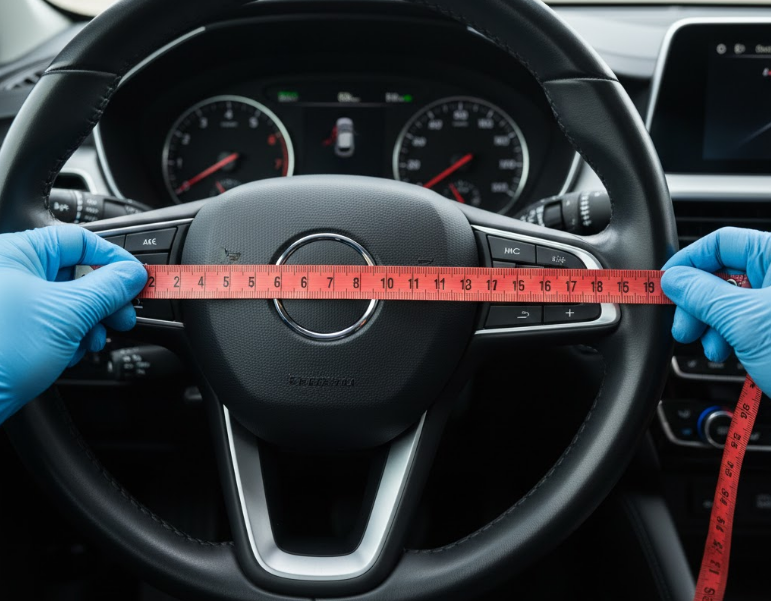
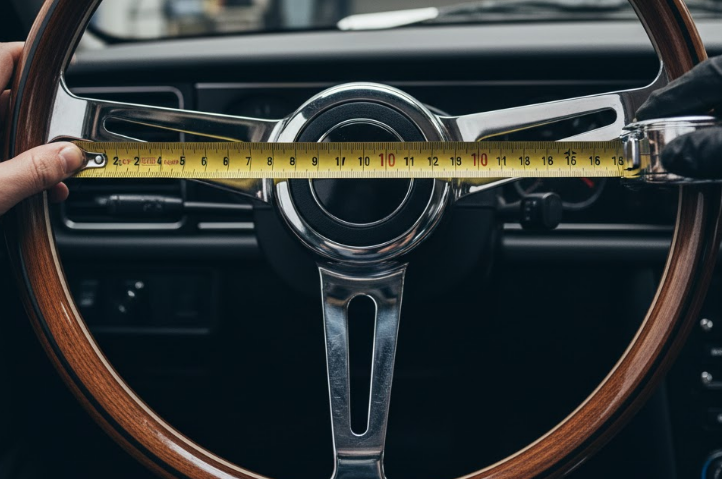
Your steering wheel diameter is measured from outer edge to outer edge, not the grip thickness. Most car steering wheels are 14.5 to 15.5 inches. But you need to actually measure yours because guessing is how you end up with a cover that doesn’t fit.
I bought a “universal fit” cover first time. Universal is a lie. It was too big for my steering wheel and kept spinning around while I drove. Super dangerous and annoying. Returned it immediately.
Here’s how to actually measure your steering wheel:
Take a tape measure or string. Measure straight across the wheel from outside edge to outside edge through the center. That’s your diameter. Write it down don’t try to remember it because you’ll forget and buy the wrong size anyway.
Then check the thickness of your steering wheel grip. The part you actually hold. Some steering wheels are chunky, some are thin. This matters for how the cover fits.
Most covers list their size range like “14.5-15.5 inches” or whatever. Get one that matches your measurement. Don’t size up thinking you want it looser. You don’t. Covers need to be snug to stay in place.
I learned this the hard way when I bought a 15-16 inch cover for my 15 inch steering wheel thinking the extra room wouldn’t matter. It mattered. Thing spun around constantly. Bought a 14.5-15.5 inch instead and it fit perfectly.
If you’re between sizes, go smaller not larger. Slightly tight is way better than slightly loose. Tight stays in place. Loose is actively dangerous.
Installation Can Range From Easy To Rage-Inducing
Some steering wheel covers slip on in 30 seconds. Others require the strength of ten men, the patience of a saint, and seriously considering just living with a burning hot steering wheel because this cannot possibly be worth it.
Slip-on elastic covers – these stretch over the wheel. When sized correctly they’re pretty easy. When sized wrong they’re impossible.
My microfiber one is slip-on. Took maybe 5 minutes to get on the first time. You just stretch it over bit by bit working your way around. Little awkward but not bad.
The key is making sure it’s the right size. Too big and it won’t stay. Too small and you’ll hurt yourself trying to force it on. Ask me how I know.
Lace-up covers – these wrap around and you lace them together with string or leather cord. More work to install but fit more steering wheels.
I tried one of these and gave up halfway through lacing it. My fingers hurt, the lacing kept coming undone, I couldn’t get the tension even. It looked terrible. Ripped it off and threw it in the “failed cover” drawer.
My friend loves lace-up covers though. Says once you get the technique down it’s fine and they fit better than slip-on. I’ll take his word for it because I’m never trying that again.
Wrap covers – these wrap around like a bandage and secure with velcro or snaps. Easy to install, adjustable, but can look bulky.
Haven’t tried these personally but they seem like the easiest option. No fighting to stretch them on, just wrap and secure. Probably good if you have hand strength issues or just want something simple.
Tips for installation – warm up the cover first if it’s leather or synthetic leather. Heat makes it more pliable and easier to stretch. Hair dryer works. Just don’t melt it.
Install from the top. Start at 12 o’clock and work your way down both sides evenly. Don’t try to do one side completely then the other. You’ll end up with it all bunched up wrong.
Use your bodyweight not just hand strength. Rest the wheel against your stomach and use your body to help stretch and position the cover.
Take breaks if you need to. I’ve definitely gotten frustrated mid-installation and had to walk away for 10 minutes before coming back to finish.
Or just pay someone to do it. Some people offer installation services. Not sure how much it costs but probably worth it to avoid the hassle.
The Comfort Factor Nobody Talks About
You know what nobody mentions in product descriptions? How the cover actually feels to hold for hours at a time. Because that’s what you’re doing – holding this thing for potentially hours every day.
Thickness matters – too thin and you don’t get much padding or insulation. Too thick and you can’t grip the wheel properly and your hands get tired.
I had one that was super thick and padded. Felt like driving with oven mitts on. Could barely feel the wheel, couldn’t grip it properly, my hands were constantly slipping. Lasted exactly one drive before I ripped it off.
The sweet spot is like 1/4 inch to 1/2 inch of padding. Enough for comfort and insulation, not so much that it feels weird.
Texture affects everything – smooth covers can be slippery. Super grippy covers can be sticky and annoying. You want something in between.
The microfiber texture on my current cover is perfect. Enough texture for grip without being aggressive about it. I can slide my hands to different positions easily but they don’t slip when I don’t want them to.
Meanwhile that rubber cover I tried? Hands stuck to it. Had to peel them off to adjust grip. Awful.
Seams and stitching – check where the seams are. If they’re right where your hands sit, they’re gonna annoy you. You want seams positioned away from your normal grip zones.
Had a cover once where the seam ran right along the bottom where my left hand sits for highway driving. That seam rubbed against my hand constantly. Drove me crazy. Didn’t last long.
Shape compatibility – some steering wheels are round, some are D-shaped, some have thumb grips, some have paddles behind them. Make sure your cover works with your specific wheel shape.
I didn’t think about this and bought a cover that didn’t accommodate my steering wheel’s thumb grips. They poked through the cover all weird. Looked terrible and felt terrible.
Weight – heavier covers can make the wheel feel different, like there’s more resistance. Lighter covers disappear more. This is subtle but you notice it.
Never thought about this until I tried a really heavy leather cover. The wheel felt sluggish somehow. Like there was more rotational weight. Probably barely measurable but I could feel it.
When Covers Actually Make Things Worse
Real talk time – sometimes steering wheel covers are a bad idea. Nobody wants to admit this because companies want to sell them to everyone, but there are situations where you shouldn’t use one.
If your airbag’s in the wheel – some covers can interfere with airbag deployment. They say they don’t but I’m skeptical. Your airbag needs to deploy fast and clean. Extra material in the way could cause problems.
I’m not a safety engineer so I don’t know for sure. But it makes me nervous. If I had a car with a really prominent airbag in the wheel I’d probably skip the cover just to be safe.
If it makes you grip wrong – thick covers can change the diameter of your wheel enough that your grip feels off. If you find yourself gripping awkwardly or your hands getting tired, the cover’s probably wrong.
If it reduces sensitivity – you get feedback through your steering wheel. Road feel, traction limits, what the front wheels are doing. A thick squishy cover can dull that feedback.
Doesn’t matter for appliance cars where you don’t care. Matters a lot for sporty cars where you want to feel everything. I wouldn’t put a cover on a Miata or something. Defeats the purpose.
If it doesn’t stay in place – a cover that spins or shifts is genuinely dangerous. Worse than no cover. If yours moves at all, get rid of it immediately.
Had this happen and it was terrifying. Mid-turn the cover shifted slightly and suddenly I couldn’t grip properly. Scary moment until I got it straightened out. Never drove with that cover again.
If it blocks buttons or controls – some steering wheels have buttons all over for cruise control, audio, whatever. Make sure your cover doesn’t block these or make them hard to use.
Seen covers that covered up the horn access or blocked paddle shifters. What’s the point then? You’ve just made your car harder to use.
The Seasonal Strategy That Actually Works
Here’s what I’ve learned works best – different covers for different seasons. I know that sounds extra but hear me out.
Summer cover – light colored, breathable material, heat-resistant. I use a light gray microfiber. Reflects heat, doesn’t get too hot, comfortable.
Makes a huge difference. My steering wheel is still warm in summer but not painful. I can actually get in my car and drive immediately instead of waiting for it to cool down.
Winter cover – darker color, insulated, soft. I swap to a black microfiber with more padding when it gets cold. Retains warmth, comfortable in cold weather.
Okay fine I live in Arizona so winter is like 50 degrees and I barely need this. But when I visit family up north during holidays I appreciate having it.
Year-round cover – if you don’t want to swap, get something neutral that handles both. Medium gray or tan microfiber works. Won’t be optimal for either season but good enough for both.
My friend does this with his beige leather cover. Uses it all year. He’s not as obsessive as me about optimization though.
The swap takes like 5 minutes twice a year. Totally worth it for having the right cover for conditions. But I’m also the kind of person who has separate summer and winter floor mats so maybe I’m just weird.
Color Choice Is More Important Than You Think
I bought a black steering wheel cover first time because black looks cool and sporty and whatever. In Arizona. Where it’s 115 degrees in summer.
That black cover absorbed heat like a professional heat absorber. It got SO hot. Defeated the entire purpose of having the cover. I’m an idiot.
Light colors for hot climates – white, tan, light gray. They reflect heat instead of absorbing it. Physics or whatever.
My light gray cover stays dramatically cooler than the black one did. Still gets warm but not “I need oven mitts” warm.
Dark colors for cold climates – black, dark brown, navy. Absorb heat from sun when it’s out, retain warmth better.
If you live in Minnesota probably don’t get a white steering wheel cover. It’ll be freezing and also show every bit of dirt immediately.
Show dirt consideration – light colors show every smudge and mark. Dark colors hide dirt but show dust and lint.
I clean my light gray cover like once a month because I can see when it gets grubby. My previous black cover I probably should’ve cleaned way more often but couldn’t see the dirt so I didn’t.
Interior matching – some people care about matching their interior color scheme. I do not. My interior is black and my cover is light gray and I don’t care even a little bit.
But if you’re aesthetically sensitive, consider how it’ll look with your interior. Clashing colors might bother you every time you look at it.
Resale value – if you’re planning to sell your car eventually, don’t get something super weird looking. Keep it neutral.
Though honestly just remove the cover before selling. Show the original steering wheel. Nobody wants to buy a car with someone else’s crusty steering wheel cover on it.
Price Versus Quality Reality Check
I’ve spent anywhere from $8 to $60 on steering wheel covers. Here’s what I learned about price versus actual quality:
Under $15 – mostly garbage. Thin materials, poor fit, fall apart quickly, smell weird. False economy. You’ll end up buying another one soon.
Exception: basic fabric covers from auto parts stores can be okay as temporary solutions. Just don’t expect them to last.
$15-$30 – sweet spot for most people. Good materials, decent durability, won’t break the bank if it doesn’t work out.
This is where my successful microfiber cover lives. $18 and it’s perfect. Has lasted two years so far. Best value I’ve found.
$30-$50 – premium materials like real leather, better construction, often better fit. Worth it if you drive a lot or want something really nice.
Had a $45 leather cover that was legitimately beautiful. Just didn’t work for my climate. But quality was noticeably better than cheaper options.
Over $50 – luxury options or specialized covers. Sheepskin, high-end leather, custom-made stuff. Only worth it if you have specific needs or a really nice car.
My friend spent $70 on a custom sheepskin cover for his BMW. Looks and feels amazing. Also he drives like 30,000 miles a year so he’s in his car constantly. Makes sense for him.
For my beat-up Honda that sits in parking lots getting door dings? Not spending $70 on a steering wheel cover. That’s insane.
Don’t cheap out on safety stuff – but also don’t overspend for no reason. Figure out what you actually need and spend appropriately.
Maintenance Nobody Tells You About
Steering wheel covers get dirty. Your hands are touching them constantly. They need occasional cleaning or they get gross.
Leather covers – wipe with leather cleaner every month or so. Condition them occasionally or they’ll dry out and crack.
Had a leather cover that I never maintained. It was beautiful for like six months then started cracking and looking terrible. Should’ve conditioned it.
Microfiber covers – most can be spot cleaned with mild soap and water. Some can be removed and machine washed but check first.
I hand wash mine in the sink with dish soap every few weeks. Takes 5 minutes, air dries in an hour. Stays clean and fresh.
Rubber/silicone – just wipe them down. Super easy to clean. Maybe the one advantage of the weird sticky feeling.
Fabric – can usually be spot cleaned or some are machine washable. Will eventually get too gross and need replacing though.
This is why I don’t like fabric covers. They’re basically impossible to deep clean. Just get progressively dirtier until you give up and buy a new one.
Smell issues – some covers smell weird when new. Usually goes away after a few days in the sun. If it doesn’t, return it because that smell is never leaving.
Had one that smelled like burning rubber for two weeks. Finally returned it because I couldn’t stand it anymore. Life’s too short to drive around smelling tire factory.
[Image: Person cleaning a microfiber steering wheel cover with a cloth and cleaning solution]
Installation Mistakes I’ve Made So You Don’t Have To
Let me just list all the dumb things I did so you can learn from my failures:
Buying without measuring – just guessed my steering wheel size. Got it wrong. Cover didn’t fit. Had to return it and pay return shipping.
Not reading the material description – bought “leather” that was actually vinyl. It was terrible. Read carefully before buying.
Installing in direct sunlight – tried to put a cover on in my driveway in July. My hands were sweating, the cover was hot and difficult to stretch. Do it inside or at least in shade.
Forcing a cover that doesn’t fit – spent 30 minutes trying to force an oversized cover to work. It never worked. Just returned it immediately if it doesn’t fit easily.
Not checking airbag compatibility – didn’t think about this until after I bought a cover. Got lucky that it was fine but should’ve checked first.
Buying based on looks alone – bought a cool looking cover that felt terrible. Function over fashion for something you’re touching constantly.
Not testing grip before long drives – installed a new cover and immediately went on a 3-hour drive. My hands slipped constantly. Test it on short drives first.
Keeping covers that don’t work – kept trying to make covers work when they clearly didn’t. Should’ve just returned them immediately and tried something else.
Not considering climate – bought covers without thinking about heat/cold. Important factor that affects everything.
Buying duplicate sizes by accident – didn’t keep track of what sizes I’d already tried. Bought the same wrong size twice. Keep notes.
What I’d Actually Recommend
After all this trial and error here’s what I’d suggest to different people:
Hot climate daily driver – light colored microfiber, 14.5-15.5 inch (or whatever fits your wheel). Simple, cheap, effective. This is what I use.
Cold climate daily driver – padded microfiber or leather, darker color for warmth retention. Maybe fuzzy for extra comfort.
Work truck or utilitarian vehicle – rubber or silicone for grip and durability. Easy to clean when they get nasty.
Nice/luxury car – real leather or high-quality synthetic leather. Match your interior. Worth spending more here.
Track/sporty car – none. Or if you must, thin alcantara or perforated leather. Don’t reduce steering feel.
Occasional use/beater car – cheap fabric or basic microfiber. Why spend money on something you barely use.
Uber/delivery vehicle – durable microfiber, medium color to hide dirt. Gets heavy use so needs to last. Easy to clean.
If you have hand issues – padded covers with good grip texture. Reduces hand fatigue. Worth spending more for comfort.
If you’re indecisive like me – buy from somewhere with easy returns. Try multiple options. Accept that the first one probably won’t be perfect.
Signs You Should Just Skip The Cover
Sometimes the answer is no cover at all. Here’s when:
Your steering wheel’s fine as-is and nothing about it bothers you. Don’t create problems.
You have airbag concerns and don’t want to risk it. Valid.
Your steering wheel’s a weird shape and covers don’t fit right. Some vehicles are like this.
You do spirited driving and care about steering feel. Covers reduce feedback.
You tried covers and hated all of them. Not everyone likes them and that’s okay.
You park in a garage so temperature’s never an issue. Don’t need it.
You’re lazy about maintenance and know you’ll never clean it. Don’t bother.
My girlfriend refuses to use a cover. Just keeps a towel in her car for summer and uses it to hold the wheel until AC cools things down. Works for her. Not everyone needs to optimize everything like I do.
The Actual Bottom Line After All This
Steering wheel covers are way more complicated than they should be. For something that seems so simple – a piece of material that goes on your steering wheel – there’s a surprising amount that can go wrong.
But when you find the right one it’s legitimately great. My steering wheel is more comfortable, doesn’t burn me in summer, looks better, and I spent $18 to achieve all this. Worth it.
The key is:
- Measure your steering wheel don’t guess
- Consider your climate and choose materials accordingly
- Don’t cheap out on $10 garbage
- Be willing to try a couple options to find what works
- Return stuff that doesn’t fit instead of trying to make it work
- Maintain it occasionally so it doesn’t get disgusting
And honestly if you buy something in the $18-$30 range from a decent brand with good reviews, you’ll probably be fine. I overthought this way more than necessary. Most people buy one steering wheel cover and it works fine for them.
I’m just cursed with being picky and living in a climate that turns steering wheels into torture devices. Your experience will probably be simpler than mine.
Just don’t do what I did and collect a drawer full of failed steering wheel covers. Learn from my mistakes. Buy smart the first time. And maybe measure your steering wheel before ordering. That would’ve saved me so much hassle.
Now if you’ll excuse me I need to go finally throw away all these covers I’ve been hoarding for no reason. Or maybe I’ll keep them “just in case.” Yeah I’ll definitely keep them. I have a problem and I need help but that’s a different conversation entirely.