
Spent three months adding air to my front right tire every single week before I finally decided to actually fix the slow leak. Kept telling myself “it’s not that bad” and “I’ll deal with it later.” Classic procrastination mixed with thinking it would be this huge expensive hassle.
Finally got tired of stopping at gas stations every Sunday morning. Decided to figure out what was actually causing it. Turned out to be a tiny nail I could barely see. Fixed it myself in like 20 minutes for $8.
Felt pretty dumb for dealing with the inconvenience for months when the solution was that simple. But also realized I’m not alone – tons of people drive around on slow leaks forever because they don’t know it’s usually an easy fix.
Let me save you from my months of unnecessary gas station trips.
The Short Answer
Most slow leaks are fixable at home with a plug kit for under $10, or at a tire shop for $15-30. You don’t need a new tire unless the leak is in the sidewall or the tire is damaged beyond repair.
The key is actually finding the leak and determining if it’s patchable. Once you know what you’re dealing with, fixing it is usually straightforward.
Don’t be like me driving around for months adding air constantly. Just fix the thing.
First: Confirm You Actually Have A Leak
Before you start hunting for leaks, make sure that’s actually your problem:
Slow temperature drop – if it’s getting colder, your tire pressure naturally drops. This isn’t a leak, just physics. Add air and see if it stays.
All tires losing pressure – if every tire is going down slowly, you probably don’t have leaks. Tires naturally lose about 1 PSI per month. Just add air.
One tire consistently low – this is a leak. If the same tire keeps losing pressure over and over, something’s letting air out.
I wasted time once thinking I had a leak when really it was just seasonal temperature change. When it dropped from 70 to 40 degrees my tires lost like 4 PSI just from the cold. That’s normal.
But if one tire loses 5 PSI every week while the others stay fine? Yeah, that’s a leak.
Finding The Leak
This is honestly the hardest part. Once you find it, fixing is usually easy.
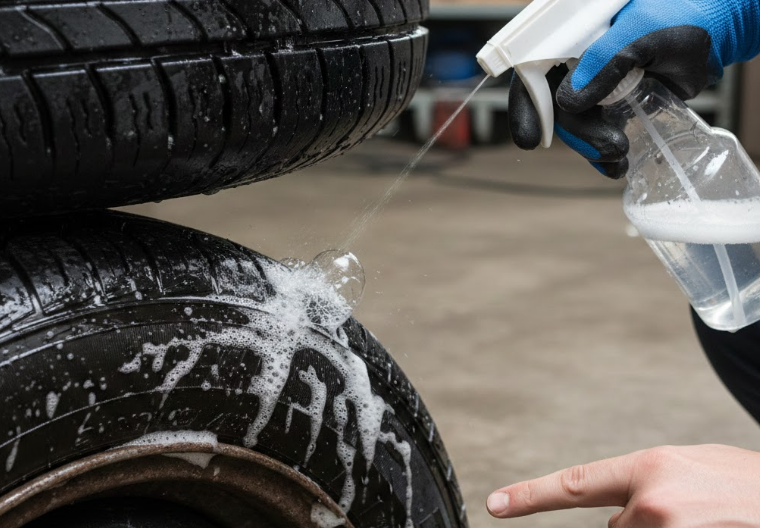
The soapy water method – mix dish soap and water in a spray bottle. Spray it all over the tire while it’s inflated. Look for bubbles. Where you see bubbles, that’s your leak.
Check these spots carefully:
- Tread surface (most common)
- Valve stem
- Bead where tire meets rim
- Sidewall
- Around any visible damage
I found my nail by spraying soapy water all over the tread. Tiny little bubbles appeared around this nail head that was barely sticking out. Would’ve never spotted it just by looking.
The water bucket method – if you can’t find it with spray, remove the tire and submerge it in water. Bubbles will show you exactly where air is escaping. Works great but requires more effort.
Listen and feel method – sometimes you can hear a hiss or feel air on your hand if the leak is big enough. Usually doesn’t work for slow leaks though.
The tire shop has better tools – they have machines that spin the tire in water and can find leaks you’ll never spot at home. If you’re struggling, just take it to a shop.
When You Can Fix It Yourself
You can DIY fix a leak if:
It’s in the tread – nail, screw, or puncture in the thick part of the tire where it contacts the road. This is patchable.
The hole is small – quarter inch or smaller. Bigger holes need professional patches or tire replacement.
The tire is otherwise healthy – good tread depth, no sidewall damage, not ancient.
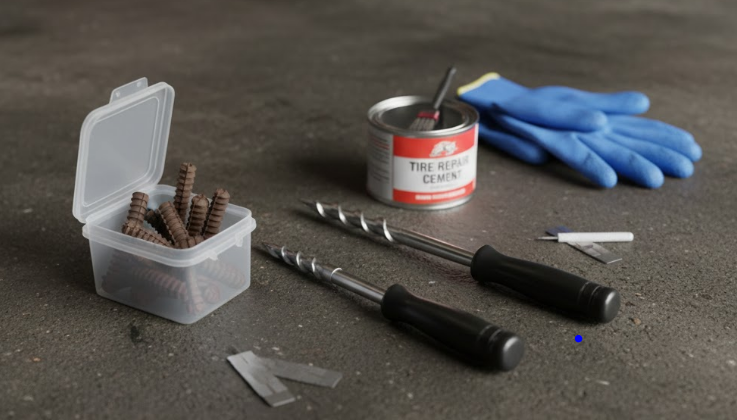
You have the right tools – plug kit costs like $8 and includes everything you need.
My nail was perfectly positioned in the tread, nice and small. Textbook patchable situation.
When You Need Professional Help
Take it to a shop if:
Leak is in the sidewall – sidewalls flex too much. Patches don’t hold and it’s dangerous. You need a new tire.
Hole is too big – anything bigger than a quarter inch should be professionally patched from the inside or tire replaced.
Leak is at the bead – where tire meets rim. Could be corrosion, bent rim, or damaged bead. Needs professional cleaning/repair.
Valve stem is leaking – these can be replaced cheaply but need proper tools. Shop will do it in 5 minutes.
You’re not comfortable doing it – totally fine. Shops charge $15-30 to plug a tire. Not worth hurting yourself over.
I’ve done plugs myself but I took my car to a shop when I had a valve stem leak. They replaced it for $12 and took like 3 minutes. Worth it.
The DIY Plug Method
If your leak qualifies for DIY, here’s how to plug it:
Get a plug kit – auto parts store, Walmart, Amazon. Should include: reamer tool, plug tool, rubber plugs, and rubber cement. Cost like $8-15.
Leave the nail/screw in – don’t pull it out yet. Mark where it is so you can find the spot again.
Let some air out – don’t need the tire fully deflated, just not rock hard. Makes it easier to work with.
Remove the offending object – pull out the nail/screw with pliers. Now you have a hole.
Ream the hole – use the reamer tool (rough spiral tool) to clean and roughen the hole. Push it in and out a few times. This helps the plug stick.
Prep the plug – thread a rubber plug through the eye of the plug tool. Apply rubber cement to the plug.
Insert the plug – push the plug tool straight into the hole until only about half an inch of plug is sticking out. This is the hardest part – you need decent force.
Pull out the tool – yank the plug tool straight out quickly. The plug stays in the tire, the tool comes out. The plug should be firmly seated with excess sticking out both sides.
Trim the excess – cut the plug flush with the tread. Don’t cut too deep, leave a tiny bit sticking out.
Reinflate – air up the tire to proper pressure. Check for leaks with soapy water.
Drive it – the plug needs to seat properly. Drive around the block, then recheck pressure.
I was nervous my first time doing this. Thought I’d screw it up. But it’s honestly pretty straightforward once you do it. The reaming and pushing the plug in takes some muscle but it’s not complicated.
The Professional Patch Method
When you take it to a shop, they usually do an internal patch which is more permanent than a plug:
They remove the tire – dismount it from the rim completely.
Clean and inspect – make sure there’s no internal damage you can’t see from outside.
Buff the area – roughen up the inside of the tire where the patch will go.
Apply patch – use a rubber patch with vulcanizing cement that chemically bonds to the tire.
Remount and balance – put tire back on rim, inflate, and balance it.
This is more work but creates a better seal. Some shops do a combination patch-plug which is even better. My understanding is internal patches are more reliable long-term.
Cost is usually $15-30 depending on where you go. Worth it if you’re not comfortable doing it yourself or if the leak is tricky.
What About Valve Stems
Valve stem leaks are super common and people don’t think about them. The valve core can get old and leak, or the rubber stem itself can crack.
Symptoms – tire slowly loses air but you can’t find any puncture. Soapy water on the valve shows bubbles.
The fix – replace the valve core (easy with valve core tool) or replace the whole stem (needs professional tools).
I had a slow leak once that drove me crazy. Couldn’t find any puncture. Finally sprayed soapy water on the valve stem and boom – bubbles. Replaced the valve core for $3 and problem solved.
Valve stems are especially prone to leaking on older cars or after winter when road salt corrodes them.
The Bead Leak Problem
If your leak is where the tire meets the rim (the bead), this is trickier:
Causes:
- Corrosion on the rim
- Bent rim from hitting a pothole
- Damaged tire bead
- Dirt or debris preventing good seal
Signs:
- Tire loses air but no visible puncture in tread
- Soapy water shows bubbles at rim edge
- Usually worse after hitting bumps
Fix:
- Shop needs to break the bead, clean the rim thoroughly, check for damage, reseat and seal
- Sometimes they use bead sealer
- If rim is bent, needs straightening or replacement
I’ve never had a bead leak but my friend did after hitting a massive pothole. His rim was slightly bent. Shop straightened it and resealed the tire for like $40.
How Long Do Plugs Last
A properly done plug can last the life of the tire. I’ve had plugs last 40k+ miles with zero issues.
That said:
Monitor it – check pressure more frequently for the first month after plugging. Make sure it’s holding.
It’s not permanent like new – technically a plug is a “temporary” repair but in practice they last forever if done right.
Internal patch is better – if you want maximum reliability, get an internal patch or patch-plug combo done at a shop.
Some people say plugs are only temporary and you need an internal patch. In my experience, a good plug is fine for the life of the tire. But I’m just some guy, not a tire engineer.
When You Actually Need A New Tire
Sometimes the tire is done and you need to replace it:
Sidewall damage – cracks, bulges, punctures in the sidewall. Not repairable.
Multiple repairs – if you’ve already patched multiple spots or the repairs are close together, might be time for new rubber.
Tread is worn – if you’re at 3/32″ or less tread depth, just get a new tire instead of repairing.
Tire is old – rubber degrades over time. If your tire is 6+ years old, might not be worth repairing.
Damage is extensive – big gashes, chunks missing, major deformation. It’s toast.
I tried to plug a tire once that had a nail and also had cracks in the sidewall. Shop told me not to bother, tire was done anyway. Saved me from wasting time on a dying tire.
The Fix-A-Flat Debate
Those emergency tire sealant cans (Fix-A-Flat, etc) are controversial:
Pros:
- Gets you to a shop if you’re stranded
- Can work in a pinch
- Better than being stuck on the highway
Cons:
- Makes a huge mess inside the tire
- Can damage TPMS sensors
- Shops hate dealing with it
- Often doesn’t actually seal the leak well
- Makes proper repair harder/impossible
My take: Use it if you’re stranded and need to limp to safety. Don’t use it as a permanent fix. If you’re at home and discover a leak, just drive slowly to a shop or fix it properly. Don’t spray sealant goop in there.
I used Fix-A-Flat once when I got a flat 50 miles from home on a Sunday. It worked to get me home. Then I had to get a new tire because the shop said they couldn’t patch it with all that crap inside. Expensive lesson.
Preventing Future Leaks
You can’t prevent every nail on the road, but you can reduce your risk:
Avoid construction zones – nails and screws everywhere. Take a different route if possible.
Don’t drive on the shoulder – debris accumulates there.
Inspect tires regularly – look for embedded objects before they fully puncture. I’ve pulled out nails that were just starting to go in.
Keep tires properly inflated – underinflated tires are more prone to damage.
Replace old tires – aged rubber is more likely to crack and leak.
I do a quick walk-around of my tires every couple weeks. Just looking for anything weird stuck in the tread. Caught a screw once before it caused a leak.
My Current Leak-Check Routine
After dealing with that three-month slow leak ordeal, I’m better about staying on top of this:
Check pressure monthly – first Sunday of the month. If one tire is consistently lower, investigate.
Visual inspection – quick look at tires when I’m washing the car or getting gas. Looking for obvious problems.
Pay attention to TPMS – if the low pressure light comes on, don’t ignore it. Figure out why.
Fix leaks immediately – no more procrastinating for months. Find it and fix it within a week.
Haven’t had a slow leak in like two years now. Probably jinxed myself by writing this but whatever.
The Cost Breakdown
So you know what you’re looking at money-wise:
DIY plug kit: $8-15 Shop plug: $15-30 Shop internal patch: $20-40 Patch-plug combo: $25-45 Valve stem replacement: $10-20 Bead reseal: $30-50 New tire: $80-200+ depending on tire
My nail would’ve cost me $20 at a shop. I did it myself for $8 because I already had the plug kit. Either way, way cheaper than I expected.
Compare that to three months of stopping for air twice a week and the risk of getting stranded with a flat. Should’ve just fixed it immediately.
Don’t Ignore It
Here’s why you shouldn’t drive around on a slow leak like I did:
It gets worse – small leaks can become big leaks. That nail can work its way in deeper.
Tire damage – running low on air damages the tire structure. You might turn a repairable puncture into a ruined tire.
Blowout risk – unlikely with a slow leak but possible, especially in hot weather or highway speeds.
Inconvenience – constantly adding air is annoying. Just fix it once and be done.
TPMS light – that warning light glowing at you all the time is distracting.
I got lucky my slow leak didn’t turn into a bigger problem. Could’ve easily had the tire fail completely on the highway because I was too lazy to deal with it.
The Bottom Line
Slow tire leaks are usually cheap and easy to fix. Find the leak, determine if it’s patchable, and either plug it yourself or take it to a shop.
Don’t overthink this. It’s not a massive repair. You’re not looking at hundreds of dollars unless the tire is actually shot.
And definitely don’t do what I did – driving around for months constantly adding air because you’re too lazy to spend 20 minutes fixing the actual problem.
Your options:
- DIY plug for under $10
- Shop repair for $15-40
- New tire if it’s not repairable
Just deal with it. Future you will be grateful you’re not stopping at air pumps every week.
Now go check if that tire that’s always a bit low actually has a leak you should fix. I bet it does and I bet you’ve been putting it off just like I did.