
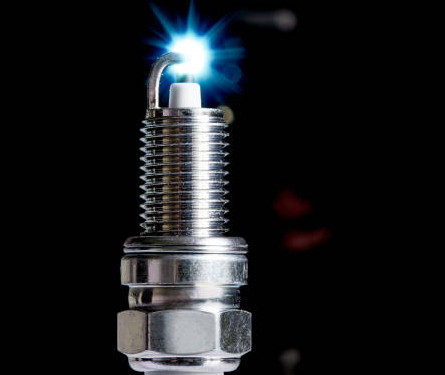
Mechanic quoted me $280 to replace spark plugs. I nearly paid it before my friend said “dude, spark plugs are the easiest thing you can do yourself.”
Looked it up. People on YouTube made it look simple. Bought the parts and tools for $60 total. Figured worst case I screw up and take it to mechanic anyway.
Did it myself in about 90 minutes including time figuring stuff out. Car ran noticeably better immediately. Saved $220.
Felt like an idiot for almost paying someone $280 to do something that easy. Now I do my own spark plugs every 60k miles and laugh at the money I’ve saved.
The Short Answer
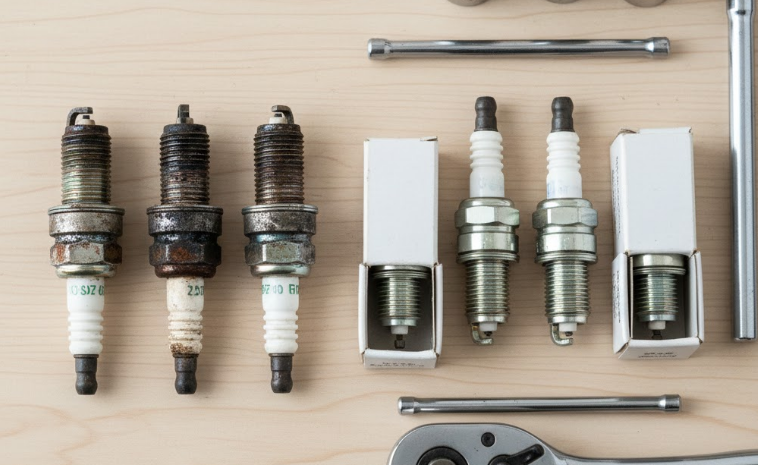
Buy correct spark plugs for your car ($30-60 for set), get spark plug socket ($10-15), remove old plugs one at a time, gap new plugs if needed, install new ones hand-tight then 1/4 turn with wrench.
Takes 1-2 hours first time. Save $150-250 versus paying mechanic.
It’s really not complicated. If you can use a wrench you can change spark plugs.
I’ve done this probably five times now on different cars. Never had issues. Always saved money.
Tools You Actually Need
Spark plug socket ($10-15) – Special deep socket (usually 5/8″ or 13/16″) with rubber insert to hold plug. Don’t try with regular socket.
Ratchet ($15-25 if you don’t have one) – 3/8″ drive works for most cars.
Extension bar ($8-12) – Usually need 6″ extension to reach plugs.
Spark plug gap tool ($3-5) – For checking/adjusting gap. Cheap and essential.
Anti-seize ($5-8) – Put on plug threads. Prevents them from seizing in engine.
Dielectric grease ($6-8) – For plug boots. Prevents moisture and makes removal easier next time.
Optional but helpful:
- Torque wrench ($30-60) – For precise tightening
- Magnetic pickup tool ($5) – In case you drop something
- Work light ($15-25) – Engine bay is dark
Total cost: $50-80 if starting from scratch. Tools last forever. Spark plugs are $30-60 depending on car.
I already had basic tools. Bought spark plug socket, gap tool, and anti-seize for like $25.
My First Time Doing This
Was nervous. Thought I’d break something or install wrong and blow up engine.
What actually happened:
Hour 1 – Figured out how to access plugs. Removed engine cover. Stared at engine trying to identify plug wires/coils. Found YouTube video for my specific car.
Hour 1.5 – Started removing first plug. Took forever because I was being super careful. Plug came out fine. Realized it wasn’t as scary as I thought.
Hour 2 – Got into rhythm. Removed and replaced remaining plugs much faster. Felt confident.
Hour 2.5 – Cleaned up, started car, it ran better. Felt accomplished.
Took 2.5 hours because I was careful and watched videos. Now I can do it in 45 minutes.
The anxiety was worse than the actual job. It’s not hard once you start.
Finding The Right Spark Plugs
Don’t just buy cheapest ones. Your car needs specific plugs.
How to find correct plugs:
- Check owner’s manual – lists part number
- Google “[your car year/make/model] spark plugs”
- Ask at auto parts store with VIN or car info
- Use online catalog at AutoZone/Advance Auto
Types of spark plugs:
- Copper – Cheapest, shortest life (20-30k miles)
- Platinum – Mid-range, decent life (60k miles)
- Iridium – Most expensive, longest life (100k+ miles)
I use iridium plugs. Cost more upfront but last way longer. Better value long-term.
My Civic needs NGK iridium plugs. Cost $50 for set of four. Would’ve paid $280 at dealer installed.
Don’t mix brands or types. All plugs should be same brand and model. Don’t mix old and new.
The Pre-Check Gap Is Important
New plugs usually come pre-gapped but you should verify before installing.
How to check gap:
- Look up required gap for your car (usually 0.028″ – 0.060″)
- Use gap tool to measure space between electrodes
- Adjust if needed by carefully bending ground electrode
- Re-check after adjusting
My plugs came gapped at 0.044″ but my car needs 0.043″. Close enough? No – gapped them properly.
Wrong gap causes misfires, poor performance, reduced fuel economy.
Takes 2 minutes per plug. Don’t skip this step.
I’ve seen people install plugs without checking gap. Then wonder why car runs rough. Check the damn gap.
The Actual Process Step-By-Step
Step 1: Let engine cool completely
- Wait at least 2 hours after driving
- Hot engines can burn you badly
- Spark plug threads can strip in hot aluminum
I started right after driving once. Touched engine, burned hand. Learned this lesson.
Step 2: Remove engine cover if applicable
- Some cars have plastic cover over engine
- Usually just snaps off or has few bolts
- Set aside carefully
Step 3: Locate spark plugs
- Follow plug wires (older cars) or coil packs (newer cars) to engine
- Usually on top or side of engine
- Might be buried under stuff
Mine were under ignition coils. Had to remove coils first to access plugs.
Step 4: Remove one plug at a time
- Pull off wire/coil from first plug only
- Use spark plug socket with extension
- Turn counterclockwise to loosen
- Remove carefully – don’t drop debris into hole
CRITICAL: Only do one at a time. Don’t remove all at once or you’ll mix up the order.
Step 5: Inspect old plug
- Look at condition – normal wear or problems?
- Oily = possible oil leak
- Fouled/black = running rich
- Burned/white = running lean
Mine were just worn normally. No issues indicated.
Step 6: Prepare new plug
- Verify gap is correct
- Apply thin coat of anti-seize to threads (NOT electrode end)
- Don’t use too much anti-seize – little dab is enough
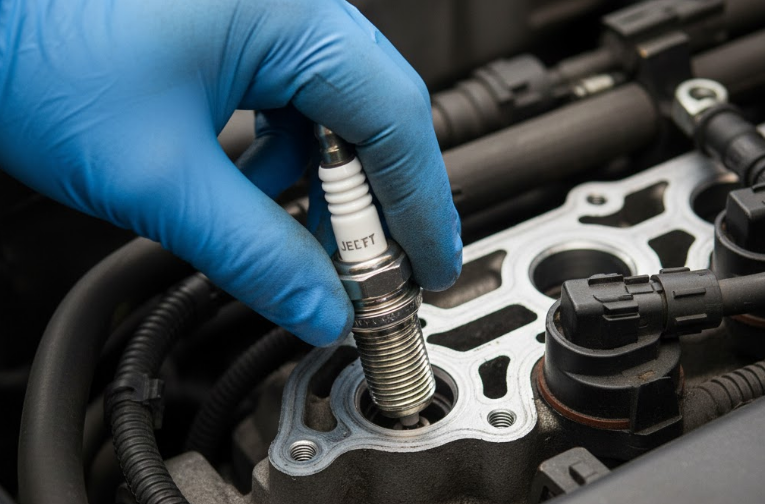
Step 7: Install new plug
- Start threading by hand – should go in smoothly
- If resistance, stop and re-align – don’t force it
- Hand-tighten until snug
- Use wrench to tighten 1/8 to 1/4 turn more
- Don’t over-tighten
Over-tightening strips threads. Under-tightening causes blowout. Hand-tight plus 1/4 turn is usually right.
Step 8: Apply dielectric grease and reconnect
- Put tiny bit of dielectric grease inside plug boot
- Push boot/coil back onto plug until it clicks
- Should feel secure
Step 9: Repeat for remaining plugs
- Do each one individually
- Don’t skip ahead
Step 10: Start engine and test
- Should start normally
- Shouldn’t hear misfiring or roughness
- Take short test drive
Mine started up smooth. Immediate improvement in how it ran.
Common Mistakes To Avoid
Cross-threading – Starting plug crooked and stripping threads. Prevention: Always start by hand, should thread smoothly.
Over-tightening – Stripping threads or breaking plug. Prevention: Hand-tight plus 1/4 turn max.
Wrong gap – Causes misfires. Prevention: Check and set gap before installing.
Dropping debris in cylinder – Can damage engine. Prevention: Clean area around plug before removing. Cover hole if you put plug down.
Mixing up plug order – On older cars with wires, mixing order causes misfires. Prevention: Do one at a time.
Forgetting anti-seize – Plugs seize into aluminum heads. Prevention: Always use anti-seize on threads.
Breaking plug wire/boot – Wires can stick to old plugs. Prevention: Twist gently while pulling, don’t yank.
I almost cross-threaded one because I was rushing. Stopped, backed out, started carefully again.
For Different Engine Configurations
4-cylinder inline – Easiest. Plugs right on top, easy access. What I have.
V6 – Bit trickier. Rear plugs can be hard to reach. Might need universal joint extension.
V8 – Similar to V6. Some plugs very buried. Patience needed.
Flat/boxer engines – Plugs on sides. Might need to remove other components. More involved.
Turbocharged – Sometimes need to remove turbo components. Check forum for your car.
If your car has tough access, budget extra time. First job might take 3-4 hours for complex engines.
Do You Need Torque Wrench?
Technically yes. Practically, maybe not.
Manufacturer specs list specific torque (usually 15-20 ft-lbs for spark plugs).
Reality: Hand-tight plus 1/4 turn usually gets you close enough.
I don’t use torque wrench for spark plugs. Just careful feel. Never had issues.
But if you’re nervous or have expensive car, torque wrench adds confidence.
Friend stripped threads by over-tightening without torque wrench. So there’s risk.
Do what makes you comfortable. Torque wrench is safer, feel method works if you’re careful.
When To Replace Spark Plugs
Manufacturer recommendation – Usually 60k-100k miles depending on plug type.
Signs you need new plugs:
- Rough idle
- Misfires (check engine light flashing)
- Hard starting
- Reduced fuel economy
- Loss of power
Don’t wait for problems. Replace on schedule before they cause issues.
My car calls for 60k miles. I do them at 55k to be safe. Cheap insurance.
Driving on worn plugs damages ignition coils. Coils cost way more than plugs.
Cost Comparison
DIY spark plug replacement:
- Spark plugs: $30-60
- Tools (one-time): $20-30
- Anti-seize/grease: $10
- Total first time: $60-100
- Future times: $30-60 (just plugs)
Mechanic/dealer:
- Labor: $120-200
- Plugs marked up: $60-80
- Total: $180-280
Savings: $120-180 per service
I’ve changed plugs three times DIY. Saved probably $400-500 total.
Tools paid for themselves first time. Every time after is just cost of plugs.
What If You Screw Up?
Stripped threads – Worst case scenario. Need thread repair (Helicoil). Mechanic job. Expensive.
Broken plug – Sometimes old plugs break. Extractor tools exist. Can be done at home with patience.
Wrong plugs installed – Engine runs rough or not at all. Just swap for correct ones.
Forgot to reconnect something – Check engine light. Figure out what you missed and fix it.
I’ve never had catastrophic failure. Worst was forgetting to plug back in a coil connector. Check engine light came on. Traced back, found unplugged connector, fixed in 2 minutes.
If you follow instructions carefully, chances of major screw-up are low.
For Really Stuck Plugs
Sometimes old plugs are seized in place. Won’t come out.
Don’t force it. You’ll break the plug and make it worse.
Try:
- Spray with penetrating oil (PB Blaster, Liquid Wrench)
- Let sit 30 minutes or overnight
- Try again with steady pressure
- Heat engine slightly (not hot, just warm)
- If still stuck, may need mechanic
Friend had plug seized so bad he broke it trying to remove. Had to take to mechanic who drilled it out. Expensive mistake.
If plug isn’t coming, don’t force it. Get professional help.
Signs Of Other Issues While You’re In There
While changing plugs, look for:
Oil on plug threads – Valve cover gasket leak. Needs fixing.
Coolant in plug well – Head gasket issue. Serious problem.
Corroded wires/boots – Replace those too while you’re there.
Worn ignition coils – Test resistance, replace if bad.
Changing plugs is good diagnostic opportunity. You’re already in there looking around.
I found oil in one plug well. Valve cover gasket was leaking. Fixed it before it got worse.
My Current Routine
Every 60k miles (or when car starts running rough):
- Order correct iridium plugs online ($40-50)
- Pick a Saturday morning
- Let car cool completely
- Remove and replace plugs one at a time
- Start car and test drive
- Done in 45 minutes to 1 hour
Super simple now that I’ve done it a few times.
Car always runs noticeably better after new plugs. Worth the time and minimal cost.
What I’d Tell Someone Doing It First Time
Don’t be intimidated. This is genuinely easy.
Watch YouTube video for your specific car first. See how someone else does it.
Take your time. Don’t rush. Do one plug at a time carefully.
Buy correct plugs and gap tool. Don’t skip checking gap.
Hand-tighten then 1/4 turn with wrench. Don’t over-tighten.
You’ll probably be surprised how easy it is. Most people are.
I was nervous my first time. Turned out to be simplest car maintenance task I’ve done besides oil change.
The Real Answer
You can absolutely change spark plugs yourself. It’s not hard.
Buy correct plugs, get spark plug socket, follow simple process. Takes 1-2 hours first time.
Save $150-250 versus paying mechanic. Tools pay for themselves immediately.
It’s satisfying doing your own maintenance. Plus you know it’s done right because you did it.
I’ve saved probably $500 over the years doing my own plugs. Money that went toward better tires, or just stayed in my bank account.
Spark plugs are gateway drug to DIY car maintenance. Once you realize you can do this, you’ll start doing other stuff too.
Oil changes, air filters, cabin filters, brake pads – all easier than you think.
Just take your time, follow instructions, and don’t let anxiety stop you from trying.
Worst case you mess up and take it to mechanic anyway. But most likely you’ll do it fine and wonder why you ever paid someone to do something this simple.