


Man I’ve dealt with steering wheel shake so many times at this point I should probably just accept that I’m cursed. First car shook because of warped rotors. Second car shook because someone at Walmart forgot to balance my tires properly. Current car started shaking last month and I spent like three days convinced something catastrophic was about to happen before I figured out I just had a wheel weight that fell off.
Every single time it’s a mini panic attack though. That vibration through the steering wheel at highway speeds just immediately makes your brain go to the worst possible scenario. Like “this is it, the whole front end is about to fall off and I’m gonna die on I-95 in front of a Cracker Barrel.”
Spoiler alert – it’s usually something way less dramatic and way cheaper to fix than your anxiety is telling you. But there’s like a dozen different things that can cause steering wheel shake and they all feel kinda similar so figuring out which one you’ve got is half the battle.
Unbalanced Wheels Are The Usual Suspect
I’m just gonna start with this one because it’s probably your problem. Like 70% chance if your steering wheel’s shaking at highway speeds it’s because your wheels aren’t balanced properly.
What happens is one of your wheels is slightly heavier on one side than the other. Could be you lost a wheel weight, could be the weights weren’t installed right to begin with, could be you picked up some mud or ice that threw off the balance. Whatever the reason, that uneven weight makes the wheel wobble as it spins and that vibration travels right up through your suspension into the steering wheel.
The telltale sign is it only happens at certain speeds. Usually kicks in around 50-60mph, gets worse at 65-70, then sometimes gets better again above that. If you slow down below 50 it goes away completely. That’s unbalanced wheels almost guaranteed.
I had this happen after getting new tires at this sketchy discount shop. Guy didn’t balance them properly and by the time I hit the highway my steering wheel was shaking so bad I thought something was gonna fly off. Turned around, went back, made them rebalance everything. Problem solved. Cost me an hour of my life arguing with them but at least they didn’t charge me again.
The fix is stupid cheap too – like $40-60 to rebalance all four wheels at any tire shop. They put the wheel on a machine, spin it, figure out where it’s heavy, stick some little weights on the rim to even it out. Takes maybe 20 minutes total. Easiest money you’ll ever spend on a car repair.
If you hit a big pothole or curb and the shaking starts right after that, you probably knocked a wheel weight off. Just go get it rebalanced. Don’t overthink it.
Warped Brake Rotors Feel Different But Similar
This was my problem on my first car and I drove around with it for way too long because I didn’t know what it was. The steering wheel would shake but specifically when I was braking. Cruising along fine, hit the brakes, steering wheel starts pulsing. Let off the brakes, vibration goes away.
That’s warped rotors like 99% of the time. What happens is your brake rotors – those disc things your brake pads squeeze to stop the car – aren’t perfectly flat anymore. They get hot spots or wear unevenly and develop high spots and low spots. So when your brake pads grab them it’s like grabbing something that’s not round anymore. Creates that pulsing sensation.
You can warp rotors a bunch of different ways. Riding your brakes down a mountain, driving through deep water when your brakes are hot, just age and wear, whatever. I warped mine by doing some aggressive driving on mountain roads without letting my brakes cool down between runs. Basically cooked them.
The fix is either resurface the rotors if there’s enough material left, or just replace them. Most shops these days just replace them because rotors are cheap and it’s not worth the labor to resurface them. You’re looking at $300-500 for both front rotors and pads usually.
I ignored mine for like six months because I’m cheap and the pulsing got progressively worse until it was legitimately bad. Could barely brake without the whole front end shaking. Finally caved and got new rotors and it was like driving a different car. Smooth as butter.
If your shake only happens during braking, it’s your rotors. Don’t even waste time diagnosing other stuff. Just get the rotors checked and replaced if needed.
Worn Tie Rods Make Everything Loose And Sketchy
This one’s more serious and also harder to diagnose yourself unless you really know what you’re looking for. Tie rods are the parts that connect your steering rack to your wheels. When they wear out your steering gets loose and sloppy and you can get vibrations.
I had a tie rod end go bad on an old Honda and the symptoms were weird. Steering wheel shake that was kinda random and unpredictable. Sometimes it would shake, sometimes it wouldn’t, didn’t seem to correlate with speed or braking or anything specific. Also the steering just felt vague and imprecise in general.
Took it to a mechanic and he grabbed the wheel and wiggled it while it was jacked up and you could see the wheel moving way more than it should. Tie rod end was completely shot, just flopping around in there. Surprised the whole thing didn’t fall apart honestly.
This is one you really need a mechanic to diagnose properly unless you know what you’re doing. You can try grabbing your wheel at 3 and 9 o’clock and pushing/pulling to see if there’s excessive play but it’s hard to tell what’s normal versus what’s worn without experience.
The fix isn’t super expensive for the part itself – like $50-100 for a tie rod end – but the labor adds up because you need an alignment after you replace it. So all in you’re probably looking at $200-300 per side. And if one’s worn the other probably isn’t far behind so you might as well do both.
Don’t mess around with tie rod issues though. That’s a safety thing. If a tie rod actually breaks while you’re driving you lose steering control. I know someone who had one separate on the highway and it was terrifying. They managed to pull over safely but it could’ve been way worse.
Bad Wheel Bearings Sound Like A Jet Engine
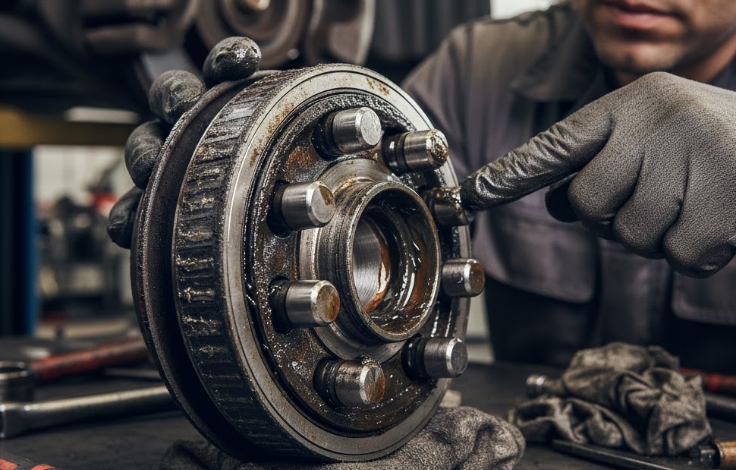
Okay so wheel bearings are these things that let your wheels spin freely. When they go bad you get vibration but you also usually get noise. Like a humming or roaring sound that gets louder as you go faster. Sounds like you’re driving next to a jet taking off.
I haven’t personally dealt with this one yet but my dad did on his truck. He ignored the noise for months thinking it was tire noise or road noise. Eventually the bearing got so bad it was causing vibration through the whole car and the wheel was getting hot from all the friction.
He finally took it in and the mechanic was like “yeah this bearing is totally cooked, surprised your wheel hasn’t fallen off yet.” Dad’s response was basically “haha yeah that would’ve been bad” while internally panicking about how long he’d been driving on it.
Wheel bearings aren’t cheap to replace. You’re looking at $200-400 per wheel usually depending on the car and whether it’s front or rear. They require pressing out the old bearing and pressing in the new one which needs special tools most people don’t have.
The good news is wheel bearings failing catastrophically is pretty rare on modern cars. They usually give you lots of warning with the noise before they actually seize or come apart. So if you hear that airplane sound, get it checked out soon but you’re probably not gonna die tomorrow.
You can sometimes diagnose which wheel bearing it is by driving and turning. If the noise gets worse when you turn right, it’s probably the left bearing taking more load. Turn left and noise gets worse, probably right bearing. Mechanic will confirm with the car on a lift.
Bent Wheels Are Less Common But Super Annoying
Hit a pothole hard enough or curb a wheel and you can actually bend the rim. Not like fold it in half but enough to make it not perfectly round anymore. That’s gonna cause vibration for sure.
I bent a wheel once hitting what I can only describe as a crater in the road. Didn’t see it coming, couldn’t avoid it, just WHAM. Thought I’d broken something major but the car still drove fine. Just this weird vibration that started after that.
Took it to a tire shop and they put the wheel on the balancing machine and you could see it wobbling. The rim had a slight bend in it. Not visible to my eye but enough to cause problems. They tried to rebalance it but it didn’t really help because the wheel itself wasn’t round.
Had to buy a new wheel which sucked. Used one from a junkyard cost like $100 plus mounting and balancing. New one from the dealer would’ve been like $300+. Not the end of the world but still annoying.
Some shops can repair bent wheels if the damage isn’t too bad. They have machines that can bend them back into shape. I didn’t trust it though. Seemed sketchy to me. Rather just get a straight wheel and not worry about it.
If you hit something hard and vibration starts immediately after, get your wheels checked. Could be bent, could’ve knocked off a weight, could’ve damaged suspension. Either way you need to get it looked at.
Tires With Issues Cause All Kinds Of Problems
Tires can cause steering wheel shake in a bunch of different ways and they all kinda blur together because the symptoms are similar.
Separated belt in the tire – the internal structure literally comes apart and creates a bulge or wobble. This feels like an out-of-balance wheel but rebalancing doesn’t fix it because the tire itself is messed up. Only fix is new tire.
Uneven wear – if your tire’s worn way more on one side than the other it can cause vibration. Usually from bad alignment but the damaged tire will keep vibrating even after you fix the alignment. Need new tires.
Bulge in the sidewall – hit something hard and damage the internal structure, tire develops a bulge. Dangerous and definitely causes vibration. Replace immediately, that’s a blowout waiting to happen.
Just old and dry-rotted tires – rubber breaks down over time and old tires can develop issues even if the tread looks okay. I had 8-year-old tires with decent tread that started causing vibrations. Replaced them and vibrations went away. The rubber was just done.
I’ve learned to just inspect my tires regularly for anything weird. Run my hand over the tread feeling for uneven wear. Look at the sidewalls for cracks or bulges. Check the manufacture date to make sure they’re not ancient. Tires are literally the only thing connecting your car to the road, don’t mess around with sketchy ones.
If you’ve got vibration and you’ve ruled out balance and rotors and everything else, take a real close look at your tires. Might find something you missed.
Loose Or Worn Control Arm Bushings
Control arms connect your wheels to your frame and they have rubber bushings that wear out over time. When those bushings get really worn the wheels can move around more than they should and cause vibrations.
This is another one that’s hard to diagnose without getting under the car and inspecting stuff. You need to look at the bushings and see if they’re cracked, torn, or completely destroyed. Sometimes they’re obviously bad, other times they look okay but are still worn enough to cause problems.
I had this on a high-mileage car I used to own. The bushings were so worn you could see the control arm moving way more than it should when I hit bumps. Created this weird clunking noise plus vibration through the steering wheel at certain speeds.
Replaced all the control arms with new ones including fresh bushings and it transformed the car. Way tighter steering, no more vibration, no more clunking. Cost like $600 for parts and labor but it was worth it.
If you’ve got a car with over 100k miles and you’re getting vibrations plus loose sloppy steering plus clunking noises over bumps, worn suspension bushings are a good bet. Get it inspected by someone who knows what they’re looking for.
CV Joints Can Cause Vibrations Too
This is mostly for front-wheel drive cars. CV joints connect your transmission to your front wheels and let them articulate while spinning. When they wear out you usually hear clicking noises when turning but you can also get vibrations.
I had a CV joint go bad and the main symptom was clicking when I turned. But I also noticed some vibration especially during acceleration. Wasn’t sure if it was related or separate issues but turned out it was all the CV joint.
Replaced the whole axle – easier than trying to just replace the CV joint – and everything got better. No more clicking, vibration mostly went away. Cost about $200 for a remanufactured axle plus an hour labor.
If you’ve got clicking plus vibration on a FWD car, check your CV joints. Look for torn boots leaking grease. That’s usually the first sign they’re going bad.
Steering Rack Problems Are The Worst Case Scenario
If your steering rack is worn or damaged you can get vibrations plus all kinds of other scary symptoms. Loose steering, wandering, clunking, whatever. It’s basically the worst thing it could be because steering racks are expensive as hell to replace.
I’ve never personally had a steering rack fail but I know people who have and it’s always like $1000-2000 to fix. Sometimes more on luxury cars or trucks. It’s not a fun repair.
The good news is steering racks don’t usually fail suddenly. They give you lots of warning with leaking fluid, noise, loose steering, all that stuff. If it gets to the point where the steering rack is causing vibrations, you’ve probably been ignoring other symptoms for a while.
If everything else checks out and you still have vibration plus power steering issues, get the rack checked. Hopefully it’s not that but better to know than ignore it.
Alignment Being Off Doesn’t Usually Cause Shake
Okay so bad alignment makes your car pull to one side and wears your tires wrong but it doesn’t really cause steering wheel shake on its own. I’ve seen people blame alignment for shake when really it was something else.
That said, bad alignment often ACCOMPANIES other problems that do cause shake. Like you hit a pothole that knocks your alignment out and also knocks off a wheel weight. Or your alignment’s off so your tires wear unevenly which then causes vibration.
So if you’ve got shake get the actual cause fixed first, then get an alignment to prevent future problems. Don’t just get an alignment and expect the shake to go away. It won’t.
I wasted $90 on an alignment once thinking it would fix my vibration. It didn’t. Still had the vibration. Turned out I needed new rotors. The alignment didn’t hurt anything but it didn’t solve my actual problem either.
How To Actually Figure Out What’s Wrong
Here’s my process now after dealing with this multiple times:
When does it shake? Only at highway speeds = probably balance. Only when braking = probably rotors. Random and unpredictable = probably suspension parts.
Did it start after hitting something? Probably knocked off a weight or bent something. Get wheels and suspension checked.
Is there noise with the shake? Humming/roaring = wheel bearing. Clicking = CV joint. Clunking = suspension bushings.
How old are your tires? Over 6 years = might just be old tires. Check for dry rot and consider replacing.
When did you last get tires or have work done? Might’ve been done wrong. Go back and make them fix it.
I start with the cheap easy stuff first. Rebalance the wheels for $50. If that doesn’t fix it, then I start looking at more expensive possibilities. No point replacing tie rods if it’s just an out of balance wheel.
What I’d Actually Do Right Now
If my steering wheel started shaking today, here’s exactly what I’d do:
First check if it’s speed-related or brake-related. That narrows it down immediately. Speed-related I’m getting my wheels balanced. Brake-related I’m getting rotors checked.
If balance and rotors are fine, I’m taking it to a mechanic and having them inspect the whole front end. I’m not good enough to diagnose worn tie rods or bushings myself. I’ll pay the $100 diagnostic fee to save myself hours of guessing.
I’m also gonna look at my tires real close. Any bulges, uneven wear, dry rot, anything weird. Tires are easy to inspect yourself and you’d be surprised how often that’s the problem.
And I’m gonna try to remember when this started. Did I hit something? Did I just get work done? Did the weather change dramatically? Sometimes the context tells you everything.
Most importantly I’m not gonna ignore it. Steering wheel shake is always telling you something’s wrong. Sometimes it’s minor, sometimes it’s serious, but it’s never nothing. Get it checked out before it turns into a bigger more expensive problem.
I’ve ignored shake before and regretted it every time. Either I made the problem worse by continuing to drive on it, or I stressed myself out unnecessarily. Just deal with it early and save yourself the anxiety and potential extra costs.
Your steering wheel’s trying to tell you something. Listen to it. Then fix it. Then enjoy smooth vibration-free driving again until the next thing inevitably goes wrong because cars are money pits and we’re all just along for the ride.