

By Engine Dynamo
Oh man, there’s nothing worse than jumping into your car on a blazing hot day, hitting the AC button, and… warm air. Instant regret, sweat pooling, the whole horror show. Most people panic and think, “Time for a $200 garage fix,” but hear me out—you can probably solve this yourself. Yes, seriously. With some patience, basic tools, and a little elbow grease, your AC can go from sad and lukewarm to ice-cold in no time.
Here’s the Engine Dynamo play-by-play on diagnosing and fixing your car’s AC without emptying your wallet.
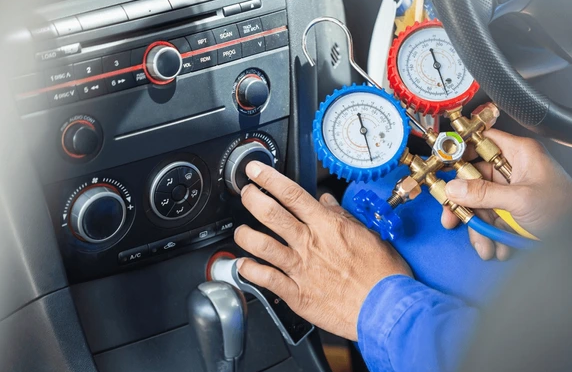
1. How Your Car’s AC Actually Works (Quick and Dirty Version)
Think of your AC like a tiny fridge for your car:
- Compressor: Pumps and pressurizes the refrigerant—basically the heart of the system.
- Condenser: Squeezes heat out and turns the gas back into liquid.
- Expansion valve: Controls how much refrigerant flows—like the AC’s tiny faucet.
- Evaporator: Absorbs heat from inside the cabin and gives you cold air.
- Blower fan: Pushes that cold air into your face (bless).
If one of these components fails or gets gunked up, your AC suddenly forgets it’s supposed to cool you.
2. Why Your AC Might Be a Drama Queen
Here’s the usual suspects:
- Low refrigerant: Weak or warm air.
- Dirty cabin air filter: Poor airflow.
- Blocked condenser: Air slightly cool but not enough.
- Faulty compressor: No cold air at all.
- Refrigerant leak: Gradual loss of cooling.
- Electrical hiccup: AC won’t even turn on.
- Dirty evaporator: Musty smell and weak cooling.
Good news? Most of these are totally fixable at home.
3. What You’ll Need
- Screwdriver or socket wrench
- Replacement cabin air filter (if needed)
- AC recharge kit with pressure gauge
- AC leak detection spray or UV dye
- Microfiber towels and gloves
- Soft brush and low-pressure hose
- AC cleaning foam (for evaporator)
- Thermometer (to check output)
4. Step 1: Check Airflow
Weak airflow often means a clogged cabin filter. Open your glove box, peek behind, pull out the filter, and inspect. Dusty, black, or nasty-looking? Replace it. Immediate airflow boost—your AC will thank you. Pro tip: swap filters every 10,000–15,000 km.

5. Step 2: Hunt for Refrigerant Leaks
Low refrigerant is the top villain. Listen for hissing near hoses or compressor, or look for oily spots. Gradually warming AC over days is another hint. Use a UV dye kit: add dye, run the AC, check with UV light. Found a leak? Seal or swap the pipe before topping up refrigerant.
6. Step 3: Clean the Condenser
Your condenser loves to trap dust, bugs, and debris.
- Let the car cool.
- Spray with low-pressure water or use a soft brush.
- Keep ~12 inches away—don’t bend the fins.
Clean condenser = heat escapes, AC chills again.
7. Step 4: Check the Compressor
Start the engine, switch AC to MAX. Hear a click? That’s the clutch engaging. No click? Check fuse and relay. Still nada? Maybe low refrigerant. If it still won’t engage after recharge, it’s a mechanic job.
8. Step 5: Recharge Refrigerant (Safely)
No visible leaks but weak cooling? Recharge:
- Attach kit to the low-pressure port (“L”).
- Engine on, AC max.
- Shake can, slowly release gas.
- Stop at 30–40 PSI (low side).
⚠️ Overcharging = dead compressor. Go slow, watch the gauge.
9. Step 6: Clean the Evaporator
Bad smell or weak air? Evaporator might be moldy.
- Car off, remove cabin filter.
- Spray AC foam into vents/evaporator opening.
- Wait 15 min, start AC full blast to flush.
Bye dust, mold, bacteria—hello fresh, cold air.
10. Step 7: Inspect Electricals
AC suddenly dead?
- Check fuse under the hood. Replace if burnt.
- Test AC relay—swap with similar one.
- Fan speeds weird? Blower resistor may be faulty.
Most electrical hiccups are cheap and easy fixes.
11. Step 8: Test Cooling
Doors/windows closed, AC on for 5–10 min. Thermometer in central vent should read 6–10 °C below outside temp. If yes—victory. If no, deeper issues like expansion valve or compressor internals may exist.
12. Pro Tips for Longevity
- Run AC 10 min weekly, even in winter—keeps seals happy.
- Replace cabin filter regularly.
- Clean condenser every few months.
- Gradually lower temperature instead of blasting cold.
- Annual service = top up refrigerant + clean components.
13. Time to Call a Mechanic
DIY fixes only go so far. Head to a shop if:
- Loud knocking or grinding noises.
- Cooling gone a few days post-recharge.
- Oil/refrigerant leak under the hood.
- Compressor clutch never engages.
- Smell burning or see smoke.
These are red flags—pro tools and expertise required.
Stay cool, save cash, and take control of your ride. With a bit of patience and elbow grease, most AC drama is totally solvable at home. Filters, condensers, and refrigerant checks are your first defense against sweat-soaked drives.
For more hands-on DIY car hacks and maintenance tips, check out EngineDynamo.com—your ride deserves it.