

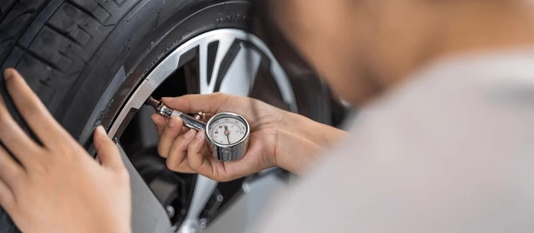
So last winter I was being lazy about checking my tire pressure and just kept pumping them up whenever they looked a bit low. Except I wasn’t actually checking the pressure, just eyeballing it and adding air. Genius move right?
Ended up with my tires at like 45 PSI when they should’ve been at 32. Didn’t think much of it until I hit a patch of black ice on the highway and my car basically just said “nah I’m good” and kept sliding instead of gripping. Scared me so bad I checked my pressure that night and realized I’d been driving on overinflated tires for weeks like an idiot.
Short answer to your question – yeah they can definitely cause accidents, just not in the dramatic way you might think.
What Actually Happens With Too Much Air
When your tires are overinflated the center of the tread bulges out more than it should. So instead of the whole tire making contact with the road, you’re basically riding on this narrow strip down the middle. Less contact = less grip. Pretty simple.
But here’s what nobody really explains – it’s not like you’re gonna blow a tire from having 5 extra PSI in there. That’s not how it works. Tires can handle way more pressure than the sidewall rating before they actually explode. The problem is how the car handles, not the tire spontaneously bursting.
I thought overinflated meant dangerous blowouts waiting to happen. Nope. It just means your car drives like crap and you’ve got less margin for error when things go sideways. Which they will eventually because that’s just life.
Where It Gets Sketchy
Rain is the big one. I didn’t realize how bad my overinflated tires were until the first real rainstorm after I fixed the pressure. Suddenly my car was actually gripping wet pavement instead of feeling like I was driving on a slip n slide.
With too much air the tire can’t flex and conform to the road surface properly. All that water on the pavement? Your tire’s supposed to squeeze it out through the tread grooves. But when the tire’s rock hard and only touching the ground in one spot, the water doesn’t evacuate like it should. Hydroplaning city.
I’ve also noticed it more in parking lots doing slow-speed maneuvers. Overinflated tires make the steering feel twitchy and unpredictable. Like the car’s constantly overcorrecting itself. Not dangerous at 5mph but extrapolate that to highway speeds and yeah, problem.
Emergency maneuvers are where you’re really gambling. Need to swerve to avoid something? Your overinflated tires have less contact patch so less grip to work with. The car’s gonna slide wider than you expect. I nearly rear-ended someone who stopped short because my braking distance was noticeably longer than normal.
How Much Overinflation Actually Matters
Like 2-3 PSI over? Honestly probably won’t even notice. Your car’s tire pressure fluctuates that much just from temperature changes anyway. Hot summer day your pressure goes up, cold winter morning it drops. That’s normal.
5-10 PSI over? Now you’re in territory where it actually affects handling. Not catastrophically but noticeably if you’re paying attention. The ride gets harsher, you bounce more over bumps, the car feels nervous.
15+ PSI over? Okay that’s legitimately dangerous and you’re an idiot if you’re driving like that on purpose. That’s where I was and I got lucky nothing bad happened. The tire sidewalls can’t flex at all, your suspension is working overtime trying to absorb impacts, and your grip is compromised significantly.
I’ve heard people say “just run max PSI on the sidewall for better fuel economy.” DO NOT DO THIS. That sidewall number is the maximum the tire can handle, not the recommended pressure for your car. Your car’s sticker (usually on the door jamb) tells you the actual correct pressure. Use that number.
The Blowout Thing Is Overblown (Pun Intended)
Everyone thinks overinflated tires are gonna explode on the highway. I thought that too. But modern tires are stupidly strong. You’d have to pump them up to like 60-70+ PSI before you’re in actual burst territory.
What CAN happen though is you hit a pothole or curb with an overinflated tire and the tire can’t absorb the impact because there’s no flex. So instead of the air cushioning the blow, the impact goes straight into the tire structure and damages it internally. Then it fails later, maybe days or weeks after.
Had a friend hit a pothole with overinflated tires and didn’t think anything of it. Three days later his tire developed a bulge in the sidewall and had to be replaced. The overinflation didn’t blow the tire directly but it made the tire vulnerable to damage it would’ve normally shrugged off.
Same deal with hitting road debris. Overinflated tire runs over something sharp and there’s less give, so it’s more likely to puncture through. With proper pressure the tire flexes around stuff better.
It Wears Your Tires Wrong Too
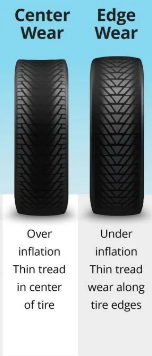
This isn’t really about accidents but it pisses me off so I’m mentioning it. Overinflated tires wear down the center of the tread way faster than the edges. So you end up with this weird wear pattern where the middle’s bald but the sides still have tread.
Means you have to replace your tires earlier than you should. I killed a set of tires like 15k miles early because of my overinflation stupidity. Cost me probably $500 in tires I shouldn’t have needed yet. Expensive lesson.
Plus once they start wearing unevenly your grip gets even worse because now you’ve got less tread depth where the tire actually contacts the road. Compounding problems.
[
Winter Is Extra Bad
That black ice incident I mentioned earlier really drove this home for me. Overinflated tires in winter conditions are legitimately scary. You need every bit of grip you can get when roads are icy or snowy and overinflation takes that away.
My car has traction control and ABS and all that but it can only do so much when your actual contact patch is tiny. The electronics were working overtime trying to keep me from spinning out and it barely managed.
My neighbor runs his tires 10 PSI over in winter because he thinks it helps with snow. I don’t have the heart to tell him he’s making it worse. Actually I did tell him once and he didn’t believe me so whatever, not my problem when he slides into a ditch.
Versus Underinflation Which Is Actually Worse
Okay so overinflation is bad but underinflation is legitimately way more dangerous. Under-inflated tires flex too much, generate heat, and can actually have catastrophic blowouts. Plus your fuel economy goes to hell and the handling gets super sloppy.
I’d rather have tires 5 PSI over than 5 PSI under if I had to choose. But obviously the right answer is neither, just run the damn correct pressure.
People worry about overinflation because it feels wrong when you’re pumping them up – like you’re gonna pop the tire. But they ignore underinflation because the tire looks “normal” even though it’s slowly destroying itself from the inside.
Check your pressure monthly. Takes five minutes. Don’t be like me driving around on overinflated tires for weeks because you couldn’t be bothered to use a gauge.
The Fuel Economy Myth
Some people intentionally overinflate thinking they’ll get better MPG. And okay, technically you might get like 1-2% better fuel economy because there’s less rolling resistance. But you’re trading safety for basically nothing.
That tiny fuel savings – maybe $50 per year if you’re lucky – isn’t worth the reduced grip and increased tire wear. You’ll spend way more replacing tires early than you’d ever save on gas.
I tried this back in college when gas was expensive and I was broke. Ran my tires at 40 PSI instead of 32. Didn’t notice any difference in fuel economy but I definitely noticed the harsh ride and sketchy handling. Not worth it at all.
How To Not Be An Idiot Like I Was
Check your tire pressure at least once a month. More often if you live somewhere with big temperature swings. Get a decent tire gauge – the pencil ones are like $5 and work fine.
Check it when the tires are cold, like first thing in the morning before you’ve driven anywhere. Driving heats up the tires and increases the pressure by a few PSI which gives you a false reading.
Fill to the pressure on your door jamb sticker, NOT the max pressure on the tire sidewall. I cannot stress this enough. The door jamb number is correct for your car’s weight and handling characteristics.
If you’re gonna be hauling extra weight or towing or whatever, the door jamb sticker usually has a separate higher pressure recommendation for that. Use it when relevant then drop back to normal when you’re not loaded up.
And if you’re not sure, slightly underinflating is safer than overinflating. Like if the sticker says 32 and you put in 30, that’s not ideal but it’s not gonna hurt anything short-term. But 35-36 is where you start getting the handling compromises I’ve been talking about.
Real Talk About Accidents
Can overinflated tires directly cause an accident? Ehhh probably not by themselves in normal conditions. You’re not gonna just randomly lose control on a sunny day driving straight.
But they absolutely can contribute to an accident in marginal situations. That moment where you need to brake hard and swerve at the same time? Overinflated tires might mean you can’t quite pull it off when properly inflated tires would’ve been fine.
It’s like driving with worn brakes. Will they fail completely? Probably not. But when you really need them to perform they might let you down just enough to turn a close call into a collision.
I got lucky that my black ice slide didn’t end with me in a ditch or worse. Could’ve easily gone different. And it would’ve been 100% my fault for not maintaining my tires properly.
Just Fix It Already
If you think your tires might be overinflated just let some air out. It’s free. Takes 30 seconds. Way easier than dealing with an accident or buying new tires early.
I keep a tire gauge in my glovebox now and check pressure every time I get gas. Obsessive? Maybe. But at least I know my tires are right and I’m not gambling with my safety over something this preventable and stupid.
And honestly once you get used to how your car feels on properly inflated tires, overinflated tires feel obviously wrong. The harsh ride, the twitchy steering, the bouncing over bumps – it’s all noticeably different. Pay attention to that.
Anyway yeah that’s my whole rant about overinflated tires. Don’t be like past me. Check your pressure. Use the right number. Don’t overthink it. Your car will handle better, your tires will last longer, and you won’t have any sketchy moments on black ice wondering if you’re about to total your car because you were too lazy to use a tire gauge.