
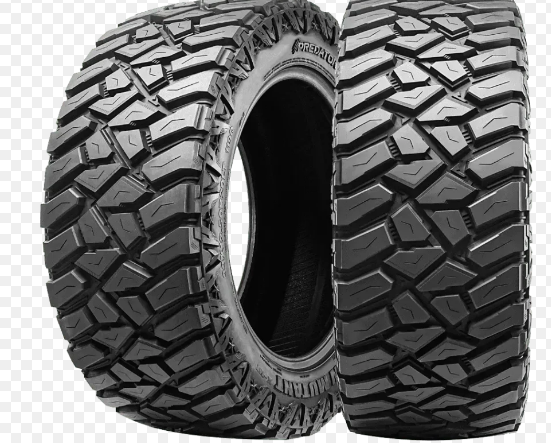
Short answer: yeah you can, but should you? Different question entirely.
I’ve got mismatched tires on my car right now. Two Michelins up front, two Continentals in back. It’s not ideal but I’m also not dead yet so there’s that. Let me break down when it matters and when it doesn’t
.
When It’s Totally Fine
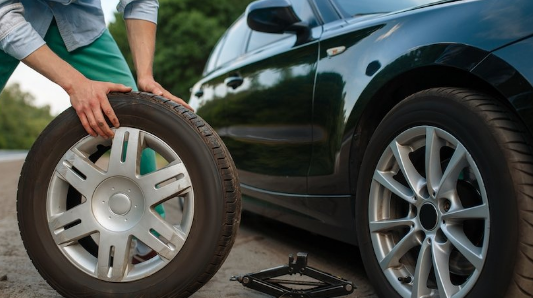
If you blow out one tire and need a replacement immediately, just get whatever decent tire fits your size. Don’t stress about matching brands perfectly. One different tire isn’t gonna kill you, especially if it’s similar quality to what you already have.
My rear tire got a nail that couldn’t be patched last year. Shop didn’t have the same Bridgestone in stock. Got a comparable Firestone instead. Been driving fine for 8 months now. Zero issues.
Same thing if you’re gradually replacing tires as they wear out. Front tires wear faster on FWD cars so you replace those first. Then eventually the rears. You end up with different brands sometimes. It happens. Life goes on.
When It Gets Sketchy
Mixing cheap garbage tires with premium ones—bad idea. Like putting Walmart specials on the front and Michelins on the back. The traction differences are real and your car’s gonna handle weird, especially in rain or snow.
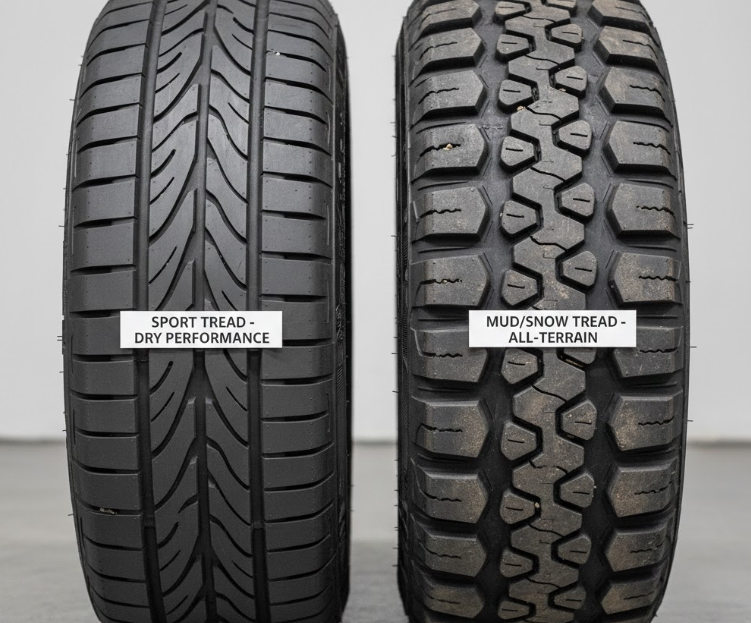
Different tread patterns also mess with how your car drives. All-season on one axle and summer performance tires on the other? Your car’s gonna be confused about what it’s supposed to do. The grip levels won’t match and you might get unpredictable handling.
AWD and 4WD vehicles are pickier. The diameter differences between tires can screw with your drivetrain. Some manufacturers say all four tires need to be within like 2/32″ of tread depth or you risk damaging the transfer case or differential. That’s expensive stuff to replace.
I know someone who mixed tires on their Subaru and ended up with a $2000 transmission repair bill. The computer freaked out because the wheels were spinning at different speeds. Subaru’s manual specifically says don’t do this but he didn’t read it. Oops.
The Rules Nobody Follows But Probably Should
If you’re mixing brands, at least put matching tires on the same axle. Don’t do one brand on front left and a different brand on front right. That’s asking for weird pulling and handling.
Put your better tires on the rear, not the front. Sounds backwards but it’s actually safer. If your rear tires lose grip you spin out. If your front tires lose grip you just understeer and can usually recover. This matters most in wet weather.
Try to match tire types at minimum. Don’t mix run-flats with regular tires. Don’t mix all-seasons with winters. The sidewall stiffness and handling characteristics are too different.
What Actually Happens If You Mix
In normal dry weather driving? Probably nothing. You might not even notice unless you’re really paying attention or driving hard.
In rain or snow? You’ll feel it. One end of the car might lose traction before the other. The car might pull to one side under braking. Your ABS and traction control might act weird because they’re detecting different grip levels.
Your fuel economy might take a tiny hit if the rolling resistance is different between tires. We’re talking maybe 1-2 mpg difference at most though. Not enough to really matter.
My Actual Experience
I’ve mixed tires on beater cars plenty of times. Never had catastrophic problems. Just made sure they were similar quality and similar tread depth on each axle.
On nicer cars or anything AWD I’m way more careful. Not worth risking expensive drivetrain damage or sketchy handling to save $100 on tires.
The Michelin/Continental combo I mentioned earlier works fine because they’re both quality tires with similar performance characteristics. If I had mixed a cheap Chinese tire with a Michelin I’d probably notice the car driving weird.
When Shops Push Back
Some tire shops refuse to mix brands. It’s partly liability—they don’t want you coming back saying the car drives weird. But it’s also because they make more money selling you four tires instead of one.
If you only need one tire and they’re being difficult about it, find another shop. Don’t let them pressure you into buying a full set if you genuinely only need one replacement.
That said, if your other tires are old or worn down anyway, getting a full set isn’t the worst idea. You’ll have to replace them soon anyway.
What I’d Actually Do
One tire needs replacing and the others are good? Replace just that one with something comparable.
Two tires on one axle need replacing? Get a matching pair for that axle.
Three or more tires shot? Just get four new ones and be done with it.
AWD/4WD vehicle? Match everything as close as possible or you’re gambling with expensive mechanical parts.
Budget’s tight and you need tires NOW? Get whatever safe tires you can afford but at least match them by axle. Two cheap tires up front, two cheap tires in back. Don’t mix and match all four with random stuff.
Real Talk
The tire industry wants you to buy four tires every time. That’s how they make money. But in reality, mixing brands carefully usually works out fine for most people in most situations.
Just use common sense. Don’t mix racing slicks with snow tires. Don’t put a donut spare on and drive cross-country. Match quality levels, match tire types, keep the same tires on each axle.
And if you’ve got AWD, seriously just follow the manufacturer’s recommendations. Those systems are sensitive and repairs cost more than a set of tires.
I’m still driving on mismatched tires right now and I’ll probably replace them all together whenever the Continentals wear out. Until then it’s fine. Car drives normal, passes inspection, does everything it’s supposed to do.
Your mileage may vary—literally and figuratively.