
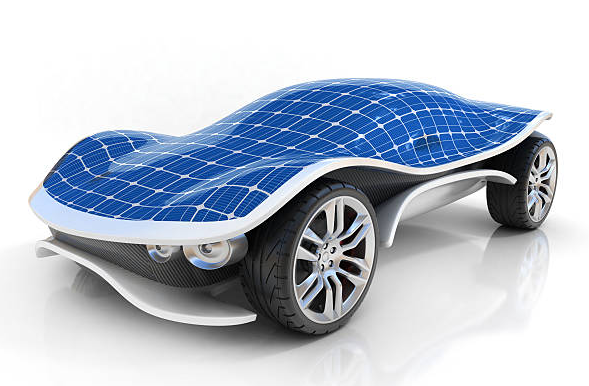
Saw this YouTube video last year about a solar car that could supposedly drive forever without charging. Comments were full of people asking “why don’t all cars have this” and “big oil is suppressing this technology” and I’m sitting there thinking yeah that sounds too good to be true.
Did a deep dive into solar cars because I was curious if this was real or just hype. Turns out it’s complicated. Solar cars exist, they’re being developed, some are even close to production. But also the physics of why we don’t all have them makes way more sense than conspiracy theories.
Spent way too much time researching this and now I know more about solar car development than any normal person should. Some of it’s genuinely cool. Some of it’s disappointing. A lot of it is companies overpromising stuff that won’t happen for years if ever.
Let me break down what’s actually real, what’s vaporware, and why your next car probably won’t be solar powered even though it sounds awesome.
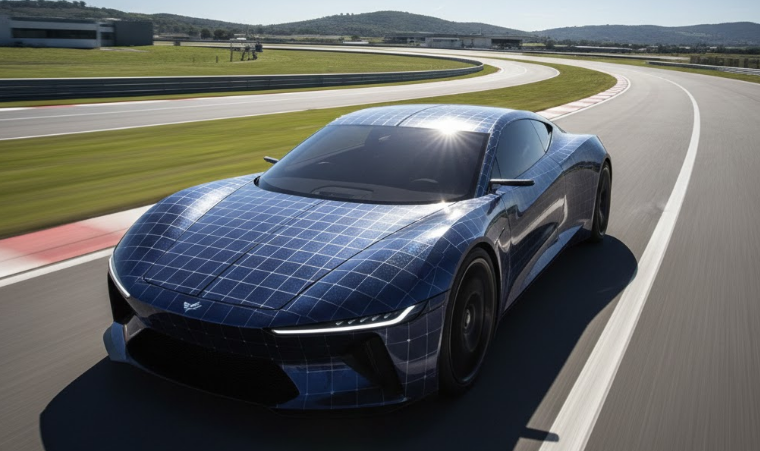
Why Solar Cars Aren’t Everywhere Already
The math is brutal and nobody wants to hear it but here it is:
A typical car roof is like 10-15 square feet. Solar panels are maybe 20-25% efficient at converting sunlight to electricity. Full sun provides about 1000 watts per square meter.
Do the math – you’re getting maybe 200-300 watts in perfect conditions from your car roof. A typical EV uses like 250-350 watt-hours per mile. So one hour of perfect sunlight gets you maybe one mile of driving. Maybe.
I tried explaining this to my friend who was convinced solar cars were totally viable and being suppressed. He didn’t want to hear it. Just kept saying “what about better panels” and “what about efficiency improvements.”
Yeah those help but physics is physics. The sun only provides so much energy and car roofs are only so big. You can’t cheat thermodynamics no matter how much you want to.
Real world limitations:
- Clouds reduce output by 80%+
- Parking in shade = zero output
- Driving at night = zero output
- Dirt on panels reduces efficiency significantly
- Winter sun is weaker than summer
- Your car’s parked 95% of the time anyway
Even in perfect Arizona sun parked all day outside you’re maybe getting 5-10 miles of range from solar panels. That’s not nothing but it’s also not replacing your need to charge.
What’s Actually Being Developed Right Now
Despite the physics problems companies are still working on solar cars. Some are closer to real than others.
Lightyear 0 – the expensive disappointment
This Dutch company built a solar car that was supposed to go into production. Long range, covered in solar panels, looked futuristic. Price tag of like $250,000.
They got like 946 reservations. Built a few prototypes. Then went bankrupt in early 2023. Turns out building solar cars is expensive and hard and not enough people wanted to spend a quarter million on one.
I was following this project hoping it would prove solar cars could work. Instead it proved that even when you build one it’s too expensive for normal people to buy.
They’re supposedly trying again with a cheaper model called Lightyear 2 aimed at like $40,000. We’ll see. I’m skeptical after the first one failed.
Aptera – the three-wheeled alien thing
This is probably the most realistic solar car project happening. Three wheels, super aerodynamic, covered in solar panels. Claims up to 40 miles per day from solar in ideal conditions.
They’ve been “coming soon” for like 15 years through multiple bankruptcies and restarts. Currently taking reservations again. Supposed to start production in 2024 but I’ll believe it when people actually receive them.
The three-wheel design is both brilliant and terrible. Brilliant because it’s classified as a motorcycle so easier regulations. Terrible because it looks weird and most people don’t want a three-wheeled car no matter how efficient it is.
I actually considered reserving one but couldn’t get past the looks. Also the “40 miles from solar” is in perfect conditions. Real world you’re probably getting like 10-20 miles which is still cool but not revolutionary.
Sono Sion – another bankruptcy
German company making a solar car covered in panels. Raised a bunch of money, built prototypes, took reservations. Then ran out of money and shut down in 2023.
Seeing a pattern here? Solar car companies keep going bankrupt because building cars is expensive and the market for weird solar vehicles is tiny.
The Sion was supposed to be affordable at like $25,000 and practical with real range. Got over 45,000 reservations but couldn’t secure enough funding to actually manufacture them.
They’re pivoting to just selling their solar panel tech to other manufacturers now. Probably a smarter business model honestly.
Squad Solar City Car – actually shipping?
This Dutch company makes a tiny solar city car that’s more like a golf cart. Max speed like 28 mph. About $6,000. Solar panels give you like 12 miles per day.
This one might actually happen because they’re not trying to compete with real cars. It’s a low-speed vehicle for urban areas. Way lower regulations and manufacturing costs.
Still looks like a toy and has limited practical use but at least they’re being realistic about what solar can provide. Not trying to claim you’ll never need to charge.
What Major Car Companies Are Doing
Big automakers are dabbling with solar but not betting heavily on it:
Toyota – testing a Prius Prime with solar roof panels. Adds like 3 miles of range per day. They’re mostly doing it for research not because they think it’s the future.
Hyundai/Kia – some models have optional solar roofs. Again adds just a few miles per day. More of a marketing feature than game changer.
Mercedes – concept cars with solar paint that could theoretically charge batteries. Very far from production and probably won’t happen.
Tesla – Elon mentioned solar roofs years ago then never talked about it again. Probably ran the math and realized it wasn’t worth it.
Notice none of these are all-in on solar. They’re adding it as a minor supplement, not the primary power source. That tells you everything about the viability.
Big auto companies have unlimited resources and engineering talent. If solar cars made sense they’d be building them. They’re not because the physics doesn’t work at acceptable cost.
The “Better Panels” Argument
People always say “but solar panels keep getting better so eventually…”
Yeah panels are improving. Current commercial panels are like 20-25% efficient. Lab prototypes hit 45-50% efficiency. Theoretically you could get close to 70-80% efficiency in the future.
But even at 100% efficiency (physically impossible) you’re still limited by how much sun hits your car’s surface area. That’s a hard limit that no technology can overcome.
The math with perfect panels:
A 15 square foot car roof in full sun gets about 1400 watts with 100% efficient panels. That’s like 4-5 miles per hour of charging in perfect conditions. Better than current tech but still not replacing your need to plug in.
So yeah better panels help but they don’t fundamentally change the equation. Physics is still physics.
I’ve argued with people online who insist future tech will solve this. It won’t. You’d need to violate the laws of thermodynamics or have the sun suddenly provide more energy. Neither is happening.
Where Solar Actually Makes Sense
Solar isn’t useless for cars. Just not as the primary power source.
Supplemental charging – adding 5-10 miles per day of free range is legitimately helpful. Especially for people who drive less than that daily. You might never need to plug in.
My coworker drives like 8 miles round trip to work. If his car got 10 miles from solar he’d basically never charge it. That’s a real use case.
Keeping 12V battery charged – some cars use solar to maintain the 12V accessory battery. This prevents the battery from dying if the car sits for weeks. Actually useful.
Powering accessories – ventilation fans, keeping the interior cool while parked, stuff like that. The Fisker Karma had this. Nice feature.
Remote or off-grid use – if you live somewhere with no grid access, solar panels on your car could slowly charge it over days. Not practical for most people but exists.
Extending range slightly – every bit helps. If solar adds 10% to your range that’s not revolutionary but it’s not nothing either.
The problem is when companies market solar as “never need to charge” or “unlimited range.” That’s misleading. It’s a supplement not a replacement.
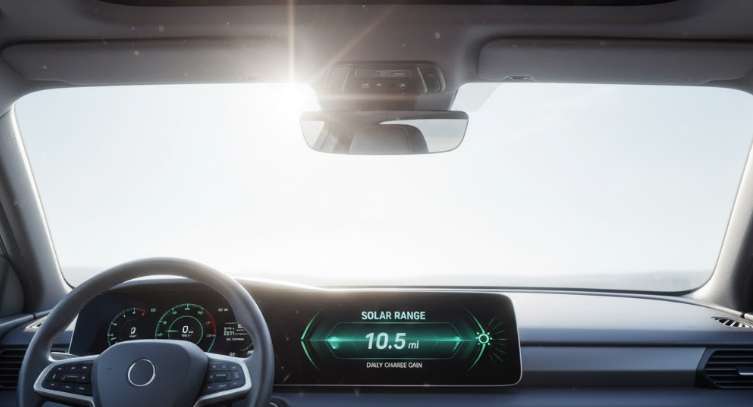
The Real Future Is Solar At Home
Here’s what actually makes sense – solar panels on your house charging your EV at home.
Your roof is way bigger than your car roof. It doesn’t move so you can angle panels optimally. You can install as many panels as needed. The electricity goes into your home battery or straight to your EV.
I have friends with solar panels on their house. They charge their Tesla basically for free from their panels. Way more practical than trying to fit panels on the car.
Why this works better:
- Way more surface area for panels
- Optimal angle toward sun
- Not limited by car roof space
- Can store energy in home batteries
- Charges car overnight when parked
This is the actual solar car future. Solar panels at home + EVs. Not solar panels on the cars themselves.
But that’s less exciting and futuristic than a car covered in panels that drives forever without charging. So companies keep trying to make the less practical version happen.
The Vaporware Problem
So many solar car announcements are just vaporware to attract investment:
Common pattern:
- Startup announces amazing solar car
- Takes refundable deposits
- Raises millions in funding
- Builds a few prototypes
- Production keeps getting delayed
- Eventually goes bankrupt or pivots
- Repeat with new company
I’ve watched this cycle happen like five times now. It’s getting predictable.
The deposits give them cash flow. The announcements attract investors. The prototypes look good for PR. But actual mass production never happens because the economics don’t work.
Aptera’s been doing this since like 2006. They’ve gone bankrupt twice. Currently on their third attempt. Maybe this time will be different but I’m not holding my breath.
Red flags for vaporware:
- Crazy claims about range or never needing to charge
- Production date keeps getting pushed back
- Prototype looks very different from “production model”
- Company has no manufacturing experience
- Price seems too good to be true
- Focus on taking reservations over actual production progress
Not saying all solar car companies are scams. But be skeptical of ambitious claims and far-off production dates.
What I’d Actually Buy If It Existed
If someone made a normal-looking EV with solar panels that added like 10-20 real-world miles per day, I’d consider it.
Requirements:
- Looks like a regular car not a spaceship
- Normal EV range (250+ miles)
- Solar is a bonus not the main feature
- Reasonable price (under $50k)
- From a company that actually manufactures cars
- Real production date not “coming soon”
So far nothing meets all these criteria. The normal-looking ones have minimal solar. The ones with lots of solar look weird or don’t exist yet.
The Hyundai Ioniq 5 with solar roof option is probably closest to what I want. It’s a normal EV that happens to have solar panels. Not revolutionary but practical.
I’d pay like an extra $2000-3000 for solar panels if they gave me 10+ miles per day. More than that and the payback period is too long to justify.
The Cost Math That Kills Most Projects
Building solar cars is expensive for not much benefit:
Extra costs:
- Solar panels and integration: $2000-5000
- Additional electronics and controllers: $500-1000
- Engineering and design: significant R&D
- Testing and certification: more regulatory hurdles
- Manufacturing complexity: specialized assembly
Benefit:
- 5-20 miles per day depending on conditions
- Maybe $1-3 per day in electricity saved
The payback period is years even in ideal conditions. Most people won’t pay $3000+ extra for solar panels that save them $500 per year in electricity.
This is why major manufacturers aren’t all-in on solar. The business case doesn’t work for most buyers.
For niche buyers who drive very little and park in the sun, it makes sense. That’s a small market though.
Why I’m Still Kinda Hopeful
Despite all the problems I still think solar cars have a future. Just not as replacements for charging.
Things that could change the equation:
- Cheaper panels (happening slowly)
- More efficient panels (improving gradually)
- Lighter weight vehicles needing less energy (EVs getting lighter)
- Better batteries storing more solar energy (definitely improving)
- Different form factors (bigger surface area like RVs or vans)
The Aptera approach is interesting – ultra aerodynamic design means it needs way less energy so solar provides more relative benefit. More cars could take that route.
Also as EVs get more efficient they need less energy per mile. A car that uses 150 watt-hours per mile instead of 300 suddenly makes solar twice as useful.
We’re not there yet but the trend is moving in the right direction. Maybe in 10-20 years solar cars will be actually practical for more people.
I just wish companies would stop overpromising and start delivering realistic products instead of futuristic vaporware that never ships.
What About Solar Race Cars
There are solar car competitions where teams build cars covered in panels that drive cross-country on solar power alone. These are cool but totally impractical:
Why race cars work:
- Covered in panels on every surface (no practicality)
- Ultra lightweight (no safety features or comfort)
- Super aerodynamic (weird shapes nobody wants)
- Drive slowly (like 40mph max)
- Only work in perfect sunny conditions
- Cost hundreds of thousands to build
These prove solar cars are possible. They don’t prove they’re practical for real-world use.
It’s like saying “we can build a bicycle that goes 80mph” – yeah but nobody’s commuting on that thing. Solar race cars are engineering exercises not templates for production vehicles.
Still cool to watch though. The World Solar Challenge races are fascinating. Just don’t expect to buy anything like those cars.
My Honest Take After All This Research
Solar cars are being developed. Some will probably make it to production eventually. But they’re not going to revolutionize transportation.
The physics limits what’s possible. Even with perfect technology you’re limited by sun intensity and surface area. That’s not going away.
Best case scenario – solar becomes a common option on EVs that adds 10-30 miles per day in good conditions. Helpful for low-mileage drivers. Not a game changer for most people.
I wanted solar cars to be the future when I started researching. The idea of free infinite range from the sun sounds amazing. Reality is disappointing but it is what it is.
If you really want solar-powered driving, get solar panels on your house and an EV. That actually works and makes financial sense.
Waiting for a solar car that never needs charging is like waiting for a perpetual motion machine. It’s not happening because physics says no.
What I’m Actually Watching
These are the solar car projects I think might actually deliver something:
Aptera – despite my skepticism they’re closest to production of any pure solar car. If anyone’s gonna make it work it’s probably them.
Sono Motors selling tech to others – smarter business model than trying to manufacture cars themselves. Maybe we’ll see their panels on mainstream vehicles.
Chinese manufacturers – several Chinese EV makers are experimenting with solar. They have the manufacturing scale to make it affordable if anyone can.
Aftermarket solar kits – might be easier to add solar to existing EVs than build whole solar cars from scratch.
I’ve got a reservation for an Aptera because why not. It’s refundable. Worst case I lose nothing. Best case I get a weird but efficient solar car in a few years.
Not holding my breath though. I’ve been disappointed too many times by solar car companies that promise the world and deliver nothing.
Real Talk About Energy And Cars
The fundamental issue is cars use a lot of energy. Way more than solar panels on a car roof can provide.
Until we either:
- Make cars that use way less energy (super light, super aerodynamic, super efficient)
- Figure out how to collect way more solar energy from a car-sized surface
- Accept that solar is supplemental not primary
…we’re not getting true solar cars that don’t need charging.
I think the realistic future is efficient EVs with solar panels that extend range by 10-20% and maybe let light users go weeks without charging. That’s still cool even if it’s not “infinite solar powered driving.”
Stop listening to marketing about cars that “never need charging” from solar. That’s not happening with current or near-future technology. It’s misleading and sets unrealistic expectations.
Should You Wait For Solar Cars?
No. If you want an EV now, buy one. Don’t wait for solar cars that might never come or might suck when they do.
By the time practical solar cars exist (if ever) current EVs will be old and cheap and you’ll have gotten years of use from them.
I waited for the Lightyear 0. That company went bankrupt. Glad I didn’t hold off buying an EV for a solar car that never materialized.
If solar cars do become available as a realistic option in a few years, great. You can get one then. But don’t put your life on hold waiting for technology that’s perpetually “coming soon.”
The best car for you is the one you can buy now that meets your needs. Not the theoretical future car that might never exist.
Final Thoughts From A Recovering Solar Car Believer
I really wanted to believe in solar cars. The concept is so appealing – free fuel from the sun forever.
After months of research I’ve accepted they’re not the revolution they seemed. They’re a niche product that might help some people in specific situations. That’s okay.
Solar panels on homes charging EVs are the real solution. That works now, it’s affordable now, it makes sense now.
Maybe in 20 years technology will advance enough that solar cars are truly practical. Maybe not. Either way I’m not waiting around for it.
Got way too invested in solar car hype and wasted time following companies that never delivered. Learn from my mistake – be skeptical of ambitious claims and focus on what’s actually available today.
Now if you’ll excuse me I need to go check if Aptera’s production date got pushed back again. Spoiler alert: it probably did.