
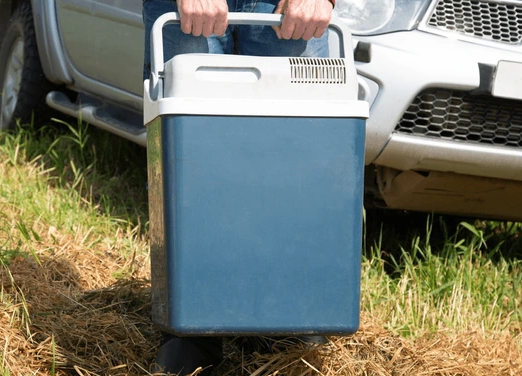
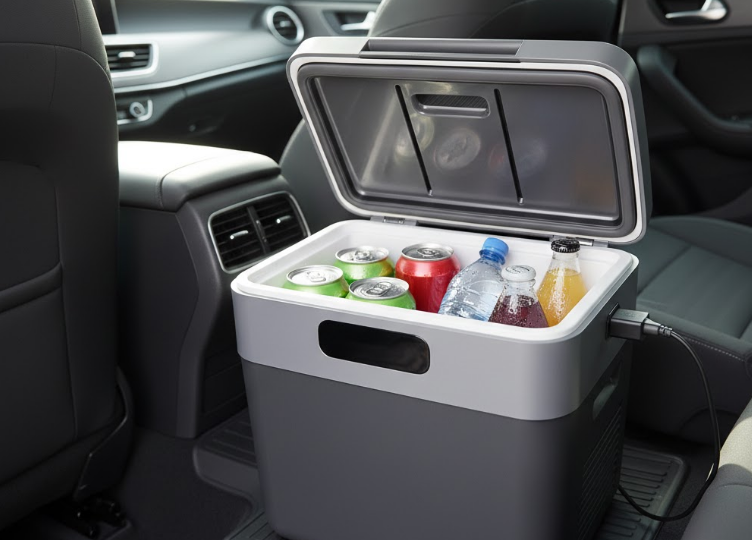
Saw a portable car cooler advertised on Facebook. Looked awesome – keeps drinks cold on road trips, runs off 12V socket, compact size. Only $80!
I do a lot of road trips. Tired of stopping for ice and dealing with melted cooler water. Thought this would be perfect solution.
Bought one. Used it for three months on multiple trips. Spoiler: it’s a $80 gadget that does a worse job than a $30 Yeti knockoff cooler with ice.
Returned it and went back to regular cooler. Saved myself ongoing hassle and disappointment.
The Short Answer
For most people: No, portable electric car coolers aren’t worth it.
They’re expensive ($60-200), drain car battery, cool slowly, have limited capacity, and don’t work as well as traditional cooler with ice.
Only worth it for specific use cases: living in vehicle, frequent multi-day trips, camping without ice access.
I wasted $80 learning regular coolers work better for 90% of situations.
What These Things Actually Are
Portable car coolers/fridges come in types:
Thermoelectric (Peltier) – $50-100. Cools 40-50°F below ambient. Cheap but not very effective. What I had.
Compressor-based – $150-400. Actually refrigerates. Works like mini fridge. Better but expensive.
Evaporative – Rare. Uses evaporation to cool. Doesn’t work in humid climates.
12V cooler bags – $30-60. Basically insulated bag with weak cooling element. Garbage.
I bought thermoelectric thinking it was good enough. It wasn’t.
Compressor ones actually work but cost 5x more than regular cooler.
My Three Month Experience
Road trip #1 – 6 hours – Loaded cooler with drinks. Plugged in. Took 2 hours to get noticeably cool. Drinks were “cool” not “cold” when I wanted them.
Road trip #2 – Weekend camping – Left cooler running overnight on car battery. Drained battery dead. Had to jump start car in morning. Cooler failed its main job.
Road trip #3 – Day trip – Brought regular cooler with ice instead. Drinks actually cold. No battery drain. Way better experience.
After trip #3 – Removed car cooler, sold it on Facebook Marketplace for $40. Took the loss and moved on.
The novelty of “electric cooler” wore off immediately when I realized it didn’t actually keep things very cold.
The Physics Problem
Thermoelectric coolers can’t actually refrigerate. They can only cool relative to outside temperature.
Example:
- Outside temp: 95°F
- Car interior: 110°F
- Cooler can cool to: 60-70°F at best
- Your drinks: Lukewarm
Meanwhile regular cooler with ice:
- Drinks: Actually cold at 35-40°F
- Cost: $2 bag of ice
- Reliability: 100%
The physics just don’t work for thermoelectric. They’re fundamentally limited.
Compressor coolers work better but cost $200-400. At that price, buy a lot of ice.
Battery Drain Is Real
Electric coolers draw 3-5 amps continuously. That adds up.
Running while driving – No problem. Alternator provides power.
Running while parked – Drains battery in 3-6 hours. Then you’re stranded.
Some have battery protection that shuts off before full drain. Mine didn’t.
I killed my battery twice before learning to unplug cooler when parking.
Compare to regular cooler: zero battery drain, zero risk of being stranded.
Capacity Is Limited
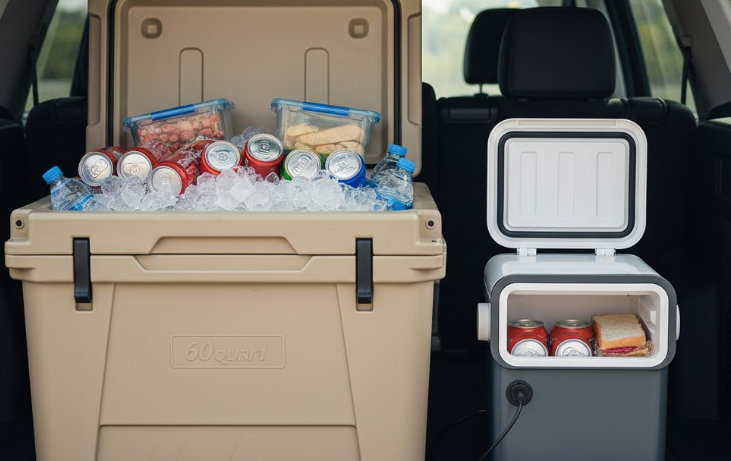
My cooler held 6-8 cans. That’s it.
For one person on day trip, barely adequate. For family or longer trip, laughably small.
Regular cooler: 30-50 cans easy. Room for ice, food, everything.
The small capacity means you’re constantly deciding what’s worth cooling. Annoying.
I wanted to bring drinks, snacks, lunch. Couldn’t fit it all. Ended up bringing regular cooler anyway.
The Noise Factor
Electric coolers have fans. They’re not silent.
My thermoelectric one hummed constantly when running. Quiet but present.
Compressor ones are worse – actual compressor cycling on/off makes noise.
In car with road noise you don’t notice much. But camping or parked, it’s audible.
Regular cooler: completely silent. Never thought I’d appreciate this until using noisy cooler.
For Different Use Cases
Daily commute – Definitely not worth it. Just bring drinks from home fridge.
Weekend road trips – Regular cooler with ice works better and costs way less.
Multi-week camping – Maybe compressor cooler worth it. Ice access might be limited. But expensive.
Van life/car living – Compressor cooler makes sense. Running regularly, worth the investment.
Tailgating – Regular cooler better. More capacity, no battery drain worry.
Food delivery – Maybe useful for keeping food temp-controlled. But professional bags work fine.
I don’t fit any category where electric cooler makes sense. Most people don’t.
Compressor vs Thermoelectric
Thermoelectric ($50-100):
- Can’t actually refrigerate
- Cools 40-50°F below ambient
- Cheaper
- Less power efficient
- Lighter weight
- Not worth buying
Compressor ($150-400):
- Actually refrigerates
- Can freeze items
- Expensive
- More power hungry
- Heavier
- Works well but pricey
If you’re going to buy electric cooler, get compressor. Don’t waste money on thermoelectric.
But honestly, most people should just use regular cooler.
The “Warming” Feature Is Useless
Many coolers advertise heating mode. “Keep food warm on the way to potluck!”
This is marketing gimmick. When would you actually use this?
Food stays warm in insulated container just fine. Don’t need electric heating.
I never once used warming mode. Nobody I know has either.
It’s feature that sounds useful but solves problem that doesn’t exist.
Cost Analysis
Thermoelectric cooler:
- Device: $60-100
- Replacement fuse if you blow it: $5
- Jump start when battery dies: $0-100
- Total: $65-205
Compressor cooler:
- Device: $200-400
- Ongoing electricity cost: minimal
- Total: $200-400
Regular cooler:
- Good cooler: $30-50 (or $300 for Yeti if you’re fancy)
- Ice: $2-3 per trip
- Annual cost: $30-80 depending on trip frequency
- Total over 3 years: $90-290
Electric cooler never pays for itself unless you’re doing weekly multi-day trips without ice access.
I spent $80 on electric cooler. Would’ve needed 40 road trips to break even on ice cost. I do maybe 6 trips per year.
What Broke On Mine
After two months, the cooling fan started making grinding noise.
One month later, fan died completely. Cooler still technically worked but couldn’t dissipate heat properly. Basically useless.
Quality control on these things is hit or miss. Lots of Amazon reviews mention failures within months.
Regular cooler has no moving parts to break. Just insulation. Lasts for years.
My $35 Coleman cooler is 8 years old and works perfectly. My $80 electric cooler died in 3 months.
For Hot Climates
I thought electric cooler would be great for Texas summer heat.
Wrong. Thermoelectric coolers struggle in extreme heat because they cool relative to ambient temperature.
When it’s 105°F outside, cooler can only get down to maybe 65-75°F. That’s barely cool.
Regular cooler with ice: Drinks stay actually cold even in 105°F heat. The ice is 32°F, physics doesn’t care about outside temp.
If you live somewhere hot, regular cooler with good ice is more reliable than electric cooler.
Power Consumption Details
Thermoelectric: 3-4 amps at 12V (35-50 watts) Compressor: 4-6 amps at 12V (50-75 watts)
Your car battery: ~50-70 amp-hours typically
Math:
- 50 AH battery ÷ 4 amps = 12.5 hours until dead
- But don’t want to fully drain battery (need to start car)
- Safe runtime while parked: 3-4 hours max
This assumes battery protection or manually unplugging. Otherwise you’re getting jumped.
Mounting And Portability
These things are awkward to carry and store.
In vehicle:
- Takes up floor space or passenger seat
- Cord runs to 12V socket (tripping hazard)
- Blocks access to other cargo
- Doesn’t fit in standard cup holder or seat pocket
Out of vehicle:
- Heavy (15-30 lbs depending on type)
- Bulky plastic box
- Hard to carry any distance
- Needs power source to work
Regular cooler with handles is way more portable. I can carry it one-handed easily.
Electric cooler required two hands and was awkward weight distribution.
For Medications
Some people buy these for medication that needs refrigeration.
This makes more sense than general cooling. Medication storage is specific need.
But verify cooler maintains proper temperature range for your medication. Thermoelectric might not cut it.
Compressor cooler would be better for this use case. Or medical-grade cooling bag.
Check with pharmacist about storage requirements before trusting cheap cooler.
The “Dual Zone” Marketing
Some expensive coolers advertise dual zones – refrigerator and freezer sections.
Sounds fancy. In practice, each zone is tiny and doesn’t work as well as claimed.
For $400 you could buy amazing regular cooler AND small portable freezer separately if you really needed both.
Dual zone is expensive gimmick for vanlifers to brag about. Not practical for normal users.
Cleaning And Maintenance
Electric coolers need cleaning like regular coolers.
But added complexity: electronics, fans, vents that can get dirty.
Can’t just hose out interior like regular cooler. Water + electronics = bad.
Have to carefully wipe clean, which is annoying.
Regular cooler: spray with hose, done. Way easier.
What I Use Instead
Went back to basics after electric cooler disappointment.
Current setup:
- Coleman 48-quart cooler ($35)
- Reusable ice packs ($15 for set)
- Buy bag of ice for long trips ($2-3)
Works perfectly. Drinks stay cold for entire day trip. Multi-day trips just need ice refresh.
Total investment: $50. No battery drain, no noise, no complexity.
Why did I ever think I needed electric cooler?
When Compressor Coolers Make Sense
If you’re living in vehicle or doing extended off-grid camping, compressor cooler worth considering.
Good for:
- Van life / car camping regularly
- Off-grid camping multiple weeks
- Living in RV/camper
- Overlanding expeditions
- Places without ice access
Brands that don’t suck:
- Dometic CFX series ($500-800) – Industry standard
- ARB Fridge Freezer ($700-900) – Premium, very reliable
- Iceco ($300-500) – Budget compressor option
- Alpicool ($250-400) – Decent mid-range
These actually work but expensive. Make sure you really need one before spending $500.
The Real Answer
Portable electric car coolers aren’t worth it for most people.
Thermoelectric ones barely work and aren’t worth any price. Compressor ones work but cost $200-400+.
Regular cooler with ice works better, costs way less, has zero complexity or battery drain.
Only invest in electric cooler if you have specific use case: van life, extended camping, medical needs, or living in vehicle.
I bought one thinking it would be convenient upgrade. Turned out to be expensive downgrade from simple cooler with ice.
Learned that newer and more expensive doesn’t mean better. Sometimes old solution is best solution.
Sold my electric cooler at a loss. Went back to regular cooler. Never looked back.
Technology for technology’s sake isn’t useful. This is perfect example.
Your car doesn’t need a $80-200 electric cooler. It needs a $30 regular cooler and occasional $2 bag of ice.
Save your money for things that actually improve your trips – better camping gear, nicer destinations, good snacks for the road.
Not gadgets that solve problems you don’t have.