
I’ve got a buddy who drives a Nissan Frontier through some absolutely brutal construction sites for work, and that thing just refuses to die. Meanwhile, my neighbor’s Nissan Versa rattles like a tin can over the same pothole-riddled street I drive down every day. So are Nissans tough enough for rough roads? The answer really depends on which Nissan you’re talking about.
The Trucks and SUVs Can Take a Beating
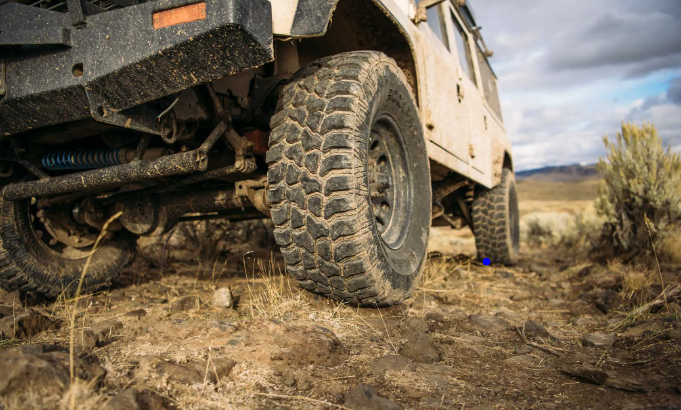
Nissan’s truck lineup is legitimately rugged. The Frontier, Titan, and Pathfinder are built with rougher conditions in mind. These vehicles have stronger frames, beefier suspension components, and higher ground clearance that handles unpaved roads, deep potholes, and rough terrain without falling apart.
The Nissan Patrol (if you’re outside North America) has a reputation for being nearly indestructible in harsh conditions. You’ll see these things all over the Middle East and Africa getting absolutely thrashed on desert roads and mountain trails. The Armada, which is basically a rebadged Patrol for the U.S. market, shares that DNA.
I’ve seen Frontiers with 200,000+ miles that spent their entire lives on gravel roads and construction sites. Sure, they look beat to hell, but they’re still running. The suspension might be worn out and need rebuilding, but the core truck holds together.
The Sedans Are a Different Story
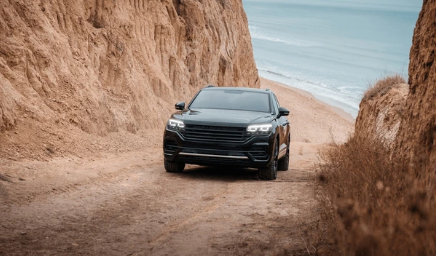
Here’s where things get sketchy. Nissan’s economy sedans—the Versa, Sentra, and to some extent the Altima—aren’t really built for rough road conditions. They’ve got pretty basic suspension setups, thinner sheet metal, and lighter-duty components throughout.
Drive a Versa on consistently rough roads and you’ll start hearing rattles within a few years. The interior trim pieces come loose, the suspension bushings wear out faster, and the ride quality goes from “acceptable” to “bone-jarring” pretty quickly. These cars are designed for smooth suburban commutes and highway driving, not for dodging craters on deteriorating city streets.
My cousin bought a used Sentra and drives it on rural roads with lots of washboard sections. After two years, she’s replaced the struts, multiple control arm bushings, and the exhaust system that literally shook itself loose at the hangers. The car still runs fine mechanically, but it’s been expensive to maintain.
Ground Clearance Makes a Huge Difference
This is probably obvious, but it matters a lot. Nissan’s crossovers like the Rogue, Murano, and Kicks sit higher off the ground than the sedans, which helps them handle rough roads better. You’re less likely to scrape the undercarriage or bottom out on uneven surfaces.
The Rogue has about 8.4 inches of ground clearance, which is decent for a compact crossover. That’s enough to handle moderately rough dirt roads, deep potholes, and snow without constantly worrying about damage. Compare that to the Sentra’s 5.9 inches, and you can see why one handles rough conditions better than the other.
Suspension Design Matters More Than Brand
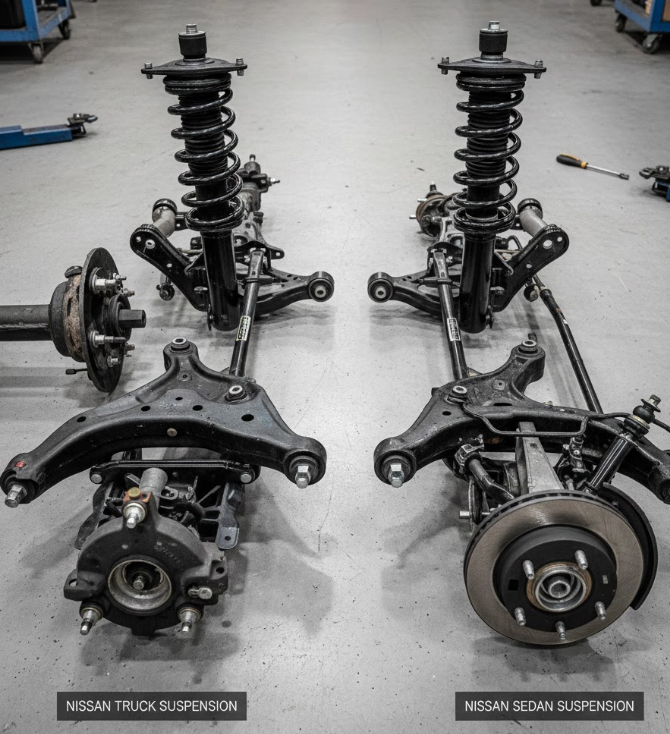
The real difference isn’t necessarily Nissan versus other brands—it’s how each specific model is engineered. Nissan’s truck-based SUVs use more traditional body-on-frame construction with solid suspension components. Their crossovers use MacPherson struts up front, which are pretty standard and reasonably durable.
The sedans mostly use simpler torsion beam rear suspensions on the cheaper models, which are fine for smooth roads but get overwhelmed quickly on rough surfaces. They’re designed to be cheap to manufacture, not to last forever under harsh conditions.
Common Problems on Rough Roads
From talking to mechanics and other Nissan owners who deal with bad roads, here’s what tends to go wrong first:
Bushings wear out fast. The rubber suspension bushings that connect everything start cracking and deteriorating when they’re constantly stressed by rough surfaces. You’ll hear clunking noises over bumps and the steering will feel looser.
Struts and shocks die early. On economy models especially, the dampers aren’t built to handle constant abuse. Instead of lasting 80,000-100,000 miles like they might on smooth roads, you might need replacement at 50,000 miles.
Exhaust systems rattle loose. All that shaking eventually breaks exhaust hangers and causes flex joints to crack. This isn’t unique to Nissan, but their economy models seem particularly prone to it.
Interior rattles develop. The interior trim pieces and dashboard components start squeaking and rattling once everything gets loosened up from constant vibration. This doesn’t affect functionality, but it’s annoying as hell.
How They Compare to Competitors
Honda and Toyota economy cars generally hold up better on rough roads. They use slightly better materials and have tighter build quality that withstands punishment longer. A Civic or Corolla will probably develop fewer rattles and need less suspension work than a comparable Sentra.
For trucks and SUVs, Nissan competes pretty well. The Frontier is arguably more durable than a Tacoma in some ways (even though Toyota has the better reliability reputation overall). The Pathfinder isn’t as tough as a 4Runner, but it’s also not trying to be—different vehicles for different purposes.
American trucks from Ford, Chevy, and Ram might have more powerful engines and towing capacity, but Nissan’s truck reliability is competitive when it comes to handling rough conditions.
So Should You Buy a Nissan for Rough Roads?
Go for it if: You’re looking at a Frontier, Titan, Armada, or Pathfinder. You’re willing to stay on top of maintenance and replace wear items as needed. You can get a good deal that accounts for potentially higher maintenance costs.
Think twice if: You’re considering a Versa, Sentra, or base-model Altima for consistently rough roads. You need something that’ll go 100,000 miles with minimal repairs. You want the absolute best reliability in harsh conditions.
The Bottom Line
Nissan makes some genuinely tough vehicles that handle rough roads well—just not across their entire lineup. The trucks and body-on-frame SUVs are built for this kind of abuse. The economy sedans really aren’t, and forcing them into that role means you’ll be replacing suspension parts and dealing with rattles sooner than you’d like.
If you’re stuck with rough roads, either go with one of Nissan’s more rugged models or consider spending a bit more on a Honda or Toyota that’ll tolerate the abuse better. And whatever you drive, budget extra money for suspension maintenance because rough roads eat components regardless of the badge on the front.