
My back hurt for like six months straight from my commute before I finally admitted I might need some kind of seat support. Hour each way, terrible traffic, cheap seat in my aging Honda. By the time I got to work my lower back was screaming and my neck was stiff.
Being stubborn and cheap I ignored it forever thinking “I’m too young for back problems” and “seat cushions are for old people.” Then one day I literally couldn’t get out of my car without wincing and my girlfriend was like “dude just buy a lumbar pillow this is ridiculous.”
Went on Amazon and bought the first lumbar cushion that had good reviews. Got it two days later, threw it in my car, and… nothing. Felt the same. Maybe slightly worse actually because now there was a weird lump pressing into my back at the wrong spot.
Tried like four more cushions over the next month. Different shapes, different materials, different everything. Most were garbage. One was okay. One was actually good. Learned way more about ergonomic car seat support than I ever wanted to know.
Let me save you from my trial and error because apparently finding the right seat support is weirdly complicated and most of what’s sold is useless junk that won’t help and might make things worse.
The Actual Problem Nobody Explains
Most car seats suck. Even in nice cars the seats aren’t designed for your specific body. They’re designed for the average person which means they’re slightly wrong for basically everyone.
Your spine has natural curves. Lower back curves in (lordosis), upper back curves out, neck curves in. Car seats are flat or curved wrong and don’t support these natural positions. Sit in a poorly designed seat for an hour and your muscles work overtime trying to maintain proper alignment.
That’s why your back hurts. Not because you’re weak or old or whatever. Because the seat is fighting against your spine’s natural shape and your muscles are exhausted from compensating.
Lumbar cushions and neck pillows are supposed to fill the gaps and restore your spine’s natural curves. In theory this takes pressure off your muscles and lets you sit comfortably for longer.
In practice most cushions are wrong shape, wrong firmness, wrong position, or just poorly designed garbage that doesn’t actually help.
I didn’t understand this at first. Thought any cushion would work. Wrong. The cushion has to match your specific body and your specific seat and your specific driving position or it’s useless.
Lumbar Support – What Actually Helps
Tried so many lumbar cushions. Here’s what I learned:
Memory foam ones are overrated – they compress and lose shape fast, especially in summer heat. My first one went flat after like two weeks. Useless.
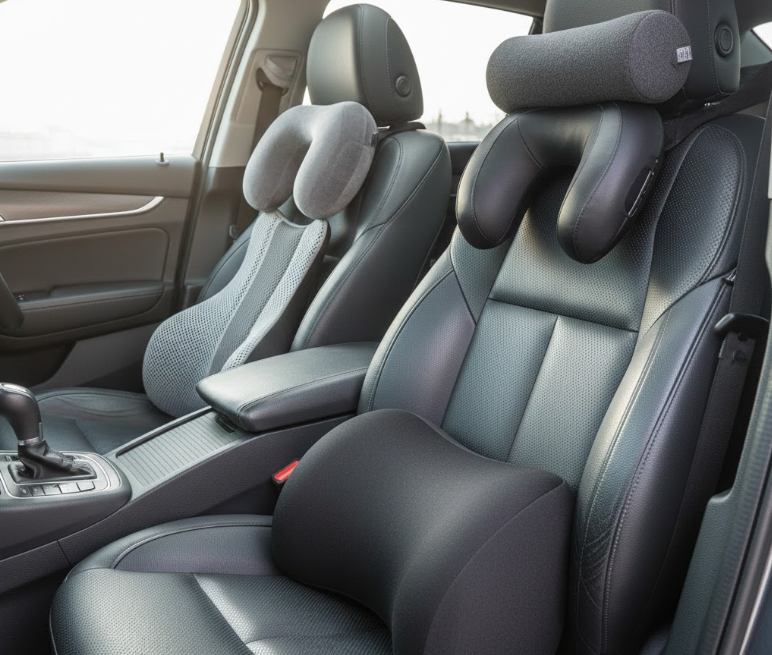
Mesh ones with straps work better – maintain shape, don’t get hot, stay in position. The ComfiLife one I eventually settled on has been solid for a year.
Size matters way more than expected – too big and it pushes you too far forward. Too small and it doesn’t provide enough support. Mine is like 5 inches deep which is apparently the sweet spot for my back and seat combo.
Position is critical – lumbar support goes in your lower back where the natural curve is, not mid-back or upper back. Right at belt level. I had mine way too high at first and it did nothing.
Firmness is personal – I need medium-firm. Too soft doesn’t support. Too firm is uncomfortable. My friend swears by really firm support. Totally subjective.
The cushion that finally worked for me was like $35. Not the cheapest, not the most expensive. Just happened to be the right shape and firmness for my specific back.
My commute back pain went from like 8/10 to maybe 3/10. Not perfect but way better. Worth every penny.
But I’ve met people who tried lumbar cushions and got zero relief. Their seat might be fine, or they need a different solution, or their cushion didn’t fit right. It’s not magic.
Neck Pillows Are Trickier
Car neck pillows seemed like a good idea. My neck was sore from my head jutting forward slightly in my seat. Bought a U-shaped neck pillow like for airplanes but for cars.
Hated it immediately. It pushed my head too far forward. Made me feel like I was wearing a neck brace. Returned it same day.
Tried a different one that attaches to the headrest. Better but still felt weird. Like it was holding my head at a slightly wrong angle. Used it for a week then gave up.
Neck support in cars is way harder than lumbar because there’s less room to work with and your head position affects visibility and driving. Can’t just stick a pillow there and hope for the best.
What actually helped my neck was adjusting my headrest properly. Most people have their headrest too low. Top of the headrest should be level with top of your head, not your neck. Mine was like 3 inches too low for years.
Fixed that and my neck soreness mostly went away without needing a pillow. Sometimes the solution is proper adjustment not adding stuff.
That said, some people swear by neck pillows. My mom has one and loves it. Her car has a gap between the headrest and seat that the pillow fills perfectly. For her body and her car it works great.
For me it was unnecessary once I fixed my headrest position. Your mileage may vary literally and figuratively.
The Cheap Amazon Special Problem
90% of the seat cushions on Amazon are identical Chinese-made products with fake reviews slapped with different brand names. You’ve seen them – same memory foam cushion, same product photos, prices ranging from $20-50 depending on which fake brand name is attached.
I bought three of these thinking “they’re all basically the same anyway.” They were the same – same cheap foam that compressed flat in two weeks, same slippery cover that made me slide around, same useless straps that didn’t hold position.
The fake 5-star reviews are obvious once you know what to look for. Hundreds of reviews all saying basically the same generic stuff. No mention of actual long-term use or specific features. Just “great product, very comfortable” over and over.
Real reviews mention specific details – how it fits in their specific car, how long they’ve used it, specific pros and cons. Fake reviews are vague generic praise.
After getting burned by cheap garbage I spent more on a actually-reviewed cushion from a real brand. Cost twice as much, lasted ten times longer, actually worked properly.
Cheap stuff exists for a reason. Sometimes you get what you pay for. Learned this lesson multiple times before it stuck.
When You Actually Need Support
Not everyone needs seat cushions. If your car is comfortable and you don’t have pain, don’t create problems by adding unnecessary stuff.
You probably need lumbar support if:
- Lower back hurts after 30+ minutes driving
- You constantly adjust position trying to get comfortable
- You feel relief when you finally get out of the car
- Your back feels tight or stiff after driving
- You’re slouching or sitting weird to avoid discomfort
You probably don’t need lumbar support if:
- Your back feels fine during and after driving
- Your car seat already has good adjustable lumbar
- You’re comfortable for hours without issues
You might need neck support if:
- Neck gets stiff or sore after driving
- Your headrest is too far back and you can’t adjust it closer
- You have a long neck and standard headrests don’t reach properly
- You’re recovering from neck injury and need extra support
You probably don’t need neck support if:
- Your neck is fine after driving
- Your headrest adjusts properly and supports your head well
- You’re just buying it because it seems like a good idea
I bought neck support I didn’t need because I thought more support = better. Wrong. Only get what actually solves a problem you have.
The Seat Adjustment You’re Ignoring
Before buying cushions adjust your actual seat properly. Most people never do this right and end up with pain that proper adjustment would fix.
Seat height – thighs should be parallel to floor, knees slightly lower than hips. Too low and your legs cramp. Too high and you put pressure on the backs of your thighs.
Seat distance – should reach pedals with knees slightly bent, not straight. Also should reach steering wheel with arms slightly bent.
Backrest angle – mostly upright, not reclined. Your back should be against the seat, not leaning away from it. I drove for years with my seat too reclined and wondered why my back hurt.
Headrest height – top of headrest level with top of your head. Not your neck, your actual head top. Mine was way too low for like five years.
Lumbar adjustment – if your car has built-in lumbar adjustment, actually use it. So many people don’t even know their seat has this. There’s usually a knob or button that pushes the lower back area in or out.
I fixed my seat adjustments properly and my pain dropped like 50% before I even added cushions. The cushions helped the rest of the way but proper seat setup was more important.
Spend 10 minutes actually adjusting your seat right. Might solve your problem for free without buying anything.
Material Differences That Matter
Memory foam – comfortable initially, loses shape fast, gets hot, can smell weird when new. My first few cushions were memory foam and they all went flat quickly.
High-density foam – firmer, maintains shape better, lasts longer. More expensive but worth it. My current lumbar cushion is high-density foam and still works after a year.
Mesh – breathable, doesn’t get hot, maintains shape forever. Great for lumbar support. Not ideal for neck pillows because too firm.
Gel-infused foam – supposed to stay cooler than regular foam. Haven’t noticed much difference honestly. Marketing hype mostly.
Inflatable – you can adjust firmness by adding or removing air. Interesting concept but they’re annoying to adjust and can leak.
Beads/buckwheat – natural option that conforms to your body. Haven’t tried these but some people love them. Seems messy if they break.
I’ve settled on mesh for lumbar and just proper headrest adjustment for neck. No fancy materials needed, just stuff that works.
The Overheating Problem Nobody Mentions
Summer in my car gets brutal. Any cushion that traps heat makes it worse. Memory foam cushions turned my back into a sweat factory.
This is why I switched to mesh lumbar support. Air flows through it. My back doesn’t get sweaty. Huge improvement.
Some cushions have “cooling gel” or “ventilation channels” which help marginally but mesh is way better if heat is an issue.
Leather or vinyl covers are terrible in summer. They don’t breathe at all. Get something with breathable fabric or mesh.
My girlfriend has a memory foam neck pillow with a smooth cover and she complains constantly about how hot it gets. I keep telling her to try something different but she’s stubborn.
If you live in a hot climate or your car gets hot, factor this into your decision. Comfort matters less if you’re sweating through your shirt.
Driving Position Changes Everything
What works for one person might not work for you because everyone sits differently and has different cars.
I sit pretty upright, close to the wheel, seat high. My lumbar cushion works great for this position.
My friend drives reclined back like he’s in a La-Z-Boy. The same cushion didn’t work for him at all. Wrong angle for his driving position.
Tall people need different support than short people. Wide people need different support than narrow people. Long-torso people need different placement than short-torso people.
There’s no one-size-fits-all solution. What works for someone else might be completely wrong for you. Annoying but true.
This is why buying locally where you can return easily is better than ordering random stuff online. Try it in your actual car before committing.
When Cushions Make Things Worse
Yeah this happens. Adding the wrong support can create new problems.
Too much lumbar support – pushes your back too far forward, creates tension in your upper back and shoulders. I had this with an overly-thick cushion. Felt worse than no cushion.
Wrong position – cushion too high or too low doesn’t support the right spot. Might as well not have it.
Too firm – uncomfortable, you tense up trying to avoid it, creates new pain. Some people like firm but if it hurts it’s too firm for you.
Too soft – doesn’t actually support, you sink into it and end up in same bad position as before. Pointless.
Wrong angle – some cushions are angled wrong for your seat. They tilt you forward or back in ways that feel wrong.
If a cushion makes you less comfortable after a week of trying it, return it. Don’t suffer through hoping you’ll adjust. You won’t. It’s just wrong for you.
I kept a bad cushion for a month thinking I needed to “get used to it.” I didn’t. It just sucked. Should have returned it immediately.
The Strap Situation
Most cushions have straps to hold them in place. The quality of these straps matters way more than expected.
Cheap elastic straps stretch out fast and the cushion slides around. My first cushion’s straps were useless after a week. Cushion migrated all over the place.
Good straps are adjustable, non-elastic, and actually stay tight. My current cushion has thick adjustable straps that haven’t budged in a year.
Some cushions use non-slip backing instead of straps. This works okay on cloth seats but slides on leather.
A cushion that moves around is worse than no cushion because you’re constantly repositioning it while trying to drive. Get one that actually stays put.
Long Road Trip Test
The real test of seat support is a long road trip. My commute is an hour but I took a 6-hour drive to visit family and that’s when I really learned what worked.
First trip with no support – miserable. Back hurt so bad I had to stop twice to walk around.
Second trip with cheap memory foam cushion – slightly better but not much. Cushion went flat after like 2 hours.
Third trip with good mesh lumbar support – way better. Back was tired but not painful. Could’ve kept driving.
If you do regular long drives, test your seat setup with a few hours of actual driving. What’s fine for 30 minutes might be terrible for 3+ hours.
My friend drives for work, like 6-8 hours daily. He’s tried probably 20 different seat supports and has specific brands he swears by. For him it’s not optional, it’s essential equipment.
For casual drivers it might not matter as much. But if you’re in your car a lot, invest in proper support. Your back will thank you.
The Posture Connection
Here’s something I didn’t realize – seat support only helps if you’re actually sitting properly. If you’re slouching or sitting weird no cushion will fix that.
I had terrible posture for years. Slouched way down in my seat, shoulders rounded forward. No amount of lumbar support helped because I wasn’t even using my back muscles properly.
Had to consciously work on sitting upright with shoulders back. Once I fixed my posture the lumbar cushion actually worked how it’s supposed to.
Same with neck support. If you’re craning your head forward to see better, a neck pillow won’t help. You need to sit back properly with your head against the headrest.
This is annoying because I wanted a cushion to magically fix my back pain without me having to do anything. Doesn’t work that way.
Proper support + proper posture = comfortable driving. Either one alone doesn’t fully solve it.
What I Actually Use Now
After all my experimenting here’s my current setup:
Lumbar support: ComfiLife Premium Mesh Lumbar Support. Cost like $35. Mesh construction, good straps, stays in place, doesn’t get hot. Works perfectly for my back and seat.
Neck support: Nothing. Just properly adjusted headrest. Spent way too much money on neck pillows I don’t need before accepting this.
Seat cushion: Nothing on the bottom. My seat is comfortable enough. Tried bottom cushions thinking more support = better but they just made me sit higher and felt weird.
That’s it. One lumbar cushion. Simple.
Some people need more – neck pillow, bottom cushion, back cushion, everything. Some people need nothing. It’s personal.
Don’t buy stuff just because it exists or because other people use it. Only get what actually solves a problem you specifically have.
When To See A Doctor Instead
If seat support isn’t helping or your pain is severe, don’t just keep buying more cushions. See a doctor.
Real back problems need medical treatment not Amazon products. Herniated discs, sciatica, spinal issues – these need professional help.
I know someone who had worsening back pain and kept buying different seat cushions thinking that was the answer. Finally saw a doctor after months and had a serious spinal issue that needed treatment. Cushions weren’t gonna fix that.
If your pain is:
- Severe or getting worse
- Radiating down your legs or arms
- Accompanied by numbness or tingling
- Present even when not driving
- Not improving with rest and support
Go see a doctor. Don’t mess around with serious spinal issues.
Seat support is for mild discomfort and ergonomic improvement, not for masking serious medical problems.
[Image: Proper lumbar support positioning on car seat showing correct placement at lower back curve]
The Money Reality Check
You can spend anywhere from $10 to $200+ on seat support. Where’s the sweet spot?
Under $20 – probably garbage that won’t last or work well. Exception: basic mesh lumbar cushions sometimes work okay at this price.
$20-50 – reasonable range for quality lumbar support or neck pillows. This is where I shop.
$50-100 – premium options with better materials and construction. Worth it if you drive a lot.
$100+ – specialized medical-grade products or fancy brands. Probably overkill unless you have specific needs.
I’ve never spent more than $40 on a single cushion. Haven’t needed to. Mid-range products work fine.
Don’t fall for expensive “therapeutic” or “medical grade” marketing unless you actually need those features. Most people don’t.
Also don’t buy the cheapest possible thing and expect it to work. That’s false economy. Spend enough to get something decent.
Alternative Solutions
Seat support isn’t the only option for driving discomfort:
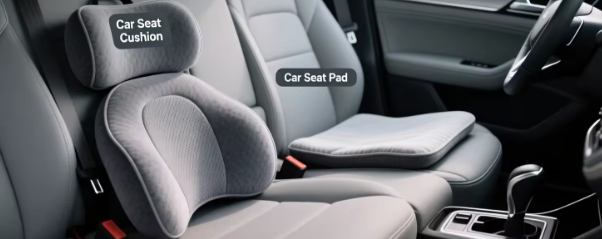
Seat covers with built-in support – replaces your whole seat cover with one that has lumbar support integrated. More expensive but cleaner look.
Heating/cooling seat covers – if temperature is your issue not support. My dad has a heated seat cover he loves for winter.
Steering wheel adjustments – sometimes moving the steering wheel closer/farther or higher/lower fixes posture issues.
Different car – if your car seat fundamentally doesn’t fit your body, no cushion will fully fix it. Sometimes the answer is a different vehicle with better seats.
Physical therapy – for chronic pain, PT might help more than any cushion. Strengthening your core and back muscles makes everything better.
Better mattress – if your back hurts all the time not just while driving, your bed might be the real problem.
I improved my sleep setup and that helped my driving comfort too. Everything’s connected.
Real Talk About Actually Using These
Most people buy seat support cushions, use them for a week, then they end up in the trunk or a closet and never get used again.
Why? Because they don’t work perfectly immediately and people give up. Or they were the wrong product for that person. Or they helped but not dramatically so people stopped using them.
I’ve done this. Bought cushion, used it five times, forgot about it. Found it months later under my seat.
If you’re gonna buy seat support actually commit to using it properly for at least two weeks. Might need adjustment period to get used to it.
Position it correctly – lumbar support at lower back, not mid or upper back. Neck support at proper headrest height.
Adjust straps so it stays in place. Don’t just throw it on the seat and hope.
Give it an honest try. If it doesn’t help after two weeks of correct use, return it and try something else.
Don’t be like me keeping products I’m not using. Either use them or return them.
Should You Actually Buy This Stuff?
Honest answer – if your back or neck hurts from driving, yeah try lumbar support. It’s cheap and might help a lot. Worth the $30-40 gamble.
If you’re comfortable while driving, don’t buy seat support just because. You don’t need to fix what’s not broken.
Neck pillows are harder to recommend. Most people don’t need them. Adjust your headrest properly first. If that doesn’t help then maybe try a neck pillow.
I wasted money on neck support I didn’t need. Don’t be me. Only get what actually solves a problem you have.
And for the love of god adjust your seat properly before buying anything. So many people skip this obvious free solution and jump straight to buying products.
Proper seat adjustment might solve 80% of your problem for free. The remaining 20% is where lumbar support comes in.
Start free, then spend money if needed. Not the other way around.
My Actual Conclusion After All This
Lumbar support cushions can legitimately help if you have lower back discomfort from driving and your seat lacks proper support. They’re cheap, easy to try, and worth it if they work for you.
Neck pillows are more hit-or-miss. Most people don’t need them. Try proper headrest adjustment first.
Don’t buy cheap garbage. Don’t buy unnecessarily expensive stuff either. Mid-range from reputable brands usually works fine.
Actually try products properly before giving up. But also don’t force yourself to use something uncomfortable hoping you’ll adjust.
And seriously just adjust your damn seat properly. This solves so many problems for free and people skip it constantly.
My back pain went from constant to occasional just from a $35 cushion and proper seat position. Your results may vary but it’s worth trying if you’re hurting.
Now if you’ll excuse me I need to go tell my girlfriend again that she should try a different neck pillow because the one she has clearly isn’t working and she keeps complaining about it. She won’t listen but I’ll try anyway. Some battles you fight even when you know you’ll lose.