
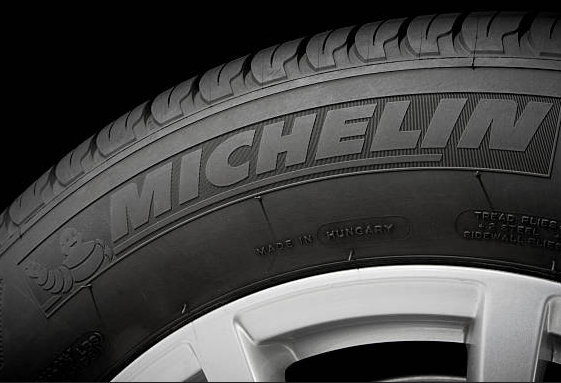
Standing in a tire shop three years ago staring at two options. Michelin Defenders for $180 each or some brand I’d never heard of for $85 each. That’s like $380 difference for a full set.
The guy working there wasn’t pushing either way. Just said the Michelins would last longer and ride better. I asked how much longer. He shrugged and said “maybe double?”
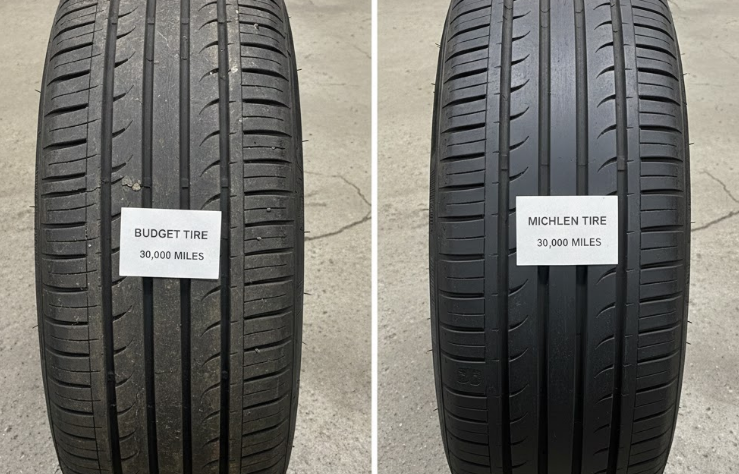
I was broke at the time. Went with the cheap tires. They lasted about 30k miles before they were shot. Did the math later and realized if the Michelins had actually lasted twice as long I would’ve come out even or ahead.
Bought Michelins for my current car. They’re at 55k miles now and still have decent tread left. Pretty sure they’ll make it past 70k. So yeah, I learned my lesson about tire math the expensive way.
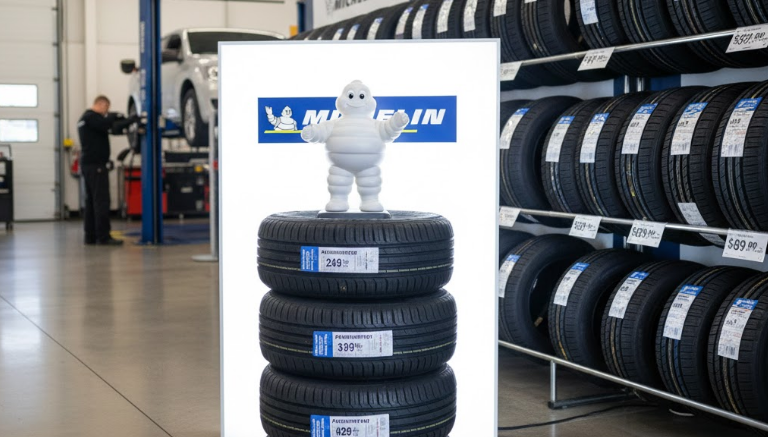
The Short Answer Depends On Your Situation
For most people driving normal cars in normal conditions – Michelins are probably worth it if you plan to keep your car a while.
If you’re selling the car soon, drive very little, or genuinely can’t afford them – cheaper tires are fine and you shouldn’t feel bad about it.
If you drive a lot, care about handling and ride quality, or live somewhere with bad weather – Michelin’s extra cost pays for itself.
I fall into that last category now. After experiencing both ends of the spectrum I’ll probably stick with Michelin or similar premium brands going forward.
What You Actually Get For The Extra Money
Tread life – This is the big one. Michelin tires consistently last 60-80k miles. Cheaper tires are more like 30-50k miles. That’s nearly double.
Better wet traction – The difference in rain is noticeable. Michelin’s stop shorter and grip better on wet roads. Could literally save your life.
Quieter ride – Premium tires are way quieter at highway speeds. You don’t realize how loud cheap tires are until you upgrade.
Better handling – The car feels more stable and responsive. Corners better, tracks straighter. Not a huge deal for daily driving but nice.
Warranty – Michelin warranties are solid. If you have issues they’ll prorate a replacement. Cheap tire brands often have garbage warranties.
Fuel economy – Premium tires have lower rolling resistance. Supposedly saves a bit on gas. I never tracked this carefully enough to confirm.
The tread life is what justifies the cost for me. Everything else is bonus.
My Cheap Tire Experience Was Fine Until It Wasn’t
Those $85 tires I bought weren’t terrible. For the first year they worked fine. No problems, no complaints.
Around 20k miles they started getting louder. That road noise you hear on the highway got noticeably worse. Annoying but whatever.
At 25k miles wet traction started getting sketchy. I’d brake in the rain and feel them slip slightly. Nothing dangerous but enough to make me nervous.
By 30k miles they were pretty much done. Tread was low and they were loud as hell. Had to replace them way sooner than I expected.
So I saved $380 upfront but had to buy tires again in 2.5 years instead of 5+ years. False economy.
The cheap tires weren’t unsafe or anything. They just wore out faster and weren’t as good in the meantime. You get what you pay for.
The Michelin Experience Has Been Different
Got Michelin Defender T+H tires on my current car about 4 years ago. Paid like $720 for all four installed.
At the time I was annoyed at the cost. That’s real money I could’ve spent on other stuff.
Four years and 55k miles later I’m glad I spent it. The tires still have like 4-5/32″ of tread. They’ll probably make it to 70-75k miles before I need new ones.
They’re still quiet on the highway. Still grip well in rain. No weird wear patterns or issues.
Did the math – if they last 70k miles that’s about $10 per thousand miles. The cheap tires were $340 for 30k miles, which is like $11 per thousand miles. Basically the same cost but way better experience.
Plus I don’t have to deal with buying tires again for another year or two. That convenience is worth something too.
Where Michelin Actually Shines
Wet weather performance – This is where the price gap really shows. Michelin’s wet traction is noticeably better than cheaper tires.
I drove through a thunderstorm last month. Highway speeds, heavy rain, had to brake hard because traffic slowed suddenly. Tires stopped the car straight and controlled with no drama.
With my old cheap tires I would’ve been white-knuckling it hoping they’d grip. The confidence you get from knowing your tires will actually stop in the rain is worth money.
Consistency over time – Cheap tires start decent and get worse quickly. Michelins stay good basically until they’re worn out.
Snow traction – I’m in Texas so this barely matters, but friends up north swear Michelin all-seasons handle snow way better than budget brands.
Hydroplaning resistance – The tread design channels water better. Less likely to lose contact with the road in standing water.
For someone who drives a lot or in challenging conditions, these differences matter.
When Michelin Is Probably Overkill
You’re selling the car soon – Don’t put $800 Michelins on a car you’re trading in next year. Get cheap tires and call it done.
You drive under 5k miles per year – At that rate any tire will last forever. Premium tires won’t wear out faster so the longevity advantage doesn’t matter.
You have a beater car – If your car is worth $2000 spending $800 on tires is kind of silly. Get something mid-range.
You’re genuinely broke – Sometimes you just need tires now and can’t afford premium. Budget tires are safe and legal. Do what you can afford.
You live somewhere with perfect weather – If it never rains and never snows, wet/snow traction advantages don’t matter much. Still get tread life though.
My friend has a 1998 Corolla worth maybe $1500. He buys cheap tires and that makes total sense. Spending Michelin money on that car would be dumb.
The Other Premium Brands
Michelin isn’t the only option in the premium tier. Other brands that compete:
Continental – German brand, similar quality and price to Michelin. Some people prefer them. I’ve never tried them personally.
Bridgestone – Japanese brand, slightly less expensive than Michelin usually. Good reputation, especially their Turanza line.
Goodyear – American brand, hit or miss depending on the specific tire. Some lines are great, some are meh.
Pirelli – Italian brand, more focused on performance. Good but expensive and don’t last as long.
I went with Michelin because that’s what my mechanic recommended and they had the best tread life warranty. But Continental or Bridgestone would probably be similar experiences.
The gap between these premium brands is smaller than the gap between any of them and budget brands.
The Tread Wear Warranty Thing
Michelin Defenders have an 80k mile tread warranty. Sounds great but there’s fine print.
You have to keep receipts proving regular tire rotations. Miss one rotation and warranty is void.
The tire has to wear evenly and be maintained properly. If you screwed up alignment or ran them underinflated, no warranty.
Even if everything is perfect you get a prorated credit, not a free tire. At 40k miles you’d get like 50% off a replacement.
My tires are probably going to hit the warranty mileage so I’ve been diligent about keeping rotation receipts. But honestly most people don’t get value from these warranties because they don’t maintain documentation.
Still, the fact they offer 80k mile warranties shows they’re confident in tread life. Cheap tire brands offer like 40k mile warranties if anything.
Tire Technology Actually Matters
Premium tires use better rubber compounds that resist wear longer. This isn’t just marketing, the chemistry is actually different.
They also have more sophisticated tread patterns designed by engineers to optimize for water channeling, road noise, wear patterns, all that stuff.
Cheap tires are made with basic compounds and simpler tread designs. They work but they’re not optimized the same way.
Is this worth $100 extra per tire? Depends on how much you drive and what you value.
For me driving 15k miles per year, yeah it’s worth it. For someone driving 5k miles per year, probably not.
Installation Costs Are The Same
Whether you buy Michelin or cheap tires, installation costs the same. Usually like $20-30 per tire for mounting, balancing, disposal, valve stems, etc.
So the price difference is purely in the tire itself, not the total cost to get them on your car.
I mention this because some people think premium tires require special installation or something. Nope, same process regardless of brand.
The Road Hazard Warranty Decision
When you buy tires they always try to sell you road hazard warranty. Costs like $15-25 per tire.
This covers things like nails, potholes, blowouts. Basically anything that damages the tire that isn’t wear-and-tear.
For cheap tires I’d skip it. The tire only cost $80, the warranty costs $20. Not worth it.
For Michelin tires at $180+ each I usually get the road hazard warranty. If I hit a pothole and destroy a $180 tire, having it covered for $20 is a good deal.
I’ve used road hazard warranty once in my life. Got a nail in a Michelin that couldn’t be plugged. Warranty covered a replacement tire. Paid for itself immediately.
Rotating Tires Is Actually Important
This matters more with premium tires because you’re trying to maximize that tread life.
Manufacturers recommend rotating every 5-7k miles. I do mine every oil change which is about 5k miles.
Proper rotation makes tires wear evenly and last longer. I’ve seen people skip rotations and then wonder why their expensive tires only lasted 40k miles.
With cheap tires you might skip rotations because whatever, they’re dying soon anyway. With Michelins that cost $720 for a set, you better believe I’m rotating them on schedule.
My Friend’s Counter-Argument
My buddy insists premium tires are a waste of money. His logic: cheap tires last half as long but cost less than half as much, so you come out ahead.
He has a point if you run the numbers a certain way. Cheap tires at $85 each for 30k miles vs Michelins at $180 each for 70k miles.
Cheap: $340 for 30k miles, or $11.33 per 1k miles Michelin: $720 for 70k miles, or $10.29 per 1k miles
So Michelins are actually cheaper per mile, but barely. His argument is why tie up the extra $380 upfront for minimal savings?
It’s a fair point if you’re cash-strapped or don’t care about the driving experience. I care about wet traction and quiet ride though, so I’ll pay the premium.
The Math For High-Mileage Drivers
If you drive 20k+ miles per year the math swings heavily toward premium tires.
At 20k miles annually you’re buying tires every 1.5 years with cheap tires or every 3.5+ years with Michelins.
The hassle of buying tires twice as often is worth something. The time, the scheduling, dealing with tire shops.
Plus you get better performance the whole time. For high-mileage drivers I don’t think there’s any argument against premium tires.
I’m at 15k miles per year now. That’s enough that Michelin makes sense. When I was driving 8k miles per year I probably should’ve bought cheaper.
What I’d Buy Today
If I needed tires right now I’d probably get Michelin Defenders again. They’ve been great and I trust them.
I might also consider Bridgestone Turanza or Continental PureContact just to see how they compare. All three are in the same price and quality tier.
If money was really tight I’d look at Michelin’s mid-tier options like the Primacy or lower-end Defenders. Still better than cheap brands but not top-dollar.
Main criteria:
- Tread life warranty of at least 60k miles
- Good wet traction ratings
- From a major reputable brand
- Reasonable price (under $200 per tire)
That basically narrows it to Michelin, Continental, or Bridgestone in their mid-to-upper tier lines.
The Used Tire Temptation
Some people buy used tires to save money. I get it when money is tight.
But tires age even if they’re not worn. A used tire might have decent tread but be 5 years old with dry-rotted rubber.
You also don’t know the history. Was it in a crash? Driven underinflated? Improperly stored?
For the savings you get buying used, it’s not worth the risk in my opinion. Tires are literally the only thing connecting your car to the road.
If you absolutely have to buy used, at least check the DOT date code and look carefully for damage or irregular wear.
When To Actually Replace Tires
Don’t wait until you’re down to the wear bars. That’s the legal minimum but not safe minimum.
I replace tires when they hit 3-4/32″ tread depth. At that point wet traction starts getting sketchy.
Use the penny test – stick a penny in the tread with Lincoln’s head down. If you can see the top of his head, replace the tires.
With my Michelins at 55k miles they’re at about 5/32″ still. I’ll probably replace around 70k miles even though they’ll technically have tread left.
Old rubber is old rubber even if there’s tread. I don’t want to push my luck.
The Real Answer For Most People
If you drive a normal amount (10-15k miles per year) and keep your car for 5+ years, Michelin or similar premium tires are worth the extra cost.
You get better safety in wet conditions, quieter ride, longer tread life, and better overall experience. The cost per mile is actually similar to cheap tires.
If you drive very little, are selling soon, or can’t afford premium tires, buy mid-range tires from brands like Cooper, Hankook, or lower-tier Goodyear. They’re the sweet spot between cheap garbage and premium prices.
Skip the absolute cheapest tires unless you’re desperate. They’re not worth the compromised performance and short lifespan.
I spent years being a cheapskate about tires. Thought spending extra on tires was wasting money. Experience taught me otherwise.
The difference between $85 tires and $180 tires is real. You feel it every time you drive, especially in bad weather. And when you factor in longevity the premium tires often cost the same or less per mile.
For something as critical as tires – the only part of your car touching the road – spending extra for quality seems obvious in hindsight. Wish I’d figured that out before buying cheap tires that first time.
But everyone’s situation is different. If Michelin’s don’t fit your budget or driving needs, that’s totally fine. Just don’t buy the absolute cheapest option if you can possibly afford something mid-range.
Your safety and driving experience are worth a few extra bucks per month spread over the life of the tires.